 Whatcom County
 Why Decks Take a Beating in Silver Beach
Decks in Silver Beach don't fail the same way decks fail in drier parts of the country. Out here, the damage is slow and it's almost always moisture-driven. Salt-laden air off the water works into fasteners, flashing, and any exposed end grain. Long stretches of driving rain push water sideways into places a deck was never designed to shed it — under rail posts, behind ledger boards, into the tiny gap where two deck boards meet. And because Whatcom County goes months at a time without more than a day or two of full sun, moss and algae get a real foothold on any horizontal surface that stays damp.
None of that is dramatic on its own. It's cumulative. A deck that would last 25 years in a dry inland climate can start showing structural problems in half that time here if it wasn't built — or isn't being replaced — with this specific climate in mind. That's the difference between a deck that's just old and a deck that's actually failing underneath a fine-looking surface.
What "Salt Air" Actually Does to a Deck
It's not just about rust, though that's part of it. Salt in the air accelerates corrosion on any exposed metal — nails, screw heads, joist hangers, railing brackets — even galvanized hardware if the coating has worn or been nicked during installation. Once a fastener starts corroding, it loses grip in the wood around it, and that's often the first real structural weak point on an older deck, long before the boards themselves look bad.
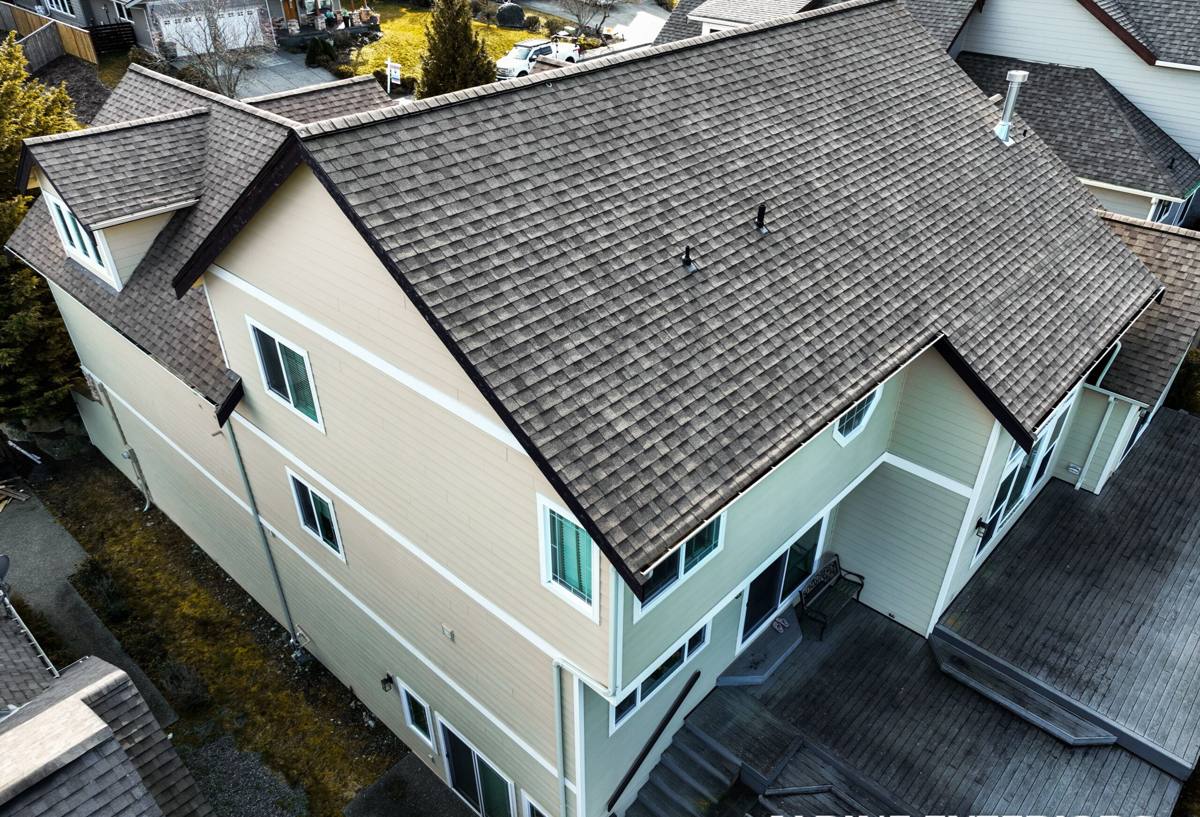
Signs Your Silver Beach Deck Needs Replacing, Not Just Repair
Homeowners often call us wanting a few boards swapped out, and sometimes that's genuinely all that's needed. But a lot of the time, the visible problem is a symptom of something underneath that repair won't fix. Here's how we tell the difference on a typical visit.
- Soft or spongy spots underfoot, especially near the house or around post bases — usually means rot has already reached the framing, not just the decking.
- Rust streaking below fastener heads or joist hangers — a sign the hardware is corroding faster than the wood around it is wearing.
- Persistent moss or dark staining that comes right back within weeks of cleaning — the surface is staying wet longer than it should, often due to poor drainage or missing gaps between boards.
- Loose or wobbly railings — this is a safety issue first, and on an older deck it often points to post connections that were never properly through-bolted.
- Gaps or separation at the ledger board where the deck meets the house — this is one of the most serious failure points and the leading cause of deck collapses nationally.
- Visible cupping, splintering, or checking across most of the deck surface, not just one or two boards — a sign the whole run of decking has reached the end of its service life.
If you're only seeing one or two of these, repair may still make sense. If you're seeing three or more, or if the deck is original to a home built decades ago, replacement is almost always the more honest recommendation — and often the more affordable one once you factor in repeated patch jobs.
What a Correct Deck Replacement Actually Involves
A deck replacement isn't just pulling up old boards and screwing down new ones. Done right, it's a rebuild of everything that keeps water out of the structure, not just what you can see standing on it.
Ledger and Flashing
The ledger board — where the deck attaches to the house — is the single most common source of hidden rot, and it's almost invisible once the old decking is in place over it. A proper replacement means pulling the ledger, inspecting the rim joist and sheathing behind it for water damage, and installing new flashing designed to shed water away from the house rather than trap it against the ledger. This step gets skipped more than any other on cut-rate deck jobs, and it's the one that causes the most expensive damage down the road.
Framing and Footings
Joists, beams, and posts should be evaluated on their own merits, not assumed to be fine just because the decking above them looked okay. In a climate that stays damp for so much of the year, we look closely at post bases and any wood that's in contact with or close to the ground — that's where rot and insect damage start. Footings need to be sized and set to current code, which matters both for safety and for resale.
Decking, Fasteners, and Drainage
The visible surface is what most homeowners think about first, but how it's fastened and spaced matters just as much as what it's made of. Board gaps need to be consistent enough to let water and debris pass through instead of collecting moss and organic buildup between boards. Fasteners should be corrosion-resistant and rated for the specific material being installed — mismatched hardware is a common cause of premature staining and loosening.
Decking Material Options for a Marine Climate
There's no single "best" decking material — there's a best material for your budget, your maintenance appetite, and how exposed your specific deck is to weather. Here's how the common options actually perform in a wet, moss-prone environment like ours.
| Material | Moisture Behavior | Maintenance | Typical Lifespan Here |
|---|---|---|---|
| Pressure-treated wood | Resists rot when sealed regularly; end grain and fastener holes are vulnerable if coating lapses | Annual cleaning and re-sealing recommended | 15-20 years with upkeep |
| Cedar | Naturally rot-resistant, but still needs sealing to prevent graying and moisture uptake | Sealing every 1-2 years | 15-25 years with upkeep |
| Composite decking | Won't rot, but lower-quality composites can absorb moisture at cut edges without proper capping | Occasional washing; no sealing | 25-30+ years |
| PVC / cellular decking | Fully moisture-resistant, does not absorb water or support rot | Lowest of the group; occasional washing | 30+ years |
For homes closer to the water, where salt air and sustained dampness are more constant, we tend to steer clients toward composite or PVC decking for the walking surface, while still using pressure-treated or naturally durable wood for structural framing that isn't visible. That's not a knock on wood decking — it's a real, honest material with a lower upfront cost — it just requires an owner who's willing to stay on top of sealing schedules, and we tell people that plainly before they commit either way.
Railings and Hardware That Hold Up Out Here
Railings take more abuse from salt air and moisture cycling than almost any other part of a deck, because posts and connections trap water at joints and fastener points. A few things we treat as non-negotiable on any replacement:
- Stainless or heavily corrosion-rated fasteners at every railing connection, not just standard galvanized hardware.
- Through-bolted post connections rather than surface-mounted brackets alone, for both strength and longevity.
- Wood or composite rail caps that shed water rather than pool it, since flat horizontal surfaces are where moss and rot get started first.
- Careful attention to any spot where dissimilar metals meet, since that combination accelerates corrosion in a salt-air environment.
Permits and Code Considerations in Whatcom County
Most deck replacements that involve new footings, structural framing changes, or a deck built above a certain height off grade require a building permit locally — this isn't unique to Silver Beach, it's standard across Washington jurisdictions, but it's easy for homeowners to assume a "like-for-like" replacement is exempt when it isn't. Guardrail height, baluster spacing, and stair requirements are also governed by code, and these get checked closely on decks used near slopes or elevation changes, which are common on lots throughout this part of the county.
We handle the permit process as part of the job rather than leaving it to the homeowner to sort out. It adds a little lead time up front, but it protects you at resale and with your insurance carrier if there's ever a question about how the deck was built.
Our Deck Replacement Process
- On-site evaluation — we inspect the existing deck, ledger, framing, and post bases, and give you a straight answer on whether repair or replacement makes sense.
- Written estimate — material options, scope, and timeline laid out clearly, with no vague allowances buried in the fine print.
- Permit and planning — we pull any required permits and schedule around Whatcom County's wetter months where possible to keep the job moving.
- Demolition and structural inspection — old decking and railings come off first so we can actually see the condition of the ledger and framing before finalizing scope.
- Framing, flashing, and footings — the parts you won't see again once decking goes down, done to code and built to handle sustained moisture exposure.
- Decking and railing installation — installed with proper spacing, corrosion-resistant fasteners, and attention to drainage.
- Final walkthrough — we go over care and maintenance specific to whatever material you chose before we consider the job done.
Maintenance Checklist to Extend the Life of Your New Deck
A well-built deck still needs some seasonal attention in this climate. This is the short list we give every Silver Beach homeowner after a replacement:
- Sweep debris out of board gaps regularly — trapped leaves and needles hold moisture and feed moss growth.
- Rinse or gently wash the surface at least once or twice a year to knock back early moss and algae before it takes hold.
- Check railing posts and stair connections annually for looseness, especially after a hard winter.
- Re-seal wood decking on schedule — don't wait until it looks gray and dry, since that means moisture protection has already lapsed.
- Keep gutters and downspouts near the deck clear so runoff isn't dumping extra water directly onto or under the structure.
- Watch for standing water after storms — pooling in one spot usually means a drainage or slope issue worth addressing early.
Cost Factors Homeowners Should Understand
Every deck is different, so we won't quote a number without seeing the site, but these are the variables that move the price the most, in rough order of impact.
| Factor | Why It Matters |
|---|---|
| Size and shape of the deck | Square footage and the number of angles, stairs, or level changes directly drive labor and material. |
| Condition of the framing | Hidden rot at the ledger or posts can add scope once demolition reveals it — we flag this as a possibility upfront, not after the fact. |
| Decking material chosen | Pressure-treated wood costs less upfront; composite and PVC cost more but reduce maintenance and last longer. |
| Height above grade and railing complexity | Taller decks and elaborate railing designs require more structural work and code compliance detail. |
| Permit and inspection requirements | Structural changes typically require permitting, which adds modest time and cost but protects you long-term. |
Why Hire a Crew That Already Works Silver Beach
Deck replacement isn't exotic work, but building one that actually holds up here takes local judgment, not just a general carpentry background. A crew that already works Silver Beach and the surrounding Whatcom County shoreline knows which details matter most in this specific environment — how much flashing overlap is actually enough against driving rain, which fastener grades hold up to salt air over years instead of just passing inspection on day one, and where moss tends to establish first on a given lot's exposure.
That local familiarity also means fewer surprises during the permit process, since we're used to the requirements in this jurisdiction, and fewer callbacks after the fact, since we're not guessing at what this climate does to a deck over time — we've seen it firsthand on other projects nearby. Hiring a crew from outside the region isn't necessarily a mistake, but it does mean you're the one absorbing the learning curve if they get a climate-specific detail wrong.
If your deck in Silver Beach is showing its age, or you just want an honest opinion on whether repair or full replacement makes more sense for your situation, we're happy to take a look. Reach out for a free, no-pressure estimate using the form below.