 Whatcom County
 Siding Built for Silver Beach's Shoreline Climate
Homes in the Silver Beach area sit in one of the tougher siding environments in Whatcom County. You've got salt-laden air drifting off the water, driving rain that comes in sideways during winter storms, and a moss season that can stretch from October through May. None of that is unique to any one house on your street — it's the baseline every exterior surface in this neighborhood has to survive, year after year. Siding that's installed correctly for this climate will look right and perform for decades. Siding that's installed to a generic standard, or installed fast to hit a price, tends to show its age within a few years — and by the time problems are visible from the curb, there's usually already damage happening behind the surface.
This page is about one job, done right, in one place: new siding installation for homes in Silver Beach. Not a general overview of siding — the specific conditions this neighborhood deals with, what a correct installation actually requires here, and how we approach it.
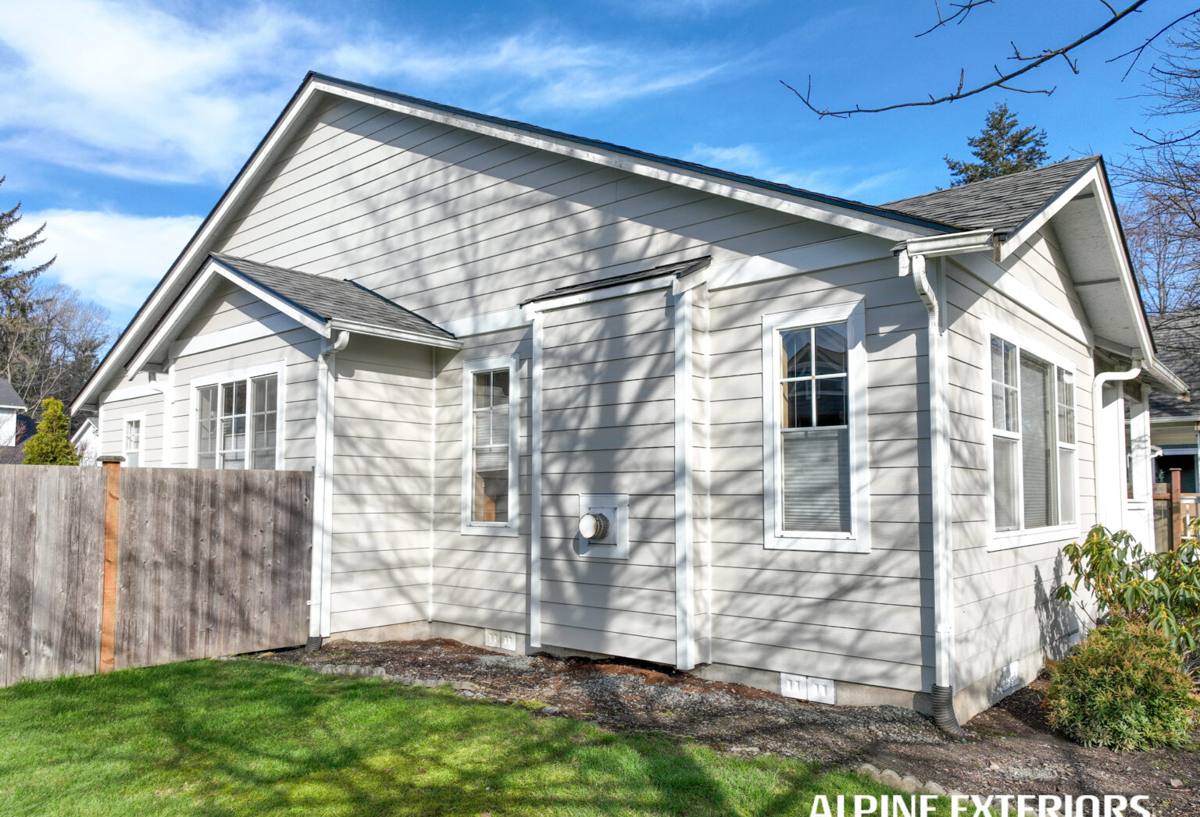
What Salt Air and Driving Rain Actually Do to a Wall
Moisture Intrusion
Wind-driven rain doesn't just wet the surface of a wall — it gets pushed up and under laps, into seams, and around penetrations like hose bibs, light fixtures, and vents. If the weather-resistive barrier behind the siding isn't lapped correctly, or flashing at windows and trim isn't detailed to shed water outward, moisture works its way into the wall assembly. Once that happens, the siding material itself almost doesn't matter — sheathing rot, insulation degradation, and interior damage follow. This is the single biggest reason siding failures happen in coastal Whatcom County homes, and it's almost never about the brand of siding. It's about how the water management behind it was built.
Moss and Organic Growth
A long, damp season means moss, algae, and mildew get a real foothold on north-facing walls, shaded elevations, and anywhere siding stays wet longer than it should. Organic growth on a wall surface isn't just cosmetic — it holds moisture against the material longer, which accelerates whatever underlying problem already exists. Siding that resists moisture absorption in the first place, and is installed with enough clearance for water to drain and surfaces to dry, holds up far better through repeat moss seasons than siding that's constantly damp.
Salt Exposure
Airborne salt accelerates corrosion on fasteners, flashing, and any exposed metal trim, and it can degrade paint and coatings faster than it degrades further inland. Material choice and hardware choice both matter here — stainless or coated fasteners, corrosion-resistant flashing, and a factory finish that's engineered to hold color and integrity in coastal air all make a measurable difference over a 20-30 year timeline.
What a Correct Siding Installation Involves Here
Weather-Resistant Barrier and Flashing
Every installation starts behind the siding, not at it. A properly lapped weather-resistive barrier, correctly integrated flashing at every window, door, and penetration, and a drainage plane that lets any water that does get behind the cladding find its way back out — these are the details that determine whether a house stays dry for 30 years or develops hidden rot in five. In a driving-rain climate like this one, shortcuts here are the most expensive mistakes a homeowner can inherit, because they're invisible until the damage isn't.
Fastening and Clearances
Fiber cement siding has specific fastening requirements — nail placement, spacing, and depth all affect how the material performs and whether its warranty stays valid. Ground clearance, deck and patio clearance, and clearance above roof lines also matter more here than in a dry climate, because they control how much splash-back moisture and standing dampness the bottom courses of siding are exposed to. We follow manufacturer installation specs exactly, not as a formality, but because those specs exist for climates like this one.
Caulking and Joints
Every joint, seam, and trim intersection is a potential entry point for wind-driven rain. Correct sealant selection and placement — not over-caulking, not under-caulking — keeps water out without trapping moisture that needs to escape. This is detail work that separates a crew that's done hundreds of coastal Whatcom County installs from one that hasn't.
Why We Install Only James Hardie Fiber Cement
We standardized on James Hardie fiber cement siding for every job we do, including here in Silver Beach, and we don't install vinyl, LP SmartSide, primed wood, or cedar. That's a deliberate professional standard, not a sales preference. Fiber cement doesn't absorb moisture the way wood-based products can, it's non-combustible, and Hardie's ColorPlus factory finish is engineered to hold up against exactly the kind of UV, moisture, and salt exposure this stretch of coastline sees. For a shoreline climate, that combination of moisture stability and finish durability is what actually matters over the life of the siding.
| Factor | James Hardie Fiber Cement | Vinyl / Wood-Based Alternatives |
|---|---|---|
| Moisture absorption | Very low; engineered for wet climates | Wood-based products can swell/degrade if moisture reaches the substrate |
| Salt air / coastal exposure | Finish engineered to hold color and integrity near water | Varies; some finishes fade or chalk faster under salt exposure |
| Fire resistance | Non-combustible material | Combustible (wood-based); vinyl can soften/deform under heat |
| Expected lifespan when correctly installed | 30+ years is common | Often shorter, especially with moisture exposure |
| Warranty structure | Long, transferable manufacturer warranty | Varies widely by product and manufacturer |
None of this means other products don't have their place — vinyl is inexpensive and low-maintenance in the right setting, and wood siding has real aesthetic appeal. But for the specific combination of salt air, sustained rain exposure, and moss season that Silver Beach homes deal with, we've found Hardie's moisture behavior and finish durability to be the better long-term investment, and it's the only product we put our name behind.
Our Installation Process in Silver Beach
- Assessment. We look at your home's specific exposure — which walls take the most wind-driven rain, where moss and moisture have already caused problems, and what condition the sheathing and framing are in once old siding comes off.
- Tear-off and inspection. Removing old siding gives us a direct look at the wall assembly. Any rot, damaged sheathing, or failed flashing gets addressed before anything new goes on — covering up an existing problem is how the next failure gets built in from day one.
- Weather barrier and flashing. A correctly lapped weather-resistive barrier and properly integrated flashing go in at every window, door, and penetration point.
- James Hardie installation to spec. Fastening, clearances, joint treatment, and caulking are all done to manufacturer specification — the details that determine long-term performance in this climate.
- Trim and finish work. Corners, trim boards, and transitions are finished cleanly, with attention to how each detail sheds water rather than collects it.
- Final walkthrough. We go over the finished work with you before we consider the job done.
Signs Your Silver Beach Home Needs New Siding
- Visible warping, buckling, or soft spots when you press on the siding
- Persistent moss or algae staining that returns quickly after cleaning
- Peeling or bubbling paint, especially on walls facing prevailing wind and rain
- Cracks or gaps at seams, corners, or trim intersections
- Rising energy bills that suggest the wall assembly isn't performing the way it should
- Visible rot or discoloration at the base of walls or around windows
Any one of these on its own might be minor. Several together, especially on a home that hasn't had its siding replaced in 20-plus years, usually means it's worth having someone take a real look before winter's driving rain finds the weak points for you.
Choosing a Crew That Already Works This Area
Siding installation isn't a one-size-fits-all trade. A crew that mostly works dry inland climates can do good general work and still get water management wrong for a shoreline exposure they don't see often. A crew that regularly works Silver Beach and the surrounding Whatcom County shoreline has already seen how the local combination of salt air, wind direction, and rain volume plays out on real homes — which walls fail first, where moss takes hold, what flashing details actually hold up. That local pattern recognition is hard to substitute for.
- Ask how many jobs the crew has done specifically in coastal or shoreline Whatcom County neighborhoods
- Ask what weather-resistive barrier and flashing approach they use, and why
- Confirm they're installing to the manufacturer's written specifications, not just "how we usually do it"
- Ask what warranty applies to the material and to their labor, separately
- Get a clear scope in writing before any tear-off starts
After Installation: Keeping Hardie Siding Performing
Correctly installed James Hardie siding is low-maintenance, but low-maintenance isn't no-maintenance in this climate. An occasional rinse to keep salt residue and moss spores from building up, a periodic look at caulked joints and trim for any separation, and prompt attention to anything that looks off are enough to keep the siding performing for its full service life. Because the material and finish are engineered for exactly this kind of exposure, the maintenance burden is far lighter than what wood-based or lower-grade siding demands in the same conditions.
If you're weighing new siding for a Silver Beach home, we're happy to take a look and give you a straightforward, no-pressure estimate — what your home's exposure actually needs, and what correct installation looks like for it.