 Whatcom County
 Roofing Nooksack Homes for Whatcom County's Wet Half of the Year
Nooksack sits in the part of Whatcom County where the rain doesn't just fall, it lingers. Between the marine-influenced air moving in off the Georgia Strait and the cooler, damper microclimate near the foothills, roofs here spend a good chunk of the year staying wet rather than drying out between storms. Add driving rain that comes in sideways during winter systems, and a moss season that can stretch from fall through spring, and you've got a set of conditions that will find every weak point in a roofing system eventually. Asphalt shingle roofs can absolutely hold up to this, but only when they're installed with this climate in mind, not installed the same way you'd install one somewhere dry.
This page is about one job in one area: asphalt shingle roofing on homes in and around Nooksack. Not a general overview of every roofing product we offer, and not generic advice that applies anywhere in the country. What follows is what actually matters for a shingle roof that has to perform through Whatcom County winters year after year.
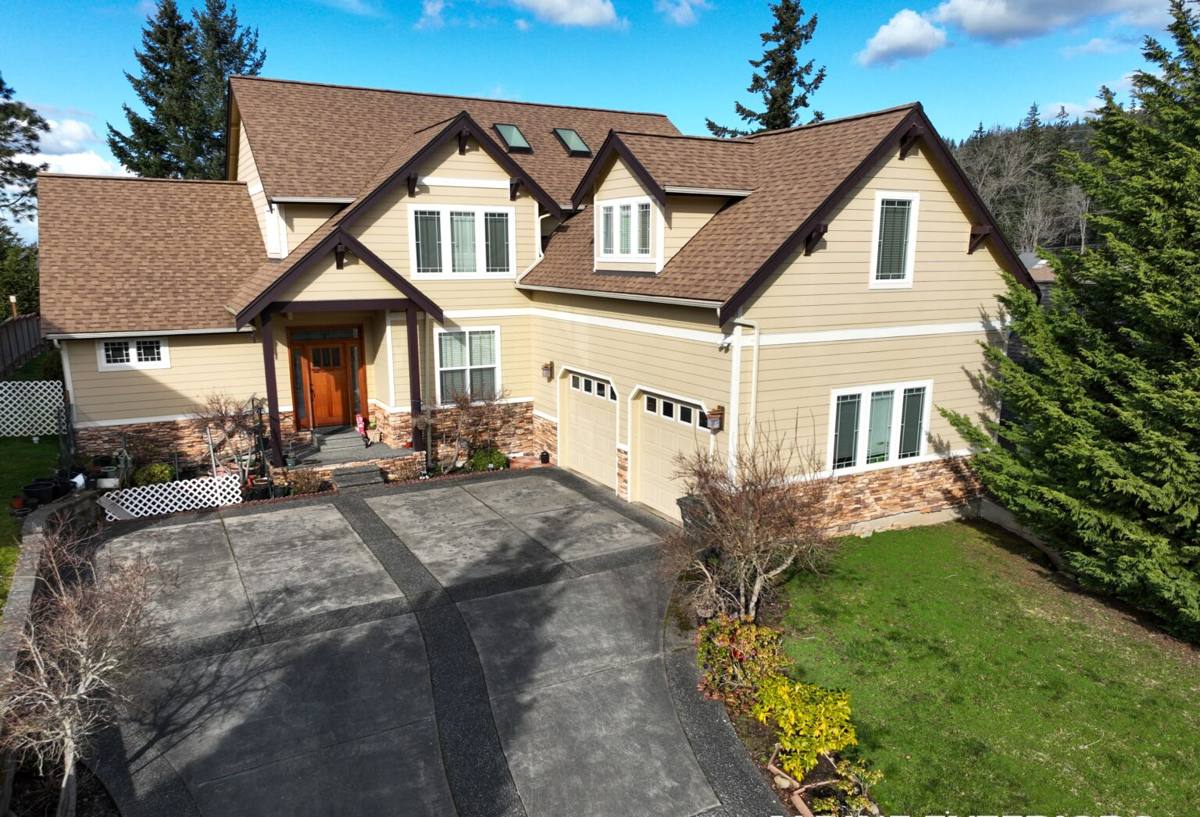
What Nooksack's Climate Actually Does to a Shingle Roof
It helps to be specific about the mechanisms, because they drive real decisions about materials and installation detail.
- Prolonged moisture exposure: Shingles that stay damp longer are more hospitable to moss and algae growth, and repeated wet-dry cycling accelerates granule loss over time.
- Driving rain: Wind-driven rain doesn't just fall straight down onto a roof plane, it gets pushed sideways and can work its way under shingle tabs, around flashing, and into valleys if those details weren't sealed correctly the first time.
- Moss and organic growth: A long damp season gives moss spores time to establish, especially on north-facing slopes and shaded sections under trees. Moss holds moisture against the shingle surface and, left unchecked, can lift shingle edges and create paths for water to travel underneath.
- Marine-influenced air: Whatcom County's proximity to Puget Sound and the Strait carries salt-tinged, humid air further inland than people expect, which adds to metal fastener and flashing corrosion over the life of a roof.
None of this means asphalt shingles are the wrong choice for Nooksack. It means the roofing system underneath the shingles — the underlayment, the ventilation, the flashing, the fastening — has to be built for these conditions, not just the shingles themselves.
Why Asphalt Shingles Still Make Sense in This Climate
Asphalt shingles remain the most common roofing material in Whatcom County for good reason. They're a proven, well-understood product with a wide range of price points, they perform well against wind and rain when installed correctly, and repairs are straightforward compared to some alternative materials. For most Nooksack homes, a quality architectural asphalt shingle roof, properly installed and reasonably maintained, will deliver 25-30+ years of service.
The trade-off worth understanding honestly: asphalt shingles are more sensitive to moss and algae staining than some other materials, and they require attention to ventilation and moisture control that lower-maintenance materials don't demand as strictly. That's not a reason to avoid them — it's a reason to make sure the install accounts for it from day one.
What a Correct Asphalt Shingle Install Actually Involves
A shingle roof is a system, not a single layer. Skipping or shortcutting any of the following is where roofs fail early in this climate, even when the shingles themselves are a good product.
Underlayment and Ice/Water Barrier
A synthetic underlayment goes down first as the roof's secondary water barrier. In valleys, around chimneys and skylights, along eaves, and at other vulnerable transitions, we install a self-adhering ice-and-water membrane. This is the layer that actually keeps a roof watertight if wind-driven rain gets past the shingles, and it's one of the details that separates a roof built for Whatcom County weather from one built to a bare-minimum spec.
Ventilation
Proper intake and exhaust ventilation keeps the attic space at a consistent temperature and moisture level. In a climate this damp, poor ventilation traps humidity against the underside of the roof deck, which shortens shingle life from below and can lead to sheathing rot that never shows up until it's a bigger repair. We check existing ventilation on every inspection and correct it as part of the install when it's inadequate.
Flashing
Step flashing at walls and chimneys, valley flashing, and drip edge at the eaves and rakes are where roofs actually leak, far more often than through the shingle field itself. Flashing has to be installed in the correct sequence with the underlayment and shingles, not caulked on as an afterthought. Corrosion-resistant materials matter here given the marine-influenced air common across the county.
Fastening and Nailing Pattern
Manufacturer nailing patterns exist for a reason, and it's the single most common corner cut on a low-bid roofing job. Correct nail placement, count, and depth are what keep shingles attached through winter windstorms rather than lifting or blowing off.
How Our Process Works
1. Inspection and Estimate
We start with a roof inspection to assess the current deck condition, ventilation, flashing, and any moss or moisture damage already present. You get a written estimate that spells out materials, scope, and price, no pressure to decide on the spot.
2. Tear-Off and Deck Assessment
We remove the existing roofing down to the deck rather than layering over old shingles. This lets us actually inspect the sheathing for soft spots or rot, which is common to find once you get under an older roof that's been dealing with Whatcom County moisture for years. Any damaged decking gets replaced before anything new goes down.
3. Underlayment, Flashing, and Ventilation Correction
Ice-and-water membrane at vulnerable areas, synthetic underlayment across the field, new flashing where needed, and ventilation corrections happen before a single shingle is installed.
4. Shingle Installation
Shingles go down per manufacturer specification for nailing pattern, exposure, and sealant strip activation, with attention to valleys, hips, ridges, and penetrations.
5. Cleanup and Final Walkthrough
Job site cleanup includes a magnetic nail sweep of the yard and driveway. We walk the finished roof with you, or send photos and a summary if you prefer, before calling the job complete.
Choosing the Right Shingle for a Nooksack Roof
Not every asphalt shingle product is built the same way, and the right choice depends on your budget, roof slope, and how much you value low-maintenance longevity versus upfront cost.
| Shingle Type | Typical Lifespan | Best Fit | Trade-offs |
|---|---|---|---|
| 3-Tab Asphalt | 15-20 years | Budget-conscious re-roofs, simple roof lines | Lower wind resistance, less visual dimension, shorter warranty |
| Architectural (Laminate) Asphalt | 25-30+ years | Most Whatcom County homes; our most common recommendation | Higher upfront cost than 3-tab, but far better value over the roof's life |
| Impact-Rated / Algae-Resistant Architectural | 25-30+ years | Homes with heavy tree coverage, shaded slopes, or prior moss/algae issues | Higher material cost; copper or zinc granule technology helps resist algae growth but isn't a substitute for maintenance |
For most Nooksack properties, we recommend a mid-to-upper-tier architectural shingle with algae-resistant granules, especially on north-facing or tree-shaded roof planes where moss pressure is highest. It costs more upfront than a basic 3-tab, but it holds up to this climate with far less intervention over the years.
Moss, Algae, and What Long-Term Maintenance Actually Looks Like
Even a well-installed shingle roof in Whatcom County will need some ongoing attention. Setting realistic expectations upfront saves homeowners from surprises later.
- Moss growth on shaded or north-facing slopes is common here and isn't necessarily a sign of a bad install — it's a sign of the climate.
- Zinc or copper control strips at the ridge can help reduce moss growth over time as rain carries trace metal down the roof plane.
- Moss should be gently removed rather than scraped or pressure-washed aggressively, which can strip granules and shorten shingle life faster than the moss itself would.
- Keeping gutters and valleys clear of debris matters as much as the shingles themselves — trapped debris holds moisture against the roof and accelerates problems.
- Overhanging branches that keep a roof section shaded and damp longer than the rest of the roof are worth trimming back where practical.
What Affects the Cost of a Nooksack Shingle Roof
| Factor | Why It Matters |
|---|---|
| Roof size and pitch | More square footage and steeper pitches mean more material and labor time |
| Number of layers to remove | Tearing off multiple existing layers adds disposal and labor cost |
| Deck condition | Rotted or soft sheathing found during tear-off needs replacement before install |
| Shingle tier | 3-tab, standard architectural, and algae-resistant architectural carry different material costs |
| Roof complexity | Valleys, dormers, skylights, and chimneys all add flashing work and labor time |
| Ventilation corrections | Adding or upgrading intake/exhaust vents where existing ventilation is inadequate |
We won't quote a price without seeing the roof, but we can talk through a realistic range for your specific home once we've done a proper inspection. Broad-brush online estimates rarely account for deck condition or complexity, and those two factors move the number more than anything else.
Signs Your Nooksack Roof May Need Attention
- Granules collecting in gutters or at downspout outlets
- Shingles that look curled, cupped, or are missing tabs
- Dark streaking or heavy moss coverage, especially on shaded slopes
- Daylight visible through the attic roof deck
- Soft spots or sagging felt when walking the attic (do not walk the roof itself to check this)
- Water stains on ceilings or in the attic after heavy rain
- A roof older than 20-25 years that hasn't had a professional inspection recently
Catching these early, before the next round of Whatcom County winter storms, usually means the difference between a repair and a full replacement.
Why a Local Crew Matters for This Kind of Work
A roof installed correctly the first time, by a crew that already understands how moss, driving rain, and marine-influenced moisture behave on roofs in this part of Whatcom County, is worth more than a lower bid from a crew that treats every job the same regardless of climate. We work throughout the county and know which details — ventilation, flashing sequencing, ice-and-water placement, shingle grade — actually matter here versus in a drier region. That's not marketing, it's the difference between a roof that needs attention again in eight years and one that goes the full length of its warranty.
If you're weighing a repair against a full replacement, or just want an honest read on how much life is left in your current roof, we're glad to take a look. Reach out for a free, no-pressure estimate using the form below.