 Whatcom County
 Sehome sits close enough to Bellingham Bay that its homes take a steady diet of moist marine air, wind-driven rain, and the long gray stretch of moss season that defines a Whatcom County winter. Windows here don't fail because they're old in the abstract — they fail because year after year of that specific combination works into seals, frames, and glazing in ways a drier inland climate never would. A window replacement done right in Sehome has to account for that from the start, not as an afterthought.
Why Window Replacement Looks Different in Sehome
Sehome's mix of older homes near the hill and newer infill construction means we see a wide range of window conditions on any given block — original wood sash from decades back, aluminum-frame replacements from the 80s and 90s, and vinyl units installed in the 2000s that are now hitting the end of their seal life. What ties them together is exposure. Bellingham Bay's salt-laden air, paired with sustained damp periods rather than short hard rains, is a slower and more corrosive process than most manufacturers design for on a national average basis. A window rated fine for a dry climate can underperform here in ways that don't show up until year eight or ten.
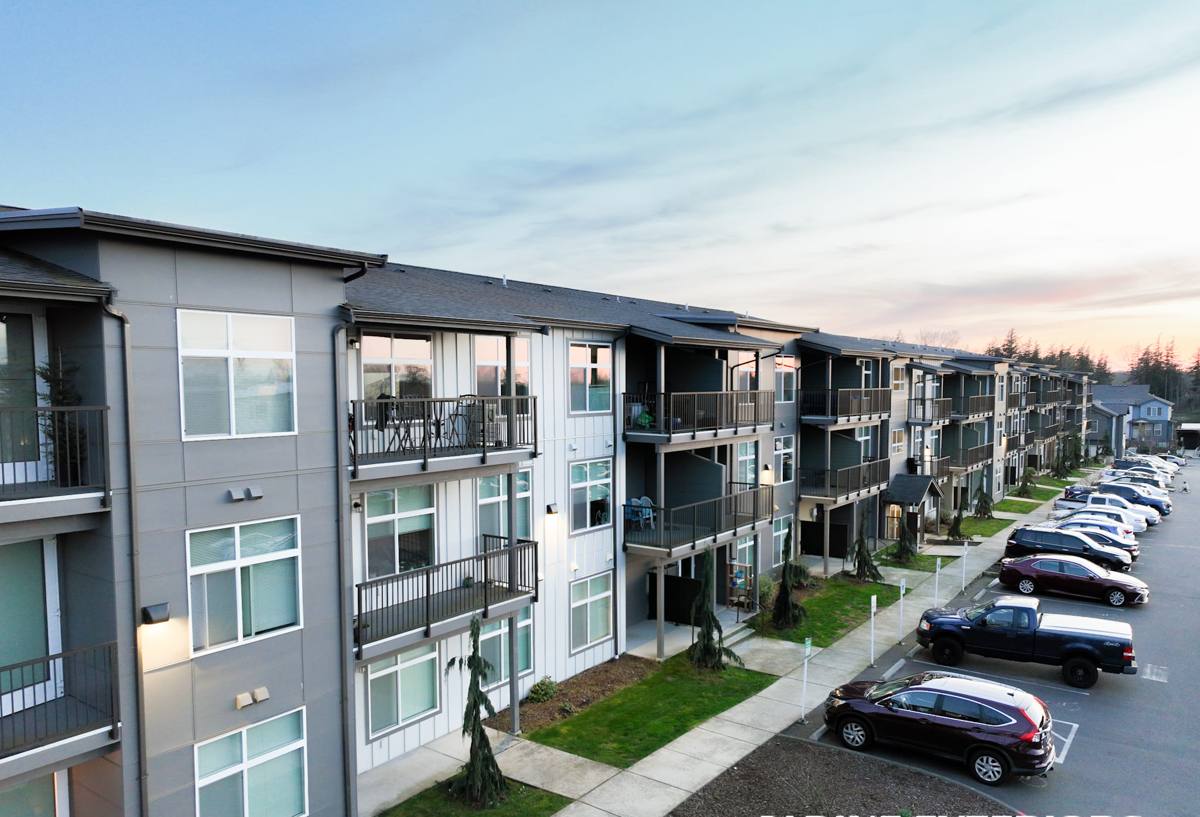
What Whatcom County's Climate Does to Old Windows
Three things drive most of the window failures we see in this part of Whatcom County:
- Salt air corrosion — metal hardware, screws, and aluminum spacer bars in older insulated glass units corrode faster near the bay, which is often the real cause of a fogged or failing seal, not just "age."
- Driving rain — wind off the water pushes rain sideways into gaps that would stay dry in a calmer climate, so poor flashing or a degraded sealant joint shows up as an active leak here much sooner.
- Moss and organic growth — the long wet season keeps sills, tracks, and exterior trim damp for extended stretches, which accelerates wood rot and lets moss and mildew get a foothold in places that never fully dry out.
Individually, none of these are dramatic. Together, over a Whatcom County winter repeated for years, they're why a window that looks fine from the street can have a soft sill, a corroded spacer, or a slowly failing seal underneath.
Signs Your Sehome Home Needs New Windows
Most homeowners don't call about windows until something is obviously wrong, but the earlier signs are usually visible if you know where to look:
- Fogging or a milky haze between panes — the seal on the insulated glass unit has failed and moisture is trapped inside.
- Windows that are hard to open, stick in the track, or won't stay up on their own — frame swelling or hardware corrosion.
- Cold drafts near the frame even with the window latched shut.
- Soft or discolored wood at the sill or lower frame corners — early rot, often from trapped moisture rather than a visible leak.
- Visible moss or dark streaking on the exterior trim around the window.
- A noticeable jump in heating costs without any other explanation.
Choosing the Right Window for Salt Air, Rain, and Moss Season
There's no single "best" window for every home — the right choice depends on the home's age, exposure, and budget. But some material and design trade-offs matter more in Sehome's climate than they would elsewhere.
| Frame Material | How It Handles This Climate | Trade-Offs |
|---|---|---|
| Vinyl | Doesn't rot or corrode; handles sustained moisture well; low maintenance | Can't be repainted; quality varies a lot between manufacturers |
| Fiberglass | Very stable in wet/dry cycling, strong resistance to warping and rot | Higher upfront cost than vinyl |
| Wood (clad exterior) | Warm interior look, exterior cladding protects from direct weather | Any gap in the cladding lets moisture reach the wood underneath — needs careful installation and upkeep |
| Aluminum | Strong and slim sightlines | Conducts cold and is more prone to corrosion near salt air unless properly finished |
As a matter of professional standard, we steer most Sehome clients away from bare aluminum frames and unclad wood on exposures that face the weather directly. It's not that those materials can't work — it's that they demand a level of maintenance and installation precision that most homeowners don't want to sign up for, and any lapse shows up faster here than in a drier climate. We'll walk through the honest trade-offs for your specific home rather than push one product line.
Glass Package Matters As Much As Frame
Low-E coatings and argon or krypton gas fills help with energy performance, but in this climate the more important spec is often the quality of the seal and spacer system, since that's what determines whether the unit stays clear and insulating for the long haul rather than fogging early.
What a Correct Window Replacement Job Actually Involves
Swapping in a new window is the easy part. The work that determines whether it lasts happens around it:
- Opening inspection — checking the sill, jack studs, and header for rot or moisture damage before anything new goes in.
- Flashing — properly lapped flashing tape and pan flashing at the sill, so any water that does get past the exterior finish drains out instead of soaking in.
- Air and water sealing — sealing the interior side for air control and the exterior side for water shedding, in that order and with compatible materials.
- Shimming and squaring — a window that's out of square will bind, leak at the corners, and wear its hardware out early.
- Insulation of the gap — low-expansion foam or backer rod and sealant around the frame, not stuffed fiberglass that leaves voids.
- Trim and finish work — interior and exterior trim reinstalled or replaced so the whole opening looks finished and stays weathertight.
Skip or rush any one of these steps and the window itself can be a good product and still fail early — which is why we treat installation quality as equal to product selection, not secondary to it.
Our Process, Start to Finish
- On-site assessment — we look at each window's condition, the framing behind it, and the specific exposure of that wall (some sides of a Sehome home take far more weather than others).
- Honest recommendation — which windows genuinely need replacing now, which can wait, and what material and glass package fits your budget and exposure.
- Written estimate — clear pricing with no surprise add-ons once work starts.
- Installation — proper flashing, sealing, and finish work as described above, done by people who do this daily, not as a side task.
- Final walkthrough — every window opened, closed, and checked with you before we consider the job done.
Window Replacement Checklist for Sehome Homeowners
Before you commit to a bid, it's worth confirming these points with whoever you hire:
- Does the estimate include sill and pan flashing, or just the window unit and labor to set it?
- What happens if rot or damage is found in the opening once the old window is out?
- Is the installer using low-expansion foam and proper backer rod/sealant, or just caulk around the edges?
- What's the manufacturer's warranty on the glass seal specifically, not just the frame?
- Is the installation labor itself warrantied separately from the product?
- Will the crew match trim profiles so the finished look is consistent with the rest of the house?
Cost Factors to Expect
| Factor | Why It Moves the Price |
|---|---|
| Frame material | Vinyl is generally the most budget-friendly; fiberglass and clad wood cost more upfront |
| Window size and style | Larger units, bay windows, and custom shapes cost more than standard double-hung or slider replacements |
| Condition of the opening | Hidden rot or framing damage found during removal adds labor and material |
| Number of windows | Doing a whole house at once typically brings a better per-window cost than one-offs |
| Access and height | Second-story or hard-to-reach windows take more time and equipment |
Whole-house window replacement projects in this region commonly land in the low-to-mid five figures depending on the count and materials, but the only way to get a real number is a walkthrough of your specific home — broad ranges like this can be misleading for planning a budget.
Why Hire a Crew That Already Works in Sehome
A contractor who works this part of Whatcom County regularly knows which walls take the brunt of the weather off the bay, what kind of rot patterns show up in homes of a certain era around Sehome, and how to flash and seal a window so it actually holds up through a full winter of driving rain rather than just looking finished on install day. That local pattern recognition is hard to replace with a generic install crew that isn't used to this climate, and it's usually the difference between a window that lasts fifteen-plus years and one that needs attention again in five.
If your windows are fogging, drafting, sticking, or just old enough that you're wondering, we're happy to take a look. Fill out the form below for a free, no-pressure estimate — we'll tell you honestly what needs doing now and what can wait.