 Whatcom County
 Roofing Built for Samish, Not for a Catalog Photo
Samish sits in a part of Whatcom County where the roof over your head does real work every month of the year. Moist marine air moves in off the water, rain arrives sideways more often than straight down, and the tree cover that makes this area beautiful also means shade, damp debris, and moss pressure that never fully lets up. A roof that would be fine in a dry inland climate can fail early here if it's installed without those conditions in mind. New roof installation in Samish isn't just about swapping old shingles for new ones — it's about building an assembly that sheds wind-driven rain, breathes properly, and resists moss and moisture instead of trapping it.
We've worked on homes throughout Whatcom County long enough to know which details matter here and which ones are just extra steps that don't pay off. This page walks through what a correct roof replacement looks like for a Samish property, the material trade-offs worth understanding, and how we run the job from first estimate to final cleanup.
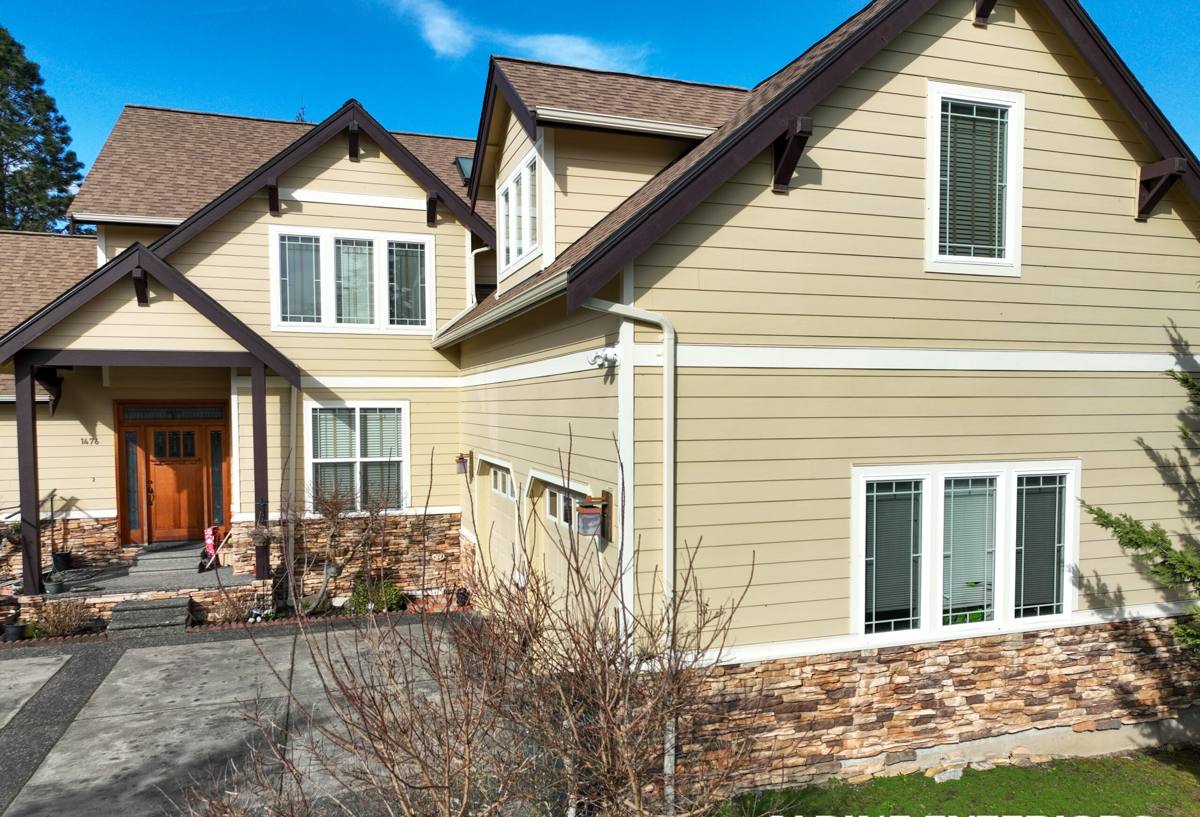
What Samish's Climate Does to a Roof
Salt Air and Corrosion
Homes closer to the water deal with airborne salt that accelerates corrosion on exposed metal — fasteners, flashing, and any hardware that isn't rated for it. Over years, this shows up as rust streaking, weakened fastener heads, and flashing that fails before the roofing material around it does. Material selection and fastener choice matter more here than in a landlocked neighborhood.
Driving Rain
Whatcom County storms often bring rain at an angle, not straight down. That means water gets pushed sideways under shingle edges, into valleys, and around anything penetrating the roof — vents, chimneys, skylights. A roof that only handles vertical rainfall well will leak here. Underlayment coverage and flashing detail work carry a lot of the load in this climate.
Moss Season
Shade, moisture, and mild temperatures give moss a long growing window in this part of the county. Moss holds water against the roof surface, works into shingle laps, and can lift edges over time. A new roof gives you a clean start, but how it's installed — ventilation, material choice, edge detail — determines how fast moss becomes a problem again.
Signs a Samish Roof Needs Replacing, Not Just Repairing
- Granule loss heavy enough that you're finding grit in gutters every season, not just after a storm
- Shingles that are curling, cupping, or cracking across large sections rather than a few isolated spots
- Soft or spongy decking felt underfoot in the attic, especially near valleys or eaves
- Daylight visible through the roof deck from inside the attic
- Moss that keeps returning within a season or two of cleaning, even after treatment
- Multiple active leaks, or one leak that keeps reappearing in a new spot after patching
- A roof approaching or past the manufacturer's expected service life for its material and exposure
One or two of these on their own might mean a repair is enough. Several at once, or a roof that's simply old and worn across its whole surface, usually means repair costs start competing with replacement costs without buying you much extra life.
What a Correct Installation Actually Involves
A roof is a system, not a single layer. Skipping or shortcutting any one part of it is where premature failures come from — and it's usually invisible from the ground until something goes wrong.
Tear-Off and Deck Inspection
We remove the old roofing down to the deck rather than layering over it. That lets us actually see the plywood or plank sheathing underneath and replace any sections that have gone soft from long-term moisture exposure — a common finding on older Whatcom County homes with a history of moss or slow leaks.
Underlayment
Given how much wind-driven rain this area sees, underlayment coverage isn't a place to cut corners. Ice-and-water shield or high-quality synthetic underlayment at eaves, valleys, and around penetrations gives the roof a real second line of defense if wind pushes water past the shingles themselves.
Flashing
Chimneys, skylights, sidewalls, and vent pipes are where most roof leaks actually start — not the open field of shingles. Correct step flashing, counter-flashing, and pipe boots, in materials that hold up to salt air, are non-negotiable details for us.
Ventilation
Balanced intake and exhaust ventilation keeps the attic dry and temperature-regulated, which slows moss growth on the roof surface and protects the deck from the underside. A roof can look great from the street and still be failing early because the attic underneath it is trapping moisture.
Final Detailing
Drip edge, ridge caps, and starter strips are small components that get overlooked on rushed jobs. They're also exactly what determines whether wind-driven rain gets pushed off the roof or finds a way underneath it.
Material Options for Samish Homes
There's no single "best" roofing material — the right choice depends on your home's exposure, roof pitch, budget, and how much long-term maintenance you want to take on. Here's how the common options stack up for this specific climate.
| Material | Moss / Moisture Resistance | Typical Lifespan | Notes for Samish |
|---|---|---|---|
| Architectural asphalt shingle | Good, especially with algae-resistant granules | 25–30 years | Most common choice locally; good balance of cost and durability |
| Standard 3-tab shingle | Fair | 15–20 years | Lower upfront cost, but shorter life under heavy moss pressure |
| Metal panel roofing | Excellent — sheds moisture, little surface for moss to grip | 40–50+ years | Higher upfront cost; needs corrosion-rated fasteners near the water |
| Cedar shake | Requires ongoing upkeep to resist moss and rot | 20–30 years with maintenance | We're honest with clients that this is the highest-maintenance option in a wet, shaded climate |
We don't push one product line over another as a rule — we'll tell you plainly what a given material means for maintenance and moisture behavior on your specific roof, and let you decide what trade-off makes sense for your home and budget.
Our Process, Start to Finish
- On-site inspection — we look at the deck, ventilation, flashing points, and current material condition, not just the shingles from the ground
- Written estimate — a clear scope of work and price, with material options explained so you're choosing with full information
- Scheduling around weather — we plan tear-off days with Whatcom County's rain patterns in mind so your home isn't left exposed
- Tear-off and deck repair — old material removed, deck inspected and repaired where needed
- Underlayment and flashing installation — the layers that do the real waterproofing work
- Roofing material installation — installed to manufacturer spec, not shortcuts
- Ventilation check — intake and exhaust confirmed balanced before we call the job done
- Cleanup and final walkthrough — magnetic sweep for stray fasteners, debris hauled off, and a walkthrough so you know exactly what was done
What Affects the Cost
| Factor | Why It Matters |
|---|---|
| Roof size and pitch | More surface area and steeper pitches both add labor time and safety requirements |
| Material choice | Asphalt, metal, and cedar carry very different material costs per square |
| Deck condition | Rotten or soft sheathing found during tear-off requires repair before new material goes on |
| Number of penetrations | Chimneys, skylights, and vents each need individual flashing work |
| Access and site conditions | Tree cover, tight lots, or difficult staging areas can add time |
| Tear-off layers | Removing multiple old layers takes longer than a single-layer tear-off |
We don't quote a number without seeing the roof first — anyone who does is guessing. What we can tell you honestly is that the biggest cost swings usually come from deck condition and material choice, not from the labor itself.
Why a Local Crew Matters for This Job
Roofing crews that work across many different climates tend to build to a generic standard. A crew that works Whatcom County regularly, including areas like Samish, already knows how much underlayment coverage this rain pattern actually requires, which fastener grades hold up near the water, and how aggressively moss comes back if ventilation and edge details aren't handled right the first time. That's not something you learn from a manual — it's something you learn from doing the work in this specific climate, year after year.
It also matters for accountability. A local company is easy to reach if a question comes up after the job, and has a reputation in the county worth protecting. That's a different relationship than a crew that's in town for one project and gone.
Keeping Your New Roof Performing After Install
A correctly installed roof still benefits from basic upkeep, especially with the moss pressure common in this area.
- Keep gutters clear so water isn't backing up under roof edges
- Trim back overhanging branches to reduce shade and debris buildup on the roof surface
- Have moss growth addressed early rather than letting it establish over a full season
- Schedule a visual roof check after major windstorms, particularly around flashing points
- Watch for granule buildup in gutters as an early sign of wear over the years ahead
If you're weighing repair versus replacement, or just want an honest look at what condition your roof is actually in, we're happy to come take a look. Reach out for a free, no-pressure estimate using the form below.