 Whatcom County
 Bellingham's Climate Is Hard on Roofs
A roof in Bellingham does a different job than a roof almost anywhere else in the country. Between the salt air rolling in off Bellingham Bay, the driving rain that comes sideways off Puget Sound in the winter months, and a moss season that can stretch from October well into spring, Whatcom County roofs are under nearly constant low-grade attack. None of it is dramatic on its own. It's the accumulation — a few years of trapped moisture here, a little corrosion there, moss holding water against shingles through a wet winter — that eventually turns a small problem into a leak, and a leak into interior damage.
Roof repair done right in this area isn't just patching a hole. It's understanding why that spot failed in the first place, because in Whatcom County the cause is rarely "the roof just got old." It's usually moisture that had somewhere to sit, or a detail that was never built to shed water fast enough for how much of it we get.
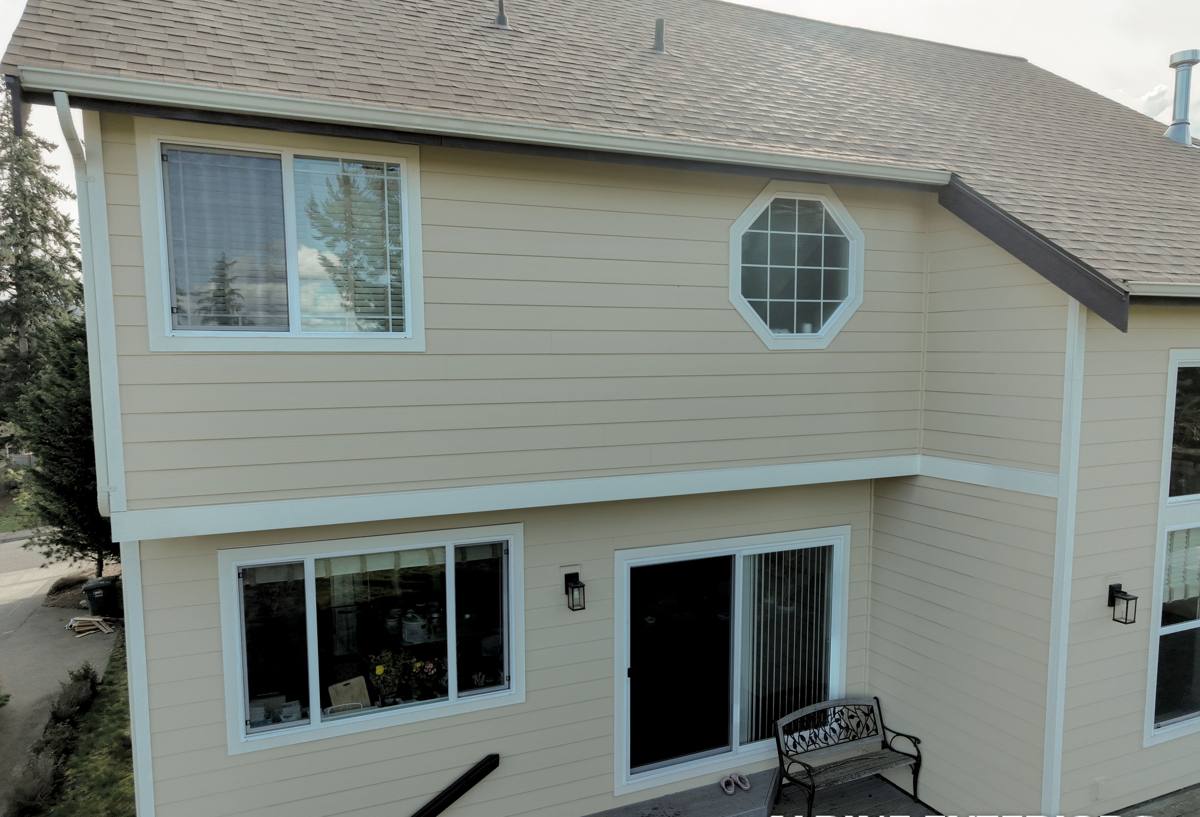
Signs a Bellingham Roof Needs Repair, Not a Full Tear-Off
Most homeowners call us after they've already noticed something — a stain on a ceiling, a damp smell in the attic, or moss they can see from the driveway. Some of the more common early signs we look for on Whatcom County homes include:
- Ceiling or wall stains that show up or worsen after a heavy rain event, especially wind-driven rain
- Granules collecting in gutters or at downspout outlets, a sign shingles are wearing thin
- Visible moss or dark algae streaking, particularly on north-facing slopes that stay shaded and damp longer
- Soft or spongy decking felt underfoot in the attic, usually near a valley, chimney, or vent
- Lifted, curled, or missing shingles after a windstorm off the water
- Rusted or separated flashing around chimneys, skylights, and roof-to-wall transitions
Catching these early is the difference between a repair that takes a day and one that turns into replacing sheathing, insulation, and drywall. A roof that's structurally sound with isolated damage is almost always a repair candidate — we don't push a full replacement on a roof that doesn't need one.
What a Correct Roof Repair Actually Involves
A repair that actually holds up through another Whatcom County winter has to address the water path, not just the visible symptom. Here's what that looks like in practice.
Flashing and Penetrations
Most leaks we find in this area trace back to flashing — the metal that seals joints at chimneys, skylights, vent pipes, and where a roof meets a wall. Flashing takes the brunt of driving rain because it's at every seam and transition. A proper repair means removing the failed section, checking the underlayment beneath it for hidden rot, and installing new flashing with correct laps and sealant, not just caulking over the old metal.
Shingle and Underlayment Repair
When shingles are cracked, lifted, or missing, we pull back the surrounding courses to check the underlayment and decking before replacing anything. Salt-laden air and constant moisture accelerate wear on asphalt shingles here compared to drier inland climates, so we match materials and fastening patterns to hold up against wind off the bay, not just against a dry-climate baseline.
Moss and Moisture Remediation
If moss caused or contributed to the damage, treating the moss itself is part of the repair, not an afterthought. That means safe removal, treatment to slow regrowth, and — where it's the real issue — addressing the shade or drainage pattern that let moss take hold in the first place.
Gutter and Drainage Tie-In
A roof repair that ignores the gutter system is only half a repair. If water isn't leaving the roof efficiently, whatever we fix is working against a drainage problem that will eventually cause the same failure again. We check that gutters, downspouts, and drip edges are actually moving water off the roof and away from the fascia.
Common Causes of Roof Leaks in Whatcom County
| Cause | Why It Happens Here | Typical Fix |
|---|---|---|
| Moss buildup | Long wet, shaded season lets moss hold moisture against shingles for months at a time | Removal, treatment, targeted shingle repair or replacement in affected area |
| Flashing failure | Metal seams take the most direct hit from wind-driven rain | Remove and reflash with correct lap and sealant, check decking underneath |
| Wind-lifted shingles | Exposure to storms coming off Puget Sound and Bellingham Bay | Reseat or replace damaged shingles, check nail pattern and adhesive seal |
| Clogged gutters/valleys | Debris from evergreen tree cover common in Whatcom County backs water up under shingles | Clear drainage path, repair any decking damage from standing water |
| Corroded fasteners | Salt air accelerates corrosion on exposed metal | Replace with corrosion-resistant fasteners rated for coastal exposure |
Our Roof Repair Process
We keep the process straightforward because a homeowner dealing with a leak doesn't need extra steps between them and a dry roof.
- Inspection. We walk the roof and attic, not just look from the ground, to find the actual source of the leak — which is often not directly above the stain you see inside.
- Honest assessment. We tell you plainly whether this is a repair, and if there's a broader issue (widespread moss, aging underlayment, multiple failure points) that means repair is a short-term fix, we say so.
- Written estimate. You get a clear scope and price before any work starts — no surprises once we're on the roof.
- Repair. We address the water path fully: flashing, shingles, decking, and drainage as needed, not just the visible patch.
- Cleanup and check. We clear debris and moss removal waste, and confirm drainage is working before we consider the job done.
Repair or Replace? How We Help You Decide
Not every roof in this condition needs to come off. But sometimes a repair is a patch on a roof that's genuinely near the end of its service life, and it's fair for a homeowner to know that before spending money. We weigh a few factors honestly with you.
| Factor | Favors Repair | Favors Replacement |
|---|---|---|
| Age of roofing material | Well within expected lifespan | Near or past typical service life for the material |
| Extent of damage | Isolated to one area or detail | Multiple leak points or widespread wear across slopes |
| Decking condition | Solid, no rot found on inspection | Soft or rotted decking in several areas |
| Moss/algae history | First occurrence, manageable | Chronic, recurring despite past treatment |
| Overall roof appearance | Consistent color, granule loss minimal | Significant granule loss, curling shingles across the roof |
Broadly, a targeted repair on a roof with years of life left runs a modest fraction of what a full replacement costs — but the right number depends on what we actually find once we're up there, which is why we inspect before we quote.
Moss and the Long Wet Season
Moss deserves its own section because it's one of the most consistent issues we see on roofs throughout Whatcom County. It's not just cosmetic. Moss holds moisture against the shingle surface for extended periods, which softens the mat underneath and shortens the shingle's working life. On shaded, north-facing slopes — common on wooded Bellingham lots — moss can establish itself within a season or two if it isn't addressed.
Zinc or copper control strips near the ridge can help slow regrowth over time by letting rain carry trace metal down the roof slope, but they're a maintenance tool, not a substitute for removing established moss and repairing any damage it's already caused. If your roof has heavy moss, that's worth having looked at even if you haven't noticed a leak yet — it's easier to deal with before it becomes one.
Why Hire a Crew That Already Works Bellingham
Roof repair looks different in a marine climate than it does in a dry inland one, and a crew that mostly works other regions doesn't always build in the extra margin this weather demands — tighter flashing laps, corrosion-resistant fasteners, drainage details sized for how much rain actually falls here. Working across Whatcom County regularly means we see the same failure patterns repeat on similar homes, so we know where to look first and what tends to actually cause the leak versus what's just a symptom.
It also means we're not guessing at material choices. What holds up against Bellingham Bay wind and a long moss season isn't automatically the same as what works fine somewhere with a drier, milder roof climate.
After the Repair: Keeping It That Way
A repair is only as good as the maintenance that follows it, especially in a climate that never really gives a roof a break. A short routine goes a long way:
- Clear gutters and valleys of debris at least twice a year, more often under heavy tree cover
- Have moss treated or removed before it spreads across a full slope
- Walk the attic after major storms to check for new staining early
- Keep an eye on flashing around chimneys and skylights, since these are the first spots to show wear
- Trim back overhanging branches that keep sections of roof shaded and damp
If you're dealing with a leak, visible moss, or just want an honest read on where your roof stands, we're happy to take a look. Fill out the form below for a free, no-pressure estimate — we'll tell you straight whether it's a repair, and what that actually involves.