 Whatcom County
 Why Bellingham Siding Wears Differently Than Siding Inland
Bellingham sits close enough to the water that homes take a different kind of beating than siding fifty miles inland. Salt-laden air off Bellingham Bay accelerates corrosion on fasteners and trim, driving rain off the Strait pushes moisture sideways into seams and laps that would stay dry in a gentler climate, and a long, gray moss season keeps north- and west-facing walls damp for months at a time. None of that means siding fails fast here — it means it fails in specific, predictable places, and a repair crew that doesn't know those patterns ends up fixing the wrong thing.
We work Bellingham and the rest of Whatcom County regularly, so when we get a repair call we already have a short list of likely causes before we even look at the wall. That's not a sales pitch — it's just what happens when you see the same climate stress on house after house.
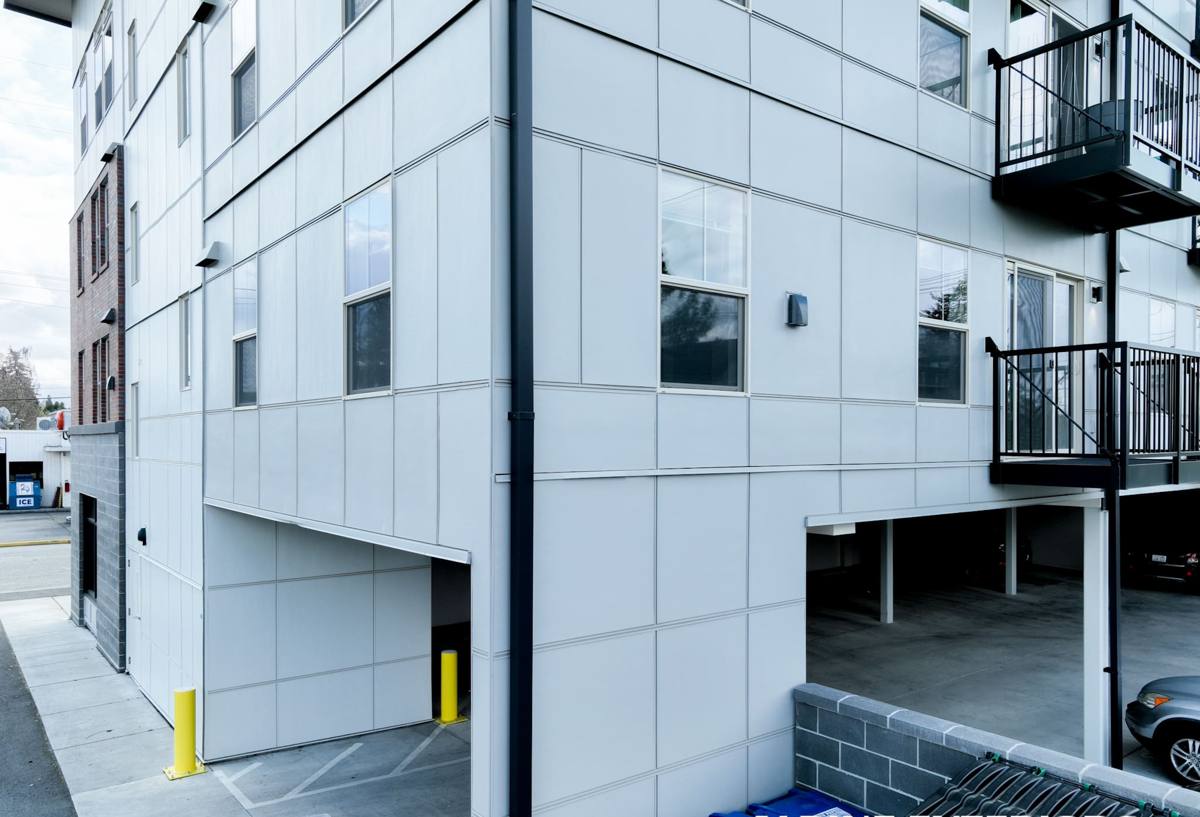
Signs Your Siding Needs Repair, Not Replacement
Most siding problems we see in Bellingham are localized, not whole-house failures. Catching them early is what keeps a repair a repair instead of turning into a re-side. Watch for:
- Soft or spongy spots when you press on the siding, especially near the bottom courses and around windows
- Dark streaking or persistent green film that comes back within weeks of cleaning
- Visible gaps or separation at butt joints and corner trim
- Paint that's bubbling, peeling, or chalking unevenly in patches rather than across the whole wall
- Fastener heads showing rust bleed or backing out of the siding
- Warped, cracked, or bowed boards, particularly on the side of the house that faces prevailing weather
Any one of these on its own is usually a repair job. Several of them showing up together, especially combined with soft sheathing underneath, is a sign the damage has spread further than the surface and needs a closer look before we commit to a scope of work.
What a Correct Siding Repair Actually Involves
Diagnosing the cause before touching a board
Bad siding repair treats the symptom — pull off a cracked board, nail up a new one, paint it, done. Correct siding repair starts by figuring out why that board failed in the first place. Was water getting behind it because of a caulking failure at a trim joint? Was it splashback from a downspout dumping at the base of the wall? Was moss holding moisture against the surface long enough to start rot underneath? If we don't answer that question, we're just guaranteeing the replacement fails the same way.
Checking what's behind the siding
Once a section is opened up, we look at the water-resistive barrier and sheathing underneath. If there's soft or delaminating sheathing, that has to be addressed — patching siding over compromised sheathing just hides a bigger problem for a year or two before it resurfaces worse. This is the step that gets skipped most often on rushed repair jobs, and it's the one that actually determines whether the repair holds.
Matching materials the right way
If the original siding is fiber cement, we match profile, exposure, and color as closely as the product line allows. If the home is currently sided in something we don't install — vinyl, LP SmartSide, cedar, or similar — we'll still do honest repair work with compatible materials where that's the right call, but we'll also tell you plainly if the underlying material is the reason the damage keeps recurring. That's a conversation, not an upsell.
Repair vs. Replace: How We Make the Call
| Situation | Typical Cause | Usual Recommendation |
|---|---|---|
| One or two damaged boards, sheathing dry underneath | Impact damage, isolated caulk failure, one bad board | Spot repair |
| Damage clustered around a window, door, or downspout | Flashing or trim detail failing at that one location | Localized repair plus flashing/trim fix |
| Soft siding and sheathing across one whole wall face | Chronic moisture exposure — usually the weather side or a shaded, moss-prone wall | Larger section replacement, sheathing repair included |
| Failures scattered across multiple walls, siding original and aging out | Material reaching end of service life, not a single defect | Full re-side worth pricing out |
We'll tell you honestly which category your home falls into. A lot of Bellingham homes we look at genuinely just need a targeted repair — we're not in the business of selling a full re-side to someone who needs three boards replaced.
Why We Repair and Replace With James Hardie Fiber Cement
When a repair calls for new material — whether it's a handful of boards or a full section — we use James Hardie fiber cement, and that's the only siding product we install on any project, repair or new construction. It's a decision based on how the material performs in exactly the conditions Whatcom County throws at it: fiber cement doesn't absorb moisture the way wood-based products can, it's non-combustible, and its factory-applied ColorPlus finish holds up to sun and salt air without the repaint cycle that wood and some engineered products need. Hardie's HZ5 formulation is specifically engineered for cold, wet climates like ours.
We don't install vinyl, LP SmartSide, cedar, Cemplank, Allura, or primed spruce, and we won't pretend those products don't have legitimate uses elsewhere — but for a coastal Pacific Northwest climate with the moisture load Bellingham gets, we've standardized on Hardie because it's what we're comfortable putting our name behind for the long haul. When we're patching a home already sided in Hardie, matching material is straightforward. When we're replacing a larger damaged section, we'll walk you through why Hardie is what goes back up.
Our Repair Process for Bellingham Homes
- Inspection. We look at the visible damage, the surrounding siding, trim, flashing, and — where accessible — what's happening behind the wall.
- Honest scope. You get a plain explanation of what's actually wrong, what caused it, and whether it's a repair or something bigger.
- Written estimate. No pressure, no inflated scope. If it's a small job, we say so.
- Repair work. Removal of damaged material, correction of the underlying cause (flashing, caulking, drainage) where relevant, sheathing repair if needed, and installation of matched material.
- Finish and check. Caulking, paint touch-up where applicable, and a final look to confirm the repair sheds water the way it's supposed to.
Maintenance Between Repairs: Managing Moss, Mildew, and Salt Air
A good repair lasts a lot longer with basic upkeep in between, especially on shaded or west-facing walls that hold onto moisture longest through Whatcom County's wet months. A simple seasonal routine goes a long way:
- Rinse siding once or twice a year, more often on north-facing or heavily shaded walls where moss takes hold fastest
- Keep gutters clear so overflow isn't running straight down the siding face
- Trim back shrubs and trees that are keeping a wall shaded and damp
- Re-caulk gaps at trim, corners, and penetrations as soon as you notice them opening up
- Walk the exterior once a year and press-test any spots that look discolored or swollen
None of this requires a contractor — it's just the kind of five-minute-a-season habit that keeps small problems from becoming repair calls.
What Happens If Repairs Get Put Off
Siding damage in this climate doesn't stay the same size. A soft board left alone through one more wet season usually means the sheathing behind it starts to go, and sheathing repair is a bigger, more expensive job than a board swap. A gap at a trim joint that's letting in driving rain doesn't dry out on its own between storms — it just keeps feeding moisture into the wall assembly. Bellingham's wet season is long enough that "we'll get to it next summer" often means another six or eight months of water finding its way in. Catching things early is the single biggest factor in whether a job stays a repair or turns into a replacement.
Why a Local Crew Matters for Repair Work
Siding repair is detail work — matching an existing profile, understanding why a specific wall of a specific house is failing, knowing which flashing details tend to give out first in this climate. A crew that works Whatcom County regularly has already seen the recurring patterns: which orientations take the worst weather, where moss builds up fastest, which older siding installations in the area are prone to the same handful of failure points. That's knowledge you don't get from a crew passing through once. We're already working in Bellingham and the surrounding area, which also means a faster response when a repair issue turns into something you don't want to sit on.
If you've got siding damage on a Bellingham home — whether it's a couple of boards or something that's spread further — we'll come take an honest look. The estimate is free, there's no pressure to turn it into more than it needs to be, and you'll get a straight answer about what's actually going on with your walls. Fill out the form below to get a repair estimate started.