 Whatcom County
 Blaine's Marine Climate: What Your Siding Is Actually Up Against
Blaine sits at the northern edge of Whatcom County, right on the water and close enough to the border that the weather feels more Pacific marine than "typical Washington." That location is beautiful, but it's also brutal on exterior building materials in three specific ways: salt-laden air, wind-driven rain that hits siding sideways instead of straight down, and a moss and algae season that can run eight or nine months out of the year in shaded, damp spots. A siding product that performs fine in a drier inland climate can fail early here, and a siding job that's installed "close enough" instead of to spec will show it faster in Blaine than almost anywhere else in the county.
Salt Air and Corrosion
Homes near the water pick up airborne salt that settles on siding, trim, and fasteners. Over years, that salt exposure accelerates corrosion on metal fasteners and flashing, and it breaks down cheaper coatings and finishes faster than inland exposure would. It's not dramatic — nobody notices salt damage in year one — but it's cumulative, and it's one of the biggest reasons material choice and installation detail matter more here than in a typical subdivision twenty miles inland.
Driving Rain and Wind Exposure
Open water means open wind. Storms off the Salish Sea push rain sideways into wall assemblies instead of letting gravity do the work, which puts real pressure on every seam, joint, and penetration in a siding system. A house with proper flashing and a working drainage plane sheds that water. A house without one lets water track behind the siding, where it can sit against sheathing and framing long enough to cause rot — often invisibly, until a wall starts to feel soft.
The Long Moss Season
Whatcom County's wet, mild winters and shoulder seasons are ideal growing conditions for moss and algae, especially on north-facing walls, under eaves, and anywhere shaded by trees or a neighboring structure. Left unchecked, moss holds moisture against a wall surface for extended periods, which shortens the useful life of any siding material that isn't engineered to resist it.
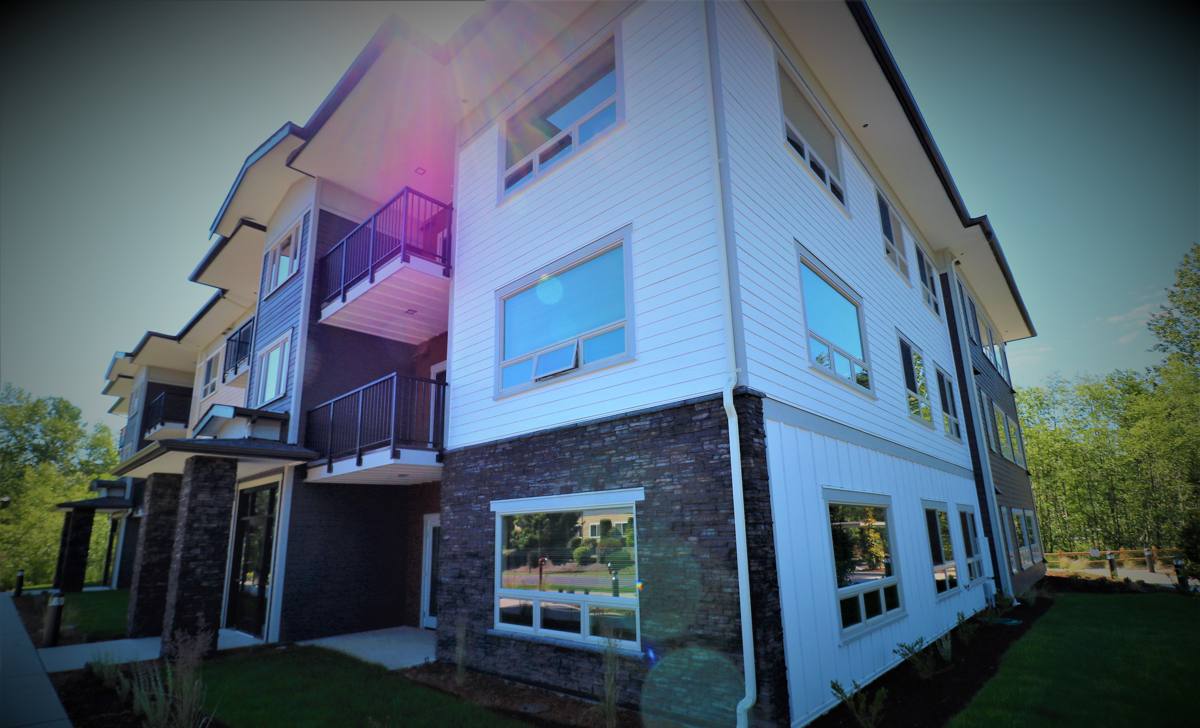
Why We Only Install James Hardie Fiber Cement Here
We install James Hardie fiber cement siding exclusively — not vinyl, not LP SmartSide, not cedar, not other fiber cement brands. That's a deliberate standard, not a sales preference, and in a climate like Blaine's the reasoning is straightforward:
- It's non-combustible. Fiber cement doesn't feed a fire the way wood-based products can, which matters for insurance and peace of mind alike.
- It doesn't rely on paint film alone. Hardie's ColorPlus factory finish is baked on and warranted separately from the substrate, so it holds up to UV and salt exposure better than field-applied paint on wood-based products.
- It's engineered by climate zone. James Hardie formulates its HardieZone products differently depending on whether a region sees hard freeze-thaw cycles or persistent damp, mild conditions. Whatcom County's coastal climate falls closer to the wet, humid end of that range, and the product we spec reflects that.
- It carries a real, transferable warranty that stays with the house through a sale, which matters in a market where a lot of buyers are looking closely at exterior condition before they make an offer.
None of this means other products are junk — cedar looks great, vinyl is cheap, LP SmartSide has its fans. We just don't think any of them hold up as well as Hardie does against salt air, driving rain, and a long moss season, and we'd rather install one product correctly than install several products at a discount.
What Correct Installation Actually Involves
Fiber cement siding is only as good as the assembly behind it. A huge share of "siding problems" people call us about aren't the siding at all — they're a missing drainage gap, bad flashing, or fasteners driven wrong. On a marine-exposed property like a Blaine home, these details aren't optional extras; they're the difference between siding that lasts decades and siding that has to be partially redone in five years.
Drainage Plane and Rain Screen
Siding should never sit flush against the weather-resistive barrier. A proper installation includes a drainage gap that lets any water that gets behind the siding drain out and lets the wall assembly dry. In a high-rain, high-humidity area like this one, skipping that gap is one of the most common causes of hidden rot.
Flashing and Water Management
Every window, door, deck ledger, and roof-to-wall transition is a place water wants to get behind the siding. Correct flashing — installed in the right order, lapped the right direction, sealed where it needs to be sealed and left open where it needs to drain — is what actually keeps a house dry, not the siding material itself.
Fastening and Joints
James Hardie publishes specific fastening patterns, clearances, and gap requirements for a reason. Nailing too tight, too close to an edge, or through the wrong zone of the board can crack panels or void warranty coverage. Joints and butt seams need to be treated correctly — caulked where Hardie specifies, left as a shadow gap where that's the better detail — rather than just caulked everywhere out of habit.
Comparing Siding Options for a Blaine Home
| Material | Salt Air / Moisture Behavior | Moss & Algae Resistance | Typical Maintenance | Fire Rating |
|---|---|---|---|---|
| James Hardie Fiber Cement | Engineered for wet, humid coastal zones | Factory finish resists growth well; still needs occasional washing | Low — periodic rinse, no repainting for years | Non-combustible |
| Vinyl | Can warp/fade with sun and salt exposure over time | Moderate; seams and laps trap moisture and debris | Low, but limited repair options if damaged | Combustible, can melt/deform |
| LP SmartSide (engineered wood) | Wood-based; more sensitive to sustained moisture exposure | Moderate; relies heavily on coating integrity | Coating needs monitoring, especially at cut edges | Combustible |
| Cedar | Attractive but absorbs moisture; needs consistent upkeep | Low without regular treatment; prone to moss in shaded areas | High — refinishing/sealing on a recurring cycle | Combustible |
This isn't a knock on the other materials — it's why, specifically, we've standardized on one product for a climate like this one instead of offering all four and letting price alone decide.
Our Process, Start to Finish
Every job starts with a walk-around of the house, not just a quote based on square footage. We're looking at exposure — which walls take the most wind-driven rain, where moss is already established, where the existing siding or trim shows signs of past water intrusion — because that changes how we detail the job, not just what it costs.
- Site assessment and measurement, including a look at existing flashing, trim, and any soft spots in the wall.
- Removal of existing siding and inspection of the sheathing underneath before anything new goes up.
- Repair of any damaged sheathing or framing found during tear-off — this gets flagged and discussed before we cover it back up.
- Installation of a proper weather-resistive barrier and drainage gap.
- Flashing at every window, door, and penetration, installed in the correct sequence.
- James Hardie panel or lap installation to manufacturer fastening spec.
- Trim, caulking, and final detail work.
- Site cleanup and a walkthrough with the homeowner.
Keeping Moss and Algae From Taking Over
No siding product is moss-proof if it's in a shaded, damp spot long enough — that's a function of sun exposure and airflow as much as material. But the finish and substrate do matter. Hardie's factory-applied ColorPlus finish is more resistant to the surface staining that moss and algae cause than field-painted wood-based sidings, and because it doesn't rely on absorbing and releasing moisture the way wood does, it doesn't feed growth the same way. On top of material choice, a few installation and maintenance habits go a long way here:
- Trim back vegetation that keeps a wall shaded and damp longer than it needs to be.
- Make sure gutters are clear and downspouts actually direct water away from siding, not down the face of it.
- Rinse north-facing and shaded walls once or twice a year before moss gets a foothold — it's far easier to prevent than to remove.
- Have caulking and joints checked periodically; a failed joint is a spot where moss-holding moisture can sit longer than it should.
What to Look For Before You Hire
- Do they install to James Hardie's published fastening and clearance specs, not just "however we've always done it"?
- Will they show you the drainage plane and flashing details before the siding goes on, not just after?
- Do they inspect and repair sheathing during tear-off, or just re-side over whatever's underneath?
- Are they familiar with Blaine and Whatcom County's wind and rain exposure, or is this their first coastal job?
- Is the warranty actually transferable if you sell the house?
Why a Crew That Already Works Blaine Matters
Siding installation isn't identical everywhere. A crew that mostly works drier, inland jobs can still do competent work, but they may not think as hard about drainage gaps, salt-tolerant fastener choices, or moss-prone shaded elevations because those aren't daily problems where they usually work. A crew that already works Whatcom County's coastline sees this exposure regularly enough that it shapes how the job gets detailed from the start — not as an afterthought once a problem shows up.
That local familiarity also means fewer surprises: knowing what typical wall assemblies and sheathing conditions look like on homes in this area, what siding is already failing early (and why), and how to plan around this region's weather windows for tear-off and installation.
If you're weighing a siding replacement on a Blaine home, we're happy to take a look and give you a straightforward, no-pressure estimate — what we'd install, why, and what it involves for your specific house.