 Whatcom County
 Siding Installation in Blaine: Built for a Coastal Border Town
Blaine sits about as close to salt water and the Canadian border as a Whatcom County home can get, and that location shapes what siding survives here and what doesn't. Between the marine air rolling off Semiahmoo Bay and Drayton Harbor, the driving rain that comes with winter storms off the Strait of Georgia, and a moss season that stretches from fall through spring, Blaine homes take on more moisture exposure than siding manufacturers assume in their generic installation guidelines. A siding job done "by the book" for a dry inland climate is not the same job that holds up here.
We install James Hardie fiber cement siding exclusively, and we install it to specifications that account for what Blaine actually throws at a house. This page covers what that means in practice: what the climate demands, what a correct installation includes, how our process works, and why local experience matters as much as the product itself.
What Blaine's Climate Does to Siding
Salt Air and Corrosion
Homes within a mile or two of Drayton Harbor, Semiahmoo Bay, or Birch Bay see salt-laden air more consistently than siding elsewhere in the county. Salt accelerates corrosion on fasteners, flashing, and any metal component in the wall assembly. It also settles into porous or poorly sealed siding surfaces, which is part of why we're particular about corrosion-resistant fastener specs and factory-finished products rather than field-painted ones that leave cut edges and fastener heads more exposed to that salt exposure over time.
Driving Rain
Blaine's exposure to weather systems moving through the Strait means rain here often arrives sideways, not straight down. Wind-driven rain finds every gap in a wall assembly that vertical rain would never reach — poorly lapped seams, under-caulked trim, penetrations around vents and fixtures. This is a water-management problem as much as a siding-material problem, and it's why house wrap detailing, flashing, and drainage planes matter as much as the siding panel itself.
Moss and Prolonged Dampness
Whatcom County's moss season isn't a cosmetic footnote — sustained dampness under moss growth or algae film keeps a wall surface wet far longer than an open, sun-exposed wall would stay. Materials that absorb moisture or swell when wet are working against you for months at a time in a climate like this. Non-combustible, dimensionally stable fiber cement handles that sustained dampness without the swelling, softening, or rot risk that wood-based and some engineered wood siding products carry.
Why We Install Only James Hardie
We don't install LP SmartSide, vinyl, Cemplank, Allura, primed spruce, or cedar. That's a deliberate standard, not a limitation of what we're capable of installing. Each of those products has legitimate uses and each has real trade-offs — engineered wood products can be sensitive to moisture at cut edges and seams if not maintained meticulously, vinyl can warp or crack in temperature swings and doesn't offer the same fire performance, and natural wood siding (cedar, primed spruce) requires an ongoing maintenance commitment that most homeowners underestimate when they choose it, especially in a wet coastal climate like Blaine's.
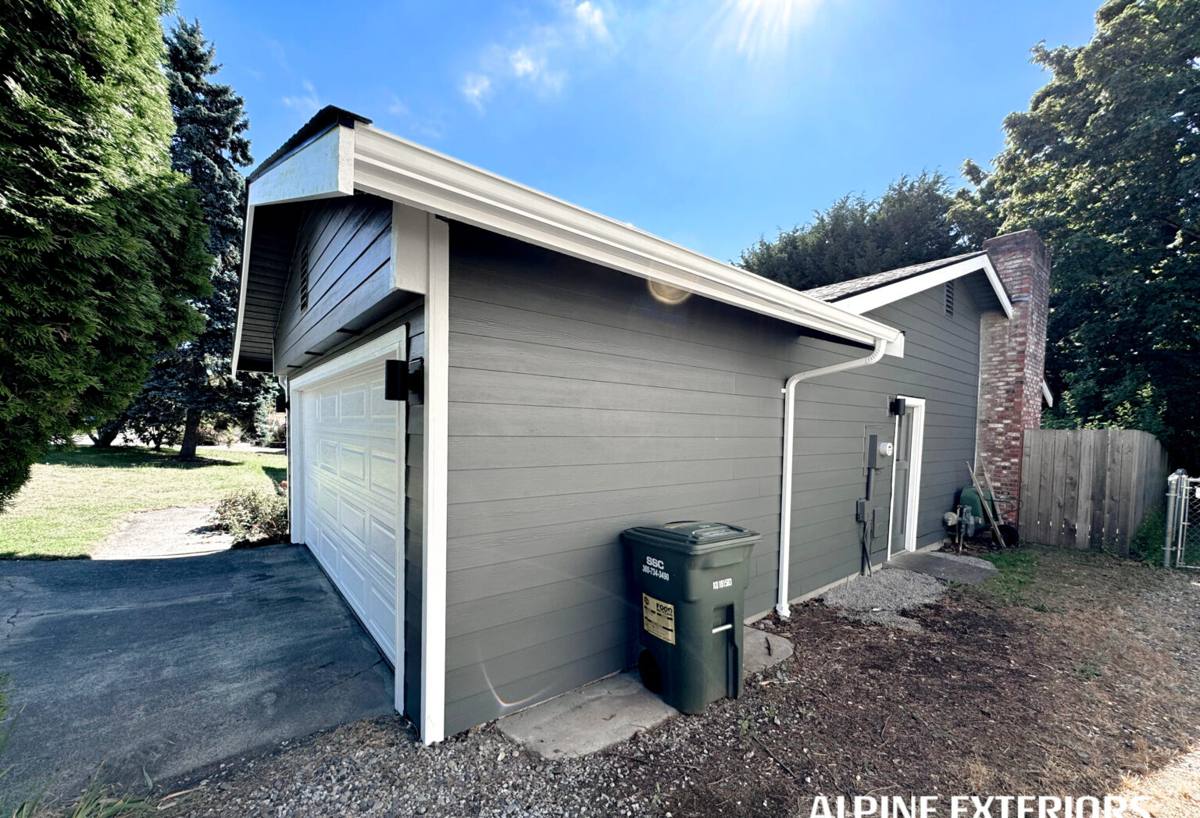
James Hardie fiber cement is non-combustible, holds its factory-applied ColorPlus finish far longer than field-applied paint, and Hardie engineers specific product lines (HZ5 for our climate zone) for moisture and temperature performance in exactly the conditions we deal with here. It comes with a strong, transferable manufacturer warranty backed by a company with decades of fiber cement manufacturing behind it. When we stand behind an installation in a climate as demanding as Blaine's, we want a product with that track record on the wall.
Hardie Product Lines We Use Locally
| Product | Common Use | Why It Fits Blaine |
|---|---|---|
| HardiePlank Lap Siding | Primary wall cladding | Most common profile; factory ColorPlus finish resists salt-air fading and moisture intrusion at the surface |
| HardiePanel Vertical Siding | Accent walls, gables, modern facades | Fewer horizontal laps means fewer water-entry points on wind-exposed elevations |
| HardieTrim | Corners, window and door casing, fascia | Matches the wall system's moisture and dimensional stability at vulnerable transition points |
| HardieSoffit | Eaves and overhangs | Vented options manage moisture in the attic space, relevant given our humidity levels |
What a Correct Installation Involves
The siding panel is only part of the system. Most siding failures we see on older Blaine homes trace back to installation shortcuts in the parts you can't see once the job is finished, not to the cladding material itself.
- Weather-resistant barrier: A continuous, properly lapped house wrap or building paper behind the siding, integrated correctly with window and door flashing — not just stapled up and covered.
- Flashing at every penetration: Windows, doors, vents, hose bibs, and light fixtures each need flashing detailed to shed water outward, not into the wall cavity.
- Rainscreen or drainage gap where appropriate: A furred-out gap behind the siding lets any moisture that does get past the cladding drain and dry rather than sit against the wall sheathing.
- Correct fastener spec and placement: Hardie specifies fastener type, length, and placement by product and application; corrosion-resistant fasteners matter more here given the salt air.
- Proper clearances: Minimum gaps from grade, roofing, decks, and other trim so the bottom edge of the siding isn't sitting in standing water or trapped moisture.
- Caulking only where Hardie specifies it: Over-caulking traps moisture inside laps and joints; under-caulking lets water in. Both are common mistakes from crews unfamiliar with the product.
Our Process for a Blaine Siding Installation
1. On-Site Assessment
We look at the existing wall assembly, current siding condition, exposure to prevailing wind and rain direction, and any signs of past moisture problems — trapped moss, soft trim, staining near penetrations — before we talk product or price.
2. Removal and Sheathing Inspection
Once old siding comes off, we check the sheathing and framing underneath for rot or water damage that needs to be addressed before anything new goes up. Covering a compromised wall with new siding just delays a bigger problem.
3. Water Management Rebuild
House wrap, flashing, and drainage details get rebuilt to current best practice, not just replaced in whatever configuration was there before — especially important on wind-exposed elevations facing the water.
4. Hardie Installation to Spec
Panels, fasteners, and trim installed to James Hardie's published installation instructions for our climate zone, with attention to clearances, fastening, and joint treatment.
5. Final Walkthrough
We go over the finished job with the homeowner, including basic care and what to watch for going forward.
Cost Factors for a Blaine Siding Installation
Every home is different, and we don't quote a number without seeing the house, but the main variables that move a project's cost are consistent from job to job.
| Factor | Why It Matters |
|---|---|
| Home size and wall complexity | More corners, gables, and dormers mean more trim, cutting, and labor |
| Condition of existing sheathing | Rot repair found during tear-off adds scope beyond the siding itself |
| Product selection | HardiePlank, HardiePanel, and trim/accent combinations price differently |
| Story height and access | Two-story and steep-lot homes require more staging and safety equipment |
| Existing water damage or moss buildup | Extensive remediation before new siding goes up adds time and materials |
Signs a Blaine Home Needs New Siding Now
- Soft or spongy spots when you press on the siding, especially near the bottom courses or under window sills
- Visible warping, buckling, or gaps between siding boards
- Persistent moss or algae growth that returns quickly after cleaning
- Peeling or bubbling paint that keeps recurring in the same spots year after year
- Rising energy bills that suggest the wall assembly isn't insulating or sealing the way it should
- Visible rot or staining around window and door trim
Why a Crew That Already Works Blaine Matters
A contractor who works Blaine regularly already understands the wind exposure differences between a lot near the water and one further inland, knows what Hardie fastening and clearance specs actually hold up against sustained salt air and moss season, and isn't learning those lessons on your house. We've built our process around the water-management details that matter in this specific climate, not around a generic installation checklist written for a drier region. That local pattern recognition — knowing which elevations need extra attention to flashing, which lots hold moisture longer, which product line fits which exposure — is part of what you're paying for when you hire a crew that already knows the area.
If you're weighing a siding replacement in Blaine, we're happy to come take a look and give you a straightforward, no-pressure estimate — no obligation, just an honest read on your home's condition and what it needs.