 Whatcom County
 Composite Decking in Sunnyland: Built for This Specific Climate
Sunnyland sits close enough to Bellingham Bay that salt-tinged air, wind-driven rain, and long stretches of gray, damp weather are just part of owning a home here. A deck in this neighborhood isn't decorative — it gets used, it gets rained on for months at a stretch, and it sits under trees that drop needles, leaves, and moisture-holding debris straight onto the boards. Composite decking has become the go-to material for homeowners here for a simple reason: it's built to shrug off exactly the conditions Whatcom County throws at it, without the annual maintenance cycle wood decking demands.
This page is specifically about composite decking installation for Sunnyland properties — not a general decking overview. The framing details, fastening choices, and maintenance schedule below reflect what actually works on homes in this part of the county, not generic advice pulled from a national manual.
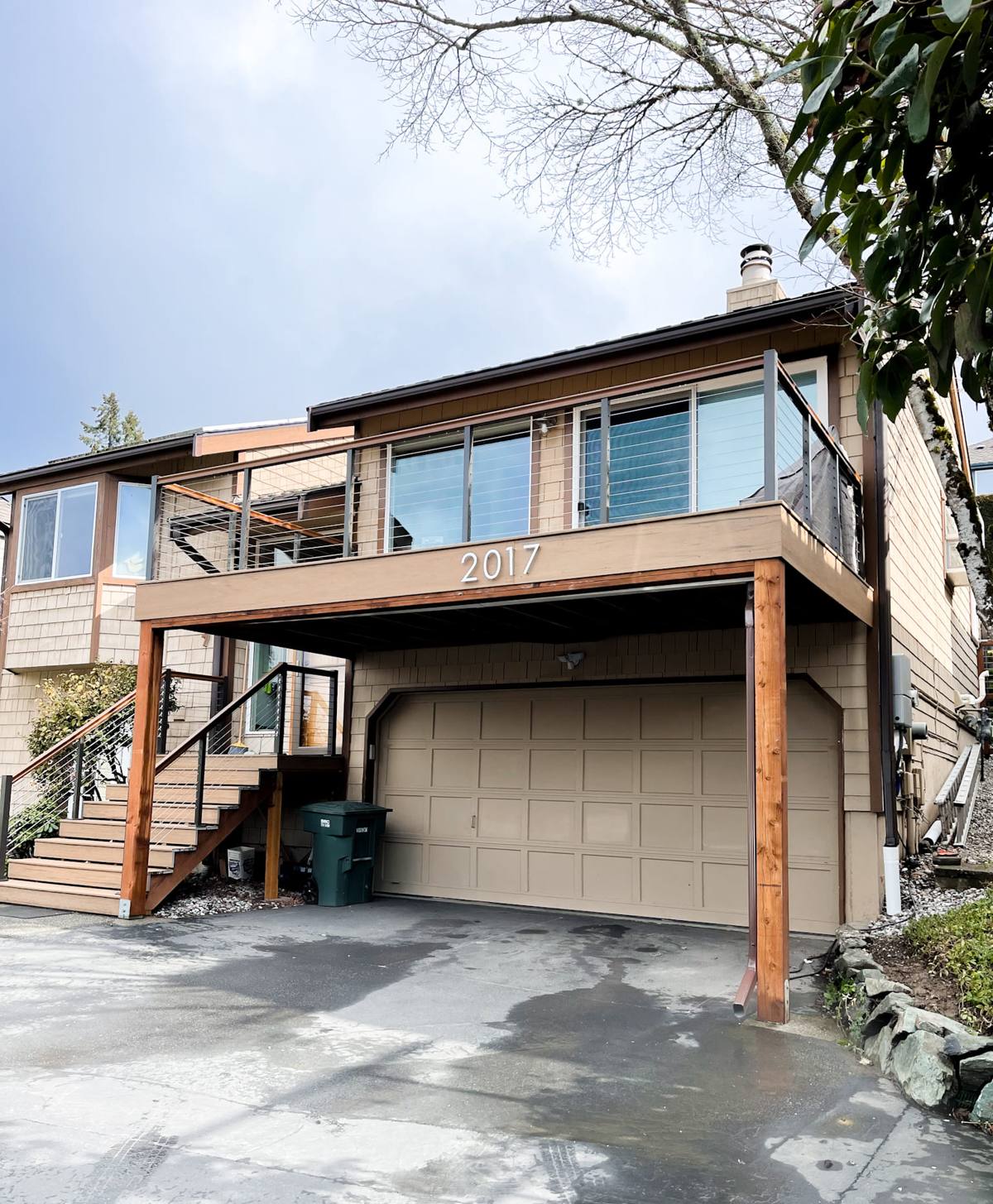
What Whatcom County Weather Actually Does to a Deck
Before talking about materials, it helps to understand the specific stresses a deck faces here, because they shape every decision in the build.
Salt Air and Moisture
Proximity to the bay means a steady low-level exposure to salt-laden moisture in the air. Over years, that moisture accelerates corrosion on unprotected metal fasteners and hardware, and it keeps wood surfaces perpetually damp longer than they would be further inland. Any decking system installed near Sunnyland needs fasteners and structural connectors rated for coastal exposure, not standard interior-grade hardware.
Driving Rain
Whatcom County doesn't just get rain — it gets rain pushed sideways by wind for days at a time during fall and winter. That means water gets driven under rail caps, into board end-cuts, and against ledger connections in ways a light vertical rain never would. Flashing, drainage gaps, and end-cap sealing all matter more here than they would in a drier climate.
The Long Moss Season
Low sun angle, tree cover, and near-constant dampness from roughly October through April create ideal conditions for moss and algae growth on any horizontal surface that doesn't dry out quickly. A deck with poor airflow underneath, tight board spacing, or a north-facing shaded orientation will grow moss faster than one built with drainage and airflow in mind — regardless of decking material.
Composite vs. Other Decking Materials for This Climate
Homeowners considering a new or replacement deck usually weigh composite against pressure-treated wood, cedar, and occasionally PVC. Here's how they actually compare under Whatcom County conditions:
| Material | Moisture Resistance | Moss/Algae Behavior | Maintenance Burden | Typical Lifespan Here |
|---|---|---|---|---|
| Composite (capped) | Excellent — non-porous surface | Resists staining; still needs periodic cleaning | Occasional wash, no sealing or staining | 25-30+ years |
| Pressure-treated wood | Fair — absorbs and releases moisture constantly | Prone to moss/algae in shaded, damp areas | Annual cleaning, re-staining every 2-3 years | 10-15 years before major repair |
| Cedar | Good initially, degrades with age | Susceptible once finish wears | Regular oiling/sealing to maintain appearance | 15-20 years |
| PVC (uncapped composite alt.) | Very good | Low, but surface can look artificial over time | Low | 20-25 years |
Composite isn't the right call for every budget or every homeowner's taste — some people genuinely prefer the look and feel of real wood and are willing to maintain it. But for a Sunnyland property dealing with salt air, extended wet seasons, and shade-driven moss pressure, composite consistently holds up with the least ongoing effort.
Why We Don't Recommend Uncapped Composite Here
Older-generation, uncapped composite boards absorb moisture at the surface over time, which in a climate this wet can lead to swelling, staining, and mold growth inside the board itself. Our standard for Sunnyland installations is fully capped composite decking — a solid polymer shell around the wood-fiber core that keeps moisture from penetrating the board. It costs more upfront than uncapped composite, but it's the version actually engineered to handle a marine-influenced, high-rainfall climate.
What a Correct Composite Deck Installation Involves
Composite boards are only as good as the structure underneath them. A poorly built substructure will cause a composite deck to sag, trap moisture, or develop soft spots at fastener points — problems that show up as cosmetic issues years later but trace back to install-day shortcuts.
Substructure and Framing
We frame with joist spacing appropriate to the specific composite product being installed — many composite boards require tighter joist spacing than traditional lumber decking, especially on diagonal layouts or stair treads. Joists and beams get either naturally rot-resistant lumber or coated framing lumber rated for ground contact and coastal moisture exposure.
Drainage and Airflow
Given how much of the year this region spends wet, we build in intentional drainage: proper slope away from the house, gapping that lets water pass through rather than pool, and enough clearance underneath the deck for air to actually move. Decks built tight to the ground with no airflow are the ones that grow moss fastest and rot framing soonest, regardless of what decking material sits on top.
Fasteners and Hardware
Every structural connector, screw, and hidden fastener is stainless steel or otherwise rated for coastal/marine exposure. This is one of the most commonly skipped details in budget deck builds, and it's the one that causes the earliest structural failures near the bay — corroded fasteners loosen boards and connections years before the decking itself would fail.
Flashing and Ledger Attachment
Where the deck attaches to the house, proper flashing keeps driving rain from working its way behind the ledger board and into the house structure. This is a spot we pay particular attention to on Sunnyland homes, given how often wind pushes rain sideways here during winter storms.
Our Process, Start to Finish
- On-site assessment: we look at sun exposure, tree cover, drainage slope, and the condition of any existing structure before quoting anything.
- Design and material selection: board profile, color, and rail system chosen based on your home and how the space will actually be used.
- Permitting: we handle the local permit process for structural decking work where required.
- Demolition (if replacing): old decking and, if needed, framing removed and hauled off.
- Framing and structural work: joists, beams, footings, and ledger attachment built to span and spacing requirements for the chosen composite product.
- Decking installation: boards, hidden fasteners, fascia, and stair treads installed with proper gapping for drainage and thermal movement.
- Railing and finish details: railing system, post caps, and any lighting or trim installed.
- Final walkthrough: we go over the finished deck with you, including realistic maintenance expectations for this climate.
Choosing the Right Composite Product
Composite decking isn't one product — brands and lines vary in board density, cap thickness, color-fastness, and warranty terms. We install several manufacturers' capped composite lines and help homeowners pick based on:
- Budget range and how it maps to board tier (entry, mid, premium)
- Color and grain pattern preference, and how it will look against your home's siding and trim
- Manufacturer warranty terms — length, what's covered (staining, fading, structural), and whether it's transferable if you sell the home
- Board texture — some profiles resist slipping better in wet conditions, which matters for a deck that stays damp much of the year
- Heat behavior — darker composite colors absorb more heat in direct summer sun, worth considering for uncovered south-facing decks
We don't push a single brand as the only option. The right product depends on your budget, how the deck will be used, and how much color variation or wood-grain texture you want. What we won't do is install a product or configuration we don't think will hold up to Whatcom County's wet season — that's a standard we hold regardless of what's cheapest to install.
Maintenance: What Sunnyland Homeowners Actually Need to Do
One of the real advantages of capped composite is how little upkeep it needs compared to wood — but "low maintenance" isn't "no maintenance," especially with a moss season this long.
- Sweep or hose off leaves, needles, and debris regularly — trapped organic matter is what feeds moss and algae growth
- Wash the deck surface a couple of times a year with a composite-safe cleaner and a soft-bristle brush, more often in heavily shaded areas
- Keep gutters and downspouts near the deck clear so runoff isn't dumping extra water onto the surface
- Trim back overhanging branches where practical to reduce shade and debris load
- Check railing connections and stair fasteners annually for looseness, particularly after winter storm season
- Avoid pressure-washing at close range or high PSI — it can damage the cap layer on composite boards
What Drives the Cost of a Composite Deck
Every project is different, but the main variables that move the price are consistent across Sunnyland jobs:
| Cost Factor | Why It Matters |
|---|---|
| Deck size and shape | Square footage and complexity (curves, multiple levels, angles) directly drive material and labor time |
| Height off the ground | Elevated decks need more substructure, railing, and sometimes stairs |
| Board tier chosen | Entry-level to premium composite lines vary significantly in per-board cost |
| Site access and existing conditions | Tree removal, slope, old deck demolition, or difficult access add labor |
| Railing and add-ons | Cable rail, glass panels, built-in lighting, and custom stair details all add cost |
| Structural condition | Rot or undersized framing discovered during a rebuild adds unplanned repair scope |
We give straightforward, itemized estimates so you can see where the money is going, rather than a single lump number that leaves you guessing.
Why a Crew That Already Works in Sunnyland Matters
A deck built by a crew unfamiliar with this specific microclimate tends to make the same mistakes: undersized drainage, standard-grade fasteners that corrode early, or a shady layout that turns into a moss farm within two winters. A crew that already works Sunnyland and the surrounding Whatcom County neighborhoods has seen how decks in this exact environment age over years, not just how they look on install day.
That local track record shows up in small but consequential decisions — where to add extra drainage slope, which fastener grade to spec by default, how to orient a deck relative to tree cover and prevailing wind-driven rain, and which composite products have actually held their color and structure through repeated wet seasons near the bay. It's the difference between a deck that looks good in the estimate photos and one that still looks good in year eight.
Get a Free, No-Pressure Estimate
If you're weighing a new composite deck or replacing an aging wood one in Sunnyland, we're glad to come take a look, walk you through material options, and give you a straightforward estimate — no pressure, no hard sell. Use the form below to get started.