 Whatcom County
 Deck Replacement Built for Columbia's Weather, Not Just Its Curb Appeal
If you own a home in the Columbia neighborhood, you already know decks here don't fail the way they do inland. It's not one big storm that does the damage — it's the accumulation. Salt-laden air off the bay works into fasteners and framing connectors. Driving rain finds its way under boards and around ledger boards. And Whatcom County's long, gray moss season keeps surfaces damp for weeks at a stretch, which is exactly the environment rot, mildew, and slow structural decay need to take hold. A deck that looked fine five years ago can be quietly failing underneath by year twelve or fifteen, especially if it was built to a builder-grade spec rather than a coastal one.
Deck replacement isn't just swapping old boards for new ones. Done right, it's a chance to correct whatever the original build got wrong for this climate — undersized ledger flashing, buried post bases, decking laid without enough airflow underneath — so the new deck actually outlasts the one it's replacing.
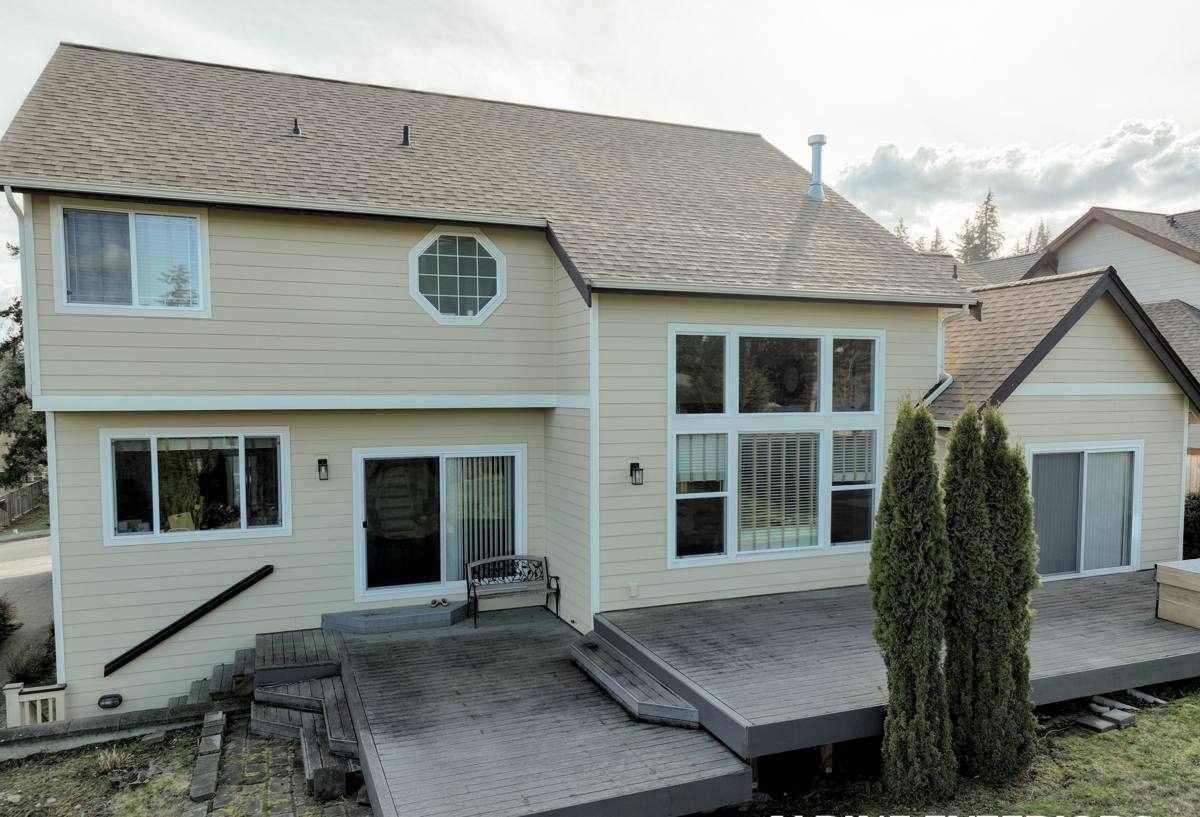
How to Tell a Deck Needs Replacement, Not Repair
Not every tired-looking deck needs a full teardown. But there's a point where patching boards is just delaying an inevitable, more expensive job. Here's how we sort it out on a walkthrough.
Signs that usually mean repair is enough
- A handful of individual boards are cupped, splintering, or soft, but the framing underneath is solid
- Railings are loose but the posts themselves aren't rotted at the base
- Fasteners are rusting and staining the wood, but the structure hasn't shifted
Signs that point to full replacement
- Soft or spongy spots you can press a screwdriver into at the ledger board, beams, or posts
- Visible gaps or separation where the deck attaches to the house
- Widespread moss or algae staining on the underside of the framing, not just the surface boards
- Posts sitting in soil or concrete that's cracked, heaved, or holding standing water
- The deck bounces or feels less rigid than it used to when you walk across it
That last one matters more than most homeowners realize. Deck framing failures are rarely dramatic until they are — the structure degrades gradually, then gives out under load. If we see signs the substructure is compromised, we'll tell you plainly rather than talk you into a cosmetic patch that won't hold.
What a Correct Deck Replacement Actually Involves
A deck is only as good as what's underneath it. Most of what determines whether a deck lasts 10 years or 30 happens before a single visible board goes down.
Ledger board and house connection
This is where the deck attaches to your home, and it's the single most common failure point in our climate. It needs proper flashing that sheds water away from the house rather than trapping it against the rim joist. We check this connection carefully on every replacement — an undersized or poorly flashed ledger is often the reason the old deck failed in the first place.
Footings and posts
Footings need to sit below frost depth and be sized for the actual load the deck will carry, not just what's minimally required. Post bases should hold the post above grade and off standing moisture — a post buried in soil or sitting in a wet footing is on a slow clock toward rot, no matter how good the wood is.
Framing and joist spacing
Joist spacing depends on the decking material you choose — composite and PVC boards often need tighter spacing than natural wood to avoid flexing over time. We frame to the material spec, not a generic standard, so the deck feels solid under load for its full lifespan.
Fasteners and hardware
In a coastal-influenced climate, hardware matters more than most homeowners expect. Coated or stainless fasteners and structural connectors resist the corrosion that plain galvanized hardware succumbs to faster near salt air. Skimping here is one of the most common ways a deck rebuild ages badly.
Choosing Decking Material for Whatcom County Conditions
There's no single "best" decking material — there's a best material for your budget, your maintenance appetite, and how much sun versus shade the deck actually gets. Here's how the common options hold up in our climate specifically.
| Material | How it handles our climate | Maintenance | Typical lifespan |
|---|---|---|---|
| Pressure-treated wood | Affordable, but needs consistent sealing to resist moss and moisture staining | Annual cleaning and re-sealing | 10–15 years |
| Cedar | Naturally rot-resistant, ages well if kept clean and dry, but still needs upkeep in shaded, damp spots | Cleaning, occasional oil or stain | 15–20 years |
| Composite decking | Handles moisture and moss better than wood; some early-generation composites trapped moisture — modern boards are built to drain and vent | Periodic washing, no sealing | 20–25+ years |
| PVC/capped polymer | Best moisture resistance of the group, holds up well in shaded, damp yards | Occasional washing | 25+ years |
For decks in shadier, moss-prone parts of a Columbia lot, we usually steer homeowners toward composite or PVC — not because wood is a bad product, but because the maintenance schedule needed to keep wood looking good in a shaded, damp spot is more than most people actually keep up with. We'll be straight with you about that trade-off rather than sell you whatever has the best margin.
Our Deck Replacement Process
1. On-site assessment
We inspect the ledger connection, framing, footings, and posts, not just the surface boards, so you know what you're actually dealing with before we quote anything.
2. Honest scope and estimate
You get a clear breakdown of what's being replaced, what material options fit your budget, and why — no vague allowances that turn into surprise change orders.
3. Demolition and disposal
Full removal of the old structure, including buried or hidden framing issues we couldn't see until it's opened up. If we find something unexpected, we tell you before proceeding, not after.
4. Rebuild to current best practice
New footings, framing, flashing, and ledger connection sized and installed correctly for the load and the climate — then decking, railing, and stairs to match.
5. Final walkthrough
We walk the finished deck with you, point out anything you should know about care going forward, and make sure it's solid before we call it done.
Permits and Local Code Considerations
Deck replacement in Whatcom County often requires a permit, particularly for decks attached to the house, decks above a certain height, or any work touching structural footings and framing. Requirements can vary depending on your specific jurisdiction within the county. We handle the permitting conversation as part of the job so you're not left guessing whether your project needs sign-off — and so the finished deck actually passes inspection rather than becoming a problem when you go to sell the house.
Caring for a New Deck in a Moss-Prone Climate
Even the best-built deck needs some seasonal attention here. This isn't a heavy list, but skipping it is how a 25-year deck starts acting like a 10-year one.
- Clear leaves and debris from between boards before fall rains set in — trapped debris holds moisture against the surface
- Rinse off moss and algae growth in shaded areas before it gets a foothold, especially after our wetter months
- Check that gutters and downspouts near the deck aren't dumping extra water onto it
- Inspect the ledger flashing and any visible fasteners once a year for rust staining or gaps
- For wood decks, keep to a sealing schedule rather than waiting until it visibly needs it
- Keep planters and furniture feet off direct contact with the decking surface where possible, to allow airflow
Why Hire a Crew That Already Works in Columbia
Deck-building fundamentals don't change from town to town, but the details that determine whether a deck lasts do. A crew that regularly works Columbia and the surrounding Whatcom County area already knows which framing details tend to fail first in this climate, which decking materials actually perform in the moss and moisture, and how local permitting works — so there's less guesswork and fewer surprises on your project. That local familiarity is the difference between a deck built to a generic spec and one built for the conditions it'll actually sit in for the next two or three decades.
If your deck is showing its age, or you just want an honest read on whether it needs repair or full replacement, we're glad to come take a look. Reach out for a free, no-pressure estimate using the form below.