 Whatcom County
 Why Blaine's Location Puts Extra Stress on Siding
Blaine sits right on Semiahmoo Bay and Drayton Harbor, at the edge of the Salish Sea and a few minutes from the Canadian border. That waterfront position is part of what makes the town beautiful, and it's also exactly why siding here works harder than siding twenty miles inland. Salt-laden air moves off the water and settles on exposed wall surfaces year-round, not just during storms. Combine that with the driving, wind-pushed rain that comes through Whatcom County off the Pacific, and you have a climate that tests every seam, joint, and coat of paint on a house.
Add in Blaine's long stretch of overcast, damp months where surfaces rarely get a full dry-out, and you get the third factor: moss and algae growth on siding that stays shaded or north-facing. None of these three things — salt air, driving rain, and a long moss season — are dramatic on their own. Together, over years, they're what separates siding that lasts three decades from siding that starts failing in eight or ten years.
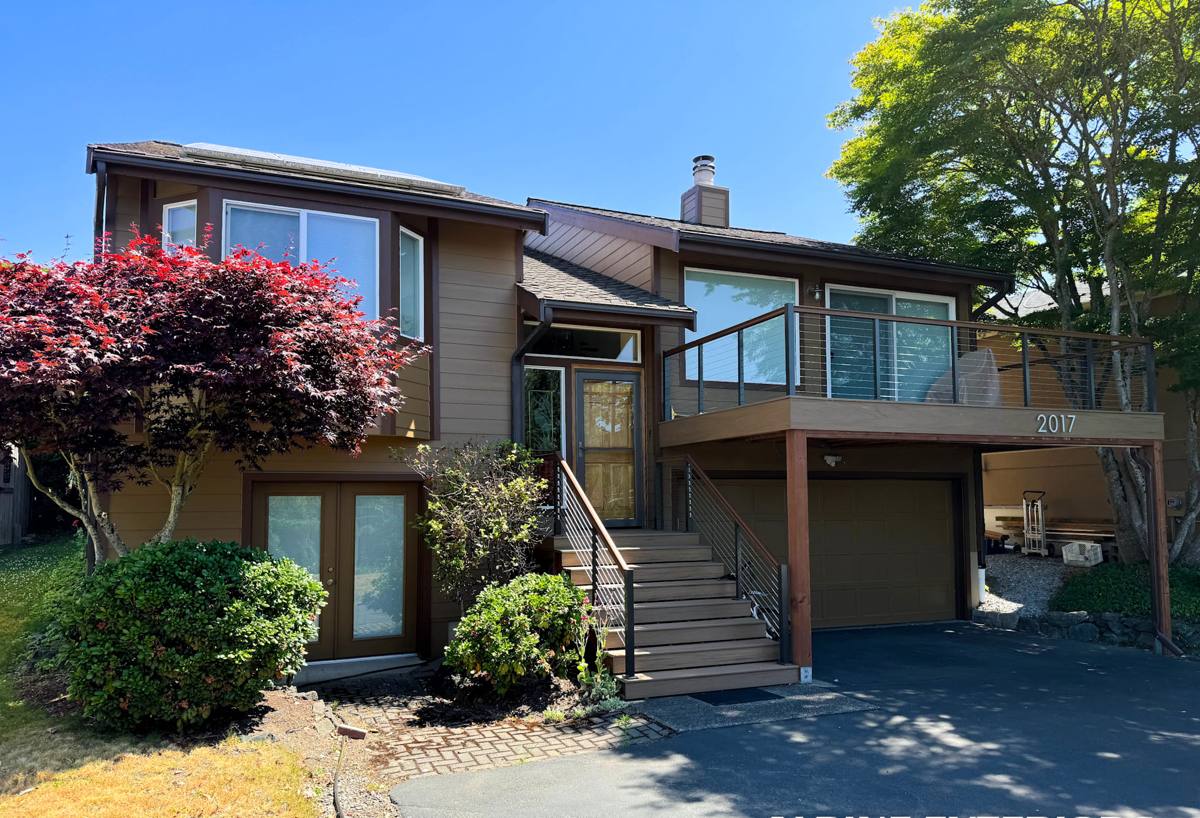
What Siding Failure Actually Looks Like on a Blaine Home
Homeowners usually notice the cosmetic symptoms first and the structural ones later, which is backwards from how the damage actually develops. By the time paint is visibly peeling or panels are visibly bowed, moisture has often been working behind the siding for a while.
- Paint that's chalking, bubbling, or peeling faster than a normal repaint cycle, especially on walls facing the water or prevailing wind
- Soft or spongy spots when you press on siding near the bottom courses, around window trim, or near roof-to-wall transitions
- Persistent moss or dark streaking that comes back within a season of cleaning
- Visible gaps, warping, or cupping in individual boards or panels
- Rising energy bills or drafty rooms, which can mean the water-resistive barrier behind the siding has been compromised
- Rust staining around fasteners, a sign the fastener or the substrate around it is breaking down
Any one of these on its own might just mean a maintenance job. Several of them together, especially on a home more than 15 years old, usually mean it's time to talk about full replacement rather than patching.
Why We Install Only James Hardie Fiber Cement in Blaine
We don't install vinyl, LP SmartSide, primed spruce, cedar, or other fiber cement brands like Allura or Cemplank. That's not a marketing position — it's a standard we hold because of what we see on coastal Whatcom County homes when the wrong product goes up in a marine environment.
Vinyl siding expands and contracts significantly with temperature swings, and its seams and J-channels give salt-laden moisture a path to work behind the panel over time. Wood-based products, whether cedar or engineered wood substrates, are organic material — even with good coatings, they're the food source that moss, algae, and rot are built to break down, and Blaine's damp season gives them a long runway to do it. Both categories can perform fine for a while, but "fine for a while" isn't what we want to put our name behind on a house that's going to sit a few blocks from saltwater for the next 30 years.
James Hardie fiber cement is non-combustible, dimensionally stable, and doesn't rot or feed insects the way wood-based siding can. The factory-applied ColorPlus finish is baked on under controlled conditions rather than field-painted, which matters a lot in a climate where field-applied paint has to cure in unpredictable weather. That's the whole case in one sentence: it's the product we've found holds up to salt air, driving rain, and repeated wet-dry cycles better than the alternatives, and it's why we don't offer those alternatives anymore.
The HZ5 Climate Line
James Hardie engineers its HardieZone products for specific climate zones, and homes in Whatcom County fall into the HZ5 category — built for regions with significant moisture exposure and freeze-thaw cycling. HZ5 panels and lap siding use a formulation and installation spec designed around exactly the wet, cool, marine conditions Blaine sees most of the year. Installing the correct zone product, with the correct fastener spacing and clearances, is part of what makes the difference between siding that shrugs off a wet winter and siding that starts absorbing moisture at the joints.
What a Correct Siding Replacement Involves
Fiber cement siding is only as good as what's behind it and how it's installed. In a place like Blaine, the details most homeowners never see are usually what determines whether the job lasts.
The Water-Resistive Barrier
Every wall gets a continuous weather-resistive barrier installed before a single piece of siding goes up. Seams get lapped and taped correctly, not just stapled and left. This layer is the home's real defense against wind-driven rain getting past the siding — the siding itself is the first line, but the barrier behind it is what actually keeps water out of the wall assembly.
Flashing and Clearances
Windows, doors, and any roof-to-wall intersections need proper flashing so water sheds outward instead of collecting behind trim. James Hardie specifies minimum clearances between siding and the ground, roof lines, decks, and other horizontal surfaces — those clearances aren't arbitrary, they're there to keep splash-back and standing moisture away from the bottom edge of the siding, which is the area most vulnerable to sustained wetness in a rainy climate.
Fastening
Corrosion-resistant fasteners, driven correctly (not overdriven, not underdriven), at the manufacturer's specified spacing, in the specified zone pattern. Overdriven nails crack the fiber cement's outer edge and create a moisture entry point that will show up as a failure years down the road, not the day it's installed.
Caulking and Joints
Joints get sealed with the right sealant, applied at the right points — not everywhere, since fiber cement needs some ability to move seasonally, but everywhere moisture could otherwise track in.
Skip any one of these steps and the siding material itself stops mattering much — even the best product fails early if the assembly behind it wasn't built right.
Our Process, Start to Finish
- Inspection and estimate. We walk the exterior, check for soft spots, moisture damage, and problem areas around trim, decks, and roof lines, and give you a clear picture of what's driving the recommendation.
- Tear-off and substrate check. Once old siding is off, we inspect the sheathing underneath. Any rot or damage gets addressed before new siding goes up — covering a compromised substrate just hides the problem.
- Water-resistive barrier and flashing. Installed to current best practice, with special attention to window and door openings and any deck or roof intersections.
- James Hardie installation. HZ5-spec panels or lap siding, installed to manufacturer clearances and fastening schedules.
- Trim, caulking, and final detailing. The finish work that determines how clean the final result looks and how well the joints resist moisture.
- Walkthrough. We go over the finished job with you before considering it done.
What Drives the Cost of a Siding Replacement
Every home is different, and we won't quote a number without seeing the house, but these are the factors that most commonly move the price up or down on a Blaine project.
| Factor | Why It Matters in Blaine |
|---|---|
| Extent of substrate damage | Homes with long-term moisture intrusion often need sheathing repair before new siding goes up, especially on walls facing the water or prevailing wind |
| Home size and complexity | Multiple stories, dormers, and cut-up wall lines take more time and material than a simple rectangular footprint |
| Siding profile | Lap siding, panel siding, and shingle-style Hardie products differ in material and labor cost |
| Trim and detail work | Window and corner trim, fascia, and soffit work add labor time, particularly on older homes needing trim replacement |
| Access and site conditions | Waterfront lots, steep grades, or tight setbacks can affect staging and scaffolding needs |
| Existing paint or coating removal | Some tear-offs involve older paint systems that need proper handling before disposal |
Why a Crew That Already Works Blaine Matters
A siding contractor who's worked other parts of Whatcom County but not specifically the coastal side of it can still do competent work, but there's real value in a crew that already understands Blaine's particular exposure. That means knowing which walls on a given lot take the worst of the wind-driven rain, recognizing early moss and algae patterns before they become a moisture problem, and not being surprised by how much salt air affects fastener and hardware choices near the water. It also means understanding the practical side — permitting expectations, typical weather windows for tear-off and installation, and how to sequence a job so the home isn't left exposed during a wet stretch.
None of that replaces good workmanship, but it does mean fewer surprises and a build sequence that accounts for the conditions your specific home actually faces, rather than a generic install plan.
Keeping New Siding Performing Long-Term
Correctly installed James Hardie siding is low-maintenance, not no-maintenance. A few habits go a long way in Blaine's climate:
- Rinse off salt residue and grime from exterior walls once or twice a year, especially on water-facing sides
- Keep gutters clear so overflow doesn't run down the wall and sit against the bottom courses of siding
- Trim back vegetation and landscaping that keeps siding shaded and damp longer than it needs to be
- Check caulking at trim and joints periodically and have any cracked sections resealed before a wet season sets in
- Address any moss regrowth promptly rather than letting it establish
If you're weighing a siding replacement on a Blaine home and want a straight answer about condition and options, we're happy to take a look. The estimate is free, there's no pressure, and you'll get a clear explanation of what we find — just fill out the form below to get started.