 Whatcom County
 Deck Building Built for Columbia's Weather, Not Against It
A deck in Columbia lives a harder life than a deck built the same way somewhere inland and dry. This part of Whatcom County sits close enough to Bellingham Bay that salt-laden air is a regular visitor, and the marine climate brings long stretches of driving rain followed by a moss season that can stretch from fall clear into spring. A deck that isn't designed with those conditions in mind doesn't fail dramatically — it fails slowly, one soft board and one loose railing post at a time, until a homeowner is looking at a full rebuild years before they should have to.
Building decks correctly for Columbia means treating the local climate as a design input, not an afterthought. That shows up in the fasteners we choose, the way we frame for drainage, the gaps we leave between boards, and the finish schedule we recommend. None of it is exotic. It's just attention to detail that pays off over the first five winters, not just the first one.
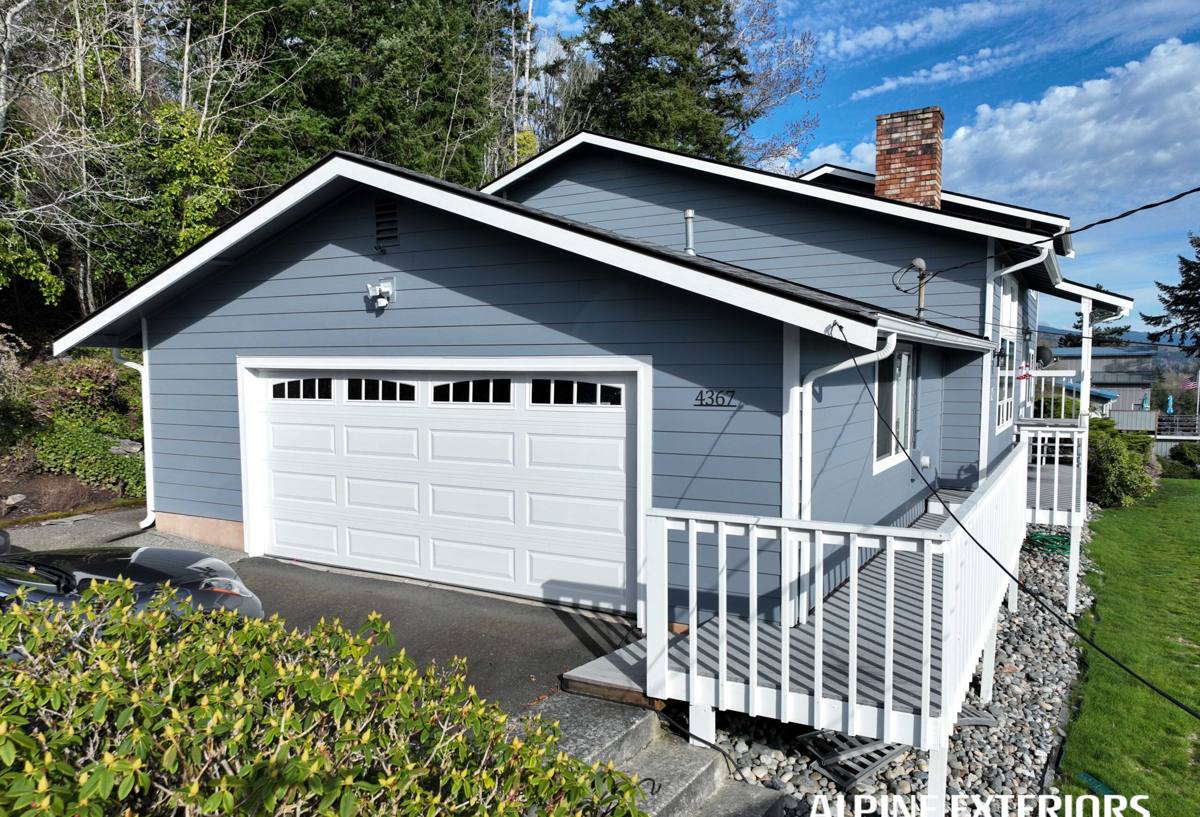
What Whatcom County's Climate Actually Does to a Deck
Salt Air and Corrosion
Homes in and around Columbia that sit within reach of marine air see accelerated corrosion on anything metal — fasteners, joist hangers, railing hardware, even the heads of screws that look fine on the surface but are rusting from the inside where they're driven into wet wood. Standard galvanized hardware can start showing surface rust within a couple of seasons in this environment. Once a fastener starts to go, it weakens the connection it's holding, and on a deck that connection might be structural.
Driving Rain and Standing Moisture
Rain here doesn't fall straight down very often — it comes sideways, driven by wind off the water, and it finds every horizontal surface and gap. Decks that don't shed water efficiently end up with moisture sitting against ledger boards, pooling around post bases, and soaking into end grain that was never sealed. Wood doesn't need to be submerged to rot — it just needs to stay damp longer than it gets to dry out.
Moss and the Long Wet Season
Moss doesn't just grow on roofs. Given a shaded deck surface, a north-facing exposure, or boards spaced too tight to dry between rains, moss and algae take hold on decking and stair treads. Beyond the cosmetic issue, a mossy deck surface is a slip hazard, and moss holds moisture directly against the board it's growing on, which speeds up decay underneath the growth.
What a Correctly Built Deck Looks Like Here
The difference between a deck that lasts and one that doesn't usually isn't visible from the top. It's in the framing, the fasteners, and the details around every connection point. For Columbia specifically, that means:
- Stainless steel or high-grade coated fasteners at any point exposed to weather or salt air, not standard galvanized
- Ledger board flashing that actually directs water away from the house rim joist, sealed at every penetration
- Joist and beam spacing that accounts for board drainage, not just structural minimums
- Post bases set above grade and away from standing water, with proper drainage beneath
- Decking gaps sized to let boards dry between rain events instead of trapping moisture
- Sealed end cuts on every board, since factory sealant only protects the piece as it was milled
- Stair and walking-surface material chosen or treated with slip resistance in mind, given the moss and algae risk
None of this is unusual construction. It's standard best practice applied consistently, which is exactly where a lot of decks in this region fall short — not because the builder didn't know better, but because it's faster and cheaper to skip a step that nobody will notice until year three.
Choosing Materials: Wood vs. Composite for This Climate
There's no universally "right" decking material — the right choice depends on budget, maintenance appetite, and how exposed the deck is to sun, rain, and salt air. Here's how the common options actually perform in a Whatcom County marine climate.
| Material | How It Holds Up Here | Maintenance Reality |
|---|---|---|
| Pressure-treated lumber | Good structural performance if properly sealed and maintained; moisture and moss are the main long-term threats | Needs re-staining/sealing every 1-3 years, especially on shaded or north-facing decks |
| Cedar | Naturally rot-resistant and handles moisture reasonably well, but softer surface can still support moss growth in shaded areas | Needs periodic oiling or sealing to hold its color and resist weathering |
| Composite decking | Excellent moisture resistance and won't rot; some early-generation composites had traction issues in wet/mossy conditions, so surface texture matters | Occasional cleaning to prevent surface algae buildup; no staining or sealing required |
| Hardware (any material) | The weak point across all decking choices in this climate is fastener corrosion, not the decking surface itself | Stainless or marine-grade hardware is worth the upcharge regardless of decking material |
We'll walk through these trade-offs honestly during an estimate — including where a cheaper material makes sense for a lower-traffic deck and where it doesn't for a deck that takes the brunt of weather off the water.
Framing and Structure: Where Failures Actually Start
Most deck problems that homeowners eventually call about didn't start with the decking boards — they started underneath, in the framing most people never look at. The ledger connection to the house is the single most important structural joint on the whole deck, and it's also the joint most exposed to trapped moisture if it isn't flashed correctly. Post footings need to be sized and set below the frost depth and clear of standing water, which in this soil and rainfall pattern means grading and drainage around the footing matter as much as the footing itself.
Joist hangers and structural connectors are another spot where corrosion-resistant hardware earns its keep. A hanger that starts rusting doesn't announce itself — it just gets weaker year over year until it's carrying less load than the deck actually needs it to.
Our Process for a Columbia Deck Project
- On-site assessment — we look at sun exposure, drainage patterns, proximity to salt air, and how the deck will actually be used before recommending materials.
- Straightforward proposal — a clear scope covering materials, framing approach, and hardware, with honest trade-offs explained rather than upsold.
- Permitting and layout — handled according to local requirements before any ground is broken.
- Framing built for drainage — ledger flashing, footing placement, and joist spacing done to hold up against driving rain, not just pass inspection.
- Decking and finish work — boards installed with proper gapping and sealed end cuts, railings and stairs finished with slip resistance in mind.
- Walkthrough — we go over basic maintenance specific to your deck's material and exposure so you know what upkeep actually looks like.
Maintenance: What Actually Keeps a Deck Going Here
A well-built deck in Whatcom County still needs upkeep — the climate doesn't allow for a "set it and forget it" approach with any material. A short seasonal checklist:
- Clear leaves and debris from between boards before fall rains set in, so water has somewhere to go
- Check and clean any moss or algae buildup on shaded areas before it spreads across the whole surface
- Inspect fasteners and hardware annually for early rust, especially near the water-facing side of the property
- Reseal or re-stain wood decking on the schedule appropriate to the product — don't wait until it's visibly gray
- Keep gutters and downspouts clear so roof runoff isn't dumping extra water directly onto or near the deck
Why a Local Crew Matters for This Job
Deck building isn't a one-size-fits-all trade. A crew that works across Whatcom County regularly, including in Columbia, has already seen which fastener grades hold up and which don't, which framing details actually matter in this rainfall pattern, and which decking products handle a mossy, shaded yard versus a sun-exposed one. That's not something you get from a generic install checklist — it's from doing the work in this specific climate, repeatedly, and seeing how those choices age.
It also means someone who understands local permitting expectations and who isn't guessing about frost depth, drainage requirements, or wind exposure based on a different region's building norms. A deck is a long-term structural investment attached to your home — it's worth having someone build it who already knows what this climate does to a deck over ten years, not just what it looks like on installation day.
Getting Started
If you're planning a new deck or replacing one that's showing its age, we're happy to walk your property, talk through material options honestly, and put together a straightforward estimate — no pressure, no upsell. Reach out using the form below to get started.