 Whatcom County
 Composite Decking Built for Happy Valley's Climate
Happy Valley homeowners know that anything built outside in Whatcom County has to earn its keep. The wood decks that looked great when a house was built often don't look great ten or fifteen years later — gray, splintered, soft in spots, green with moss by January. Composite decking was developed specifically to solve those problems, but "composite" covers a wide range of products, and not all of them handle our climate the same way. This page walks through what Happy Valley homes actually need from a deck, what a correct installation looks like, and how we approach the job.
We're not going to pretend every composite product is interchangeable, or that installation quality doesn't matter. Both of those things are true, and they're the difference between a deck that's still solid in fifteen years and one that's showing problems in five.
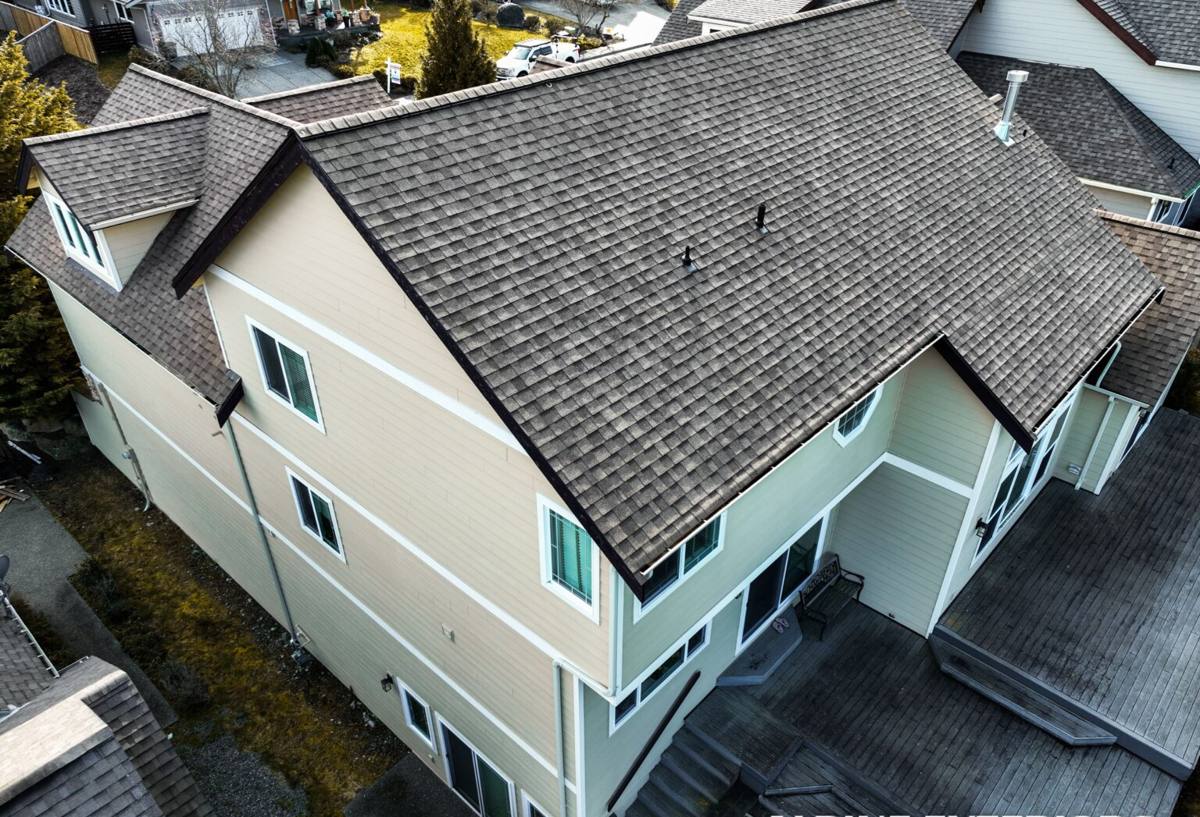
What Whatcom County Weather Does to a Deck Over Time
Whatcom County sits in a stretch of the Pacific Northwest where a deck spends most of the year damp. That combination of salt-tinged coastal air, driving rain that doesn't just fall but blows sideways into a structure, and a moss season that can run from fall through spring is hard on anything nailed together outdoors — and it exposes weak points in a deck faster than a drier climate would.
Salt Air and Hardware
Homes closer to the water deal with airborne salt that accelerates corrosion on unprotected metal. Cheap fasteners, uncoated brackets, and the wrong grade of hardware will rust and stain long before the decking itself wears out — and once a fastener starts failing, it can compromise the whole connection.
Driving Rain and Water Management
Rain that comes in at an angle finds every gap in flashing, every unsealed ledger board connection, and every spot where water can pool instead of shed. A deck that isn't built with drainage in mind will trap moisture against the house framing, which is where the real damage happens — not in the decking boards, but behind them.
Moss, Algae, and Long Shaded Seasons
Low winter sun angles, tree cover common in Happy Valley's residential lots, and months of damp weather add up to a long moss and algae season. Moss doesn't just look bad — it holds moisture against the deck surface and can make boards slick and unsafe underfoot if it's allowed to build up.
Composite Decking vs. Other Materials
Composite isn't automatically the right call for every project, but for our climate it solves several problems that wood and older composite generations struggled with. Here's how the common options compare for a Whatcom County application:
| Material | Moisture Resistance | Moss/Algae Resistance | Maintenance |
|---|---|---|---|
| Pressure-treated wood | Fair — swells, cups, and checks over time | Poor without regular treatment | Annual cleaning, periodic staining/sealing |
| Cedar | Good initially, degrades without upkeep | Poor without treatment | Frequent sealing to hold color and resist rot |
| First-generation composite | Fair — some older boards absorb moisture at cut ends | Fair | Occasional washing |
| Capped composite / PVC | Excellent — engineered shell resists moisture intrusion | Good, especially with mineral-based streak-and-stain formulations | Periodic washing, no sealing or staining |
The category we install on most Happy Valley projects is capped composite or PVC decking, for the reasons in that table — but the material is only half the equation. A capped composite deck installed without proper drainage and flashing will still have problems, just different ones than a wood deck would.
What a Correct Composite Deck Installation Involves
The Substructure Matters More Than the Boards
Most composite deck failures we get called to look at aren't failures of the decking at all — they're failures of the framing underneath it. Joists that flex too much, spacing that's too wide for the specific product's span rating, or a substructure that traps water will cause problems no matter how good the boards on top are. We frame or evaluate the substructure to the manufacturer's actual span tables for the product being installed, not a generic rule of thumb.
Flashing at the House Connection
Where a deck ledger board attaches to the house is the single most common source of hidden water damage in this climate. It needs proper flashing integrated with the home's existing water management — house wrap, siding, and trim — so that driving rain doesn't get channeled behind the ledger and into the wall framing. This is exterior work, not just deck work, which is part of why it pays to have a crew that understands how decks and siding interact.
Joist Protection and Fastening
We use joist tape or an equivalent protective barrier on top of the framing to keep standing moisture off the wood joists, and we use fasteners and hardware rated for exterior, coastal-influenced exposure — not standard interior-grade hardware that will corrode and streak the decking within a few seasons. Board spacing is set to allow for expansion and contraction and to keep drainage paths clear rather than let debris and moss build up between boards.
Choosing the Right Composite Product for a Happy Valley Home
Capped Composite vs. PVC
Capped composite boards have a wood-plastic composite core wrapped in a protective polymer shell — that shell is what gives modern composite its stain and moisture resistance compared to older, uncapped boards. Fully cellular PVC decking takes it a step further with no wood content at all, which some homeowners prefer for maximum moisture resistance, particularly on decks that get heavy shade or sit low to grade. Either can be the right call; the decision usually comes down to budget, appearance preference, and how much shade and moisture exposure the specific deck location gets.
Color and Grain for Shaded, Mossy Lots
Lighter and more variegated color patterns tend to show algae streaking and pollen less than solid dark tones on decks that sit under tree cover for much of the year, which is common on Happy Valley lots. If your site gets significant shade, we'll walk through color options with that in mind rather than just matching a sample board without considering the deck's actual sun exposure.
Our Process, Start to Finish
- Site evaluation: We look at drainage, sun/shade exposure, existing structure (if replacing a deck), and how the deck connects to the house.
- Material selection: We walk through composite options suited to the site's specific moisture and shade conditions, with honest cost and maintenance trade-offs for each.
- Permitting: Deck work in Whatcom County and the City of Bellingham typically requires a permit depending on size and height — we handle that process rather than leaving it for the homeowner to sort out.
- Demolition and framing: Existing structure is removed or reinforced, ledger flashing is corrected if it wasn't done properly the first time, and the substructure is built or verified to span tables for the chosen product.
- Decking installation: Boards are installed with correct spacing, fastening, and drainage detailing.
- Final walkthrough: We go over the finished deck with you, including what maintenance it actually needs — which for most capped composite is very little.
Keeping a Composite Deck Looking Good in This Climate
One of the real advantages of composite over wood is how little upkeep it needs — but "little" isn't "none," especially with our moss season. A few habits go a long way:
- Sweep debris (leaves, needles, seed pods) off the deck regularly so it doesn't trap moisture in one spot
- Wash the deck once or twice a year with a soft-bristle brush and a cleaner rated for composite — avoid pressure washers on close settings, which can damage the cap layer
- Address early moss or algae growth promptly rather than letting it establish, especially in shaded corners
- Keep gutters and downspouts near the deck functioning so runoff isn't dumping directly onto or under the deck surface
- Check the ledger board flashing area periodically for any signs of staining on the siding above it, which can indicate a water intrusion problem worth catching early
Why Hire a Crew That Already Works in Happy Valley
Deck work in this part of Whatcom County isn't the same job as deck work in a dry climate, and it isn't the same job as deck work on a slab-on-grade patio somewhere inland. Crews unfamiliar with how driving rain, salt-tinged air, and long moss seasons interact with a house's water management tend to build decks that look fine on installation day and develop problems two or three winters later — usually hidden ones, behind the ledger board or under the joists, that cost far more to fix than they would have to prevent. A crew that regularly works Happy Valley and the surrounding Whatcom County area has already seen what goes wrong here and builds to avoid it from the start, not as a repair after the fact.
If you're weighing a new composite deck or replacing a tired wood one, we're happy to take a look and give you a straight answer about what your specific site needs. Reach out for a free, no-pressure estimate using the form below.