 Whatcom County
 Deck Building for Cordata Homes
Cordata sits in the north Bellingham area of Whatcom County, where homes deal with the same weather pattern as the rest of the region: long stretches of steady rain, humid air that never fully dries out between storms, and a moss season that can run from fall through spring. A deck built here isn't just a weekend outdoor space — it's an exterior structure that has to shed water correctly, resist rot at every joint, and stay safe underfoot when it's covered in wet moss and algae film. We build decks for Cordata homeowners with that reality in mind, not with a generic build that happens to work in a drier climate.
This page covers what a deck in this part of Whatcom County actually needs, what separates a correctly built deck from one that will need major repairs in five to seven years, and how we approach the job from first estimate to final walkthrough.
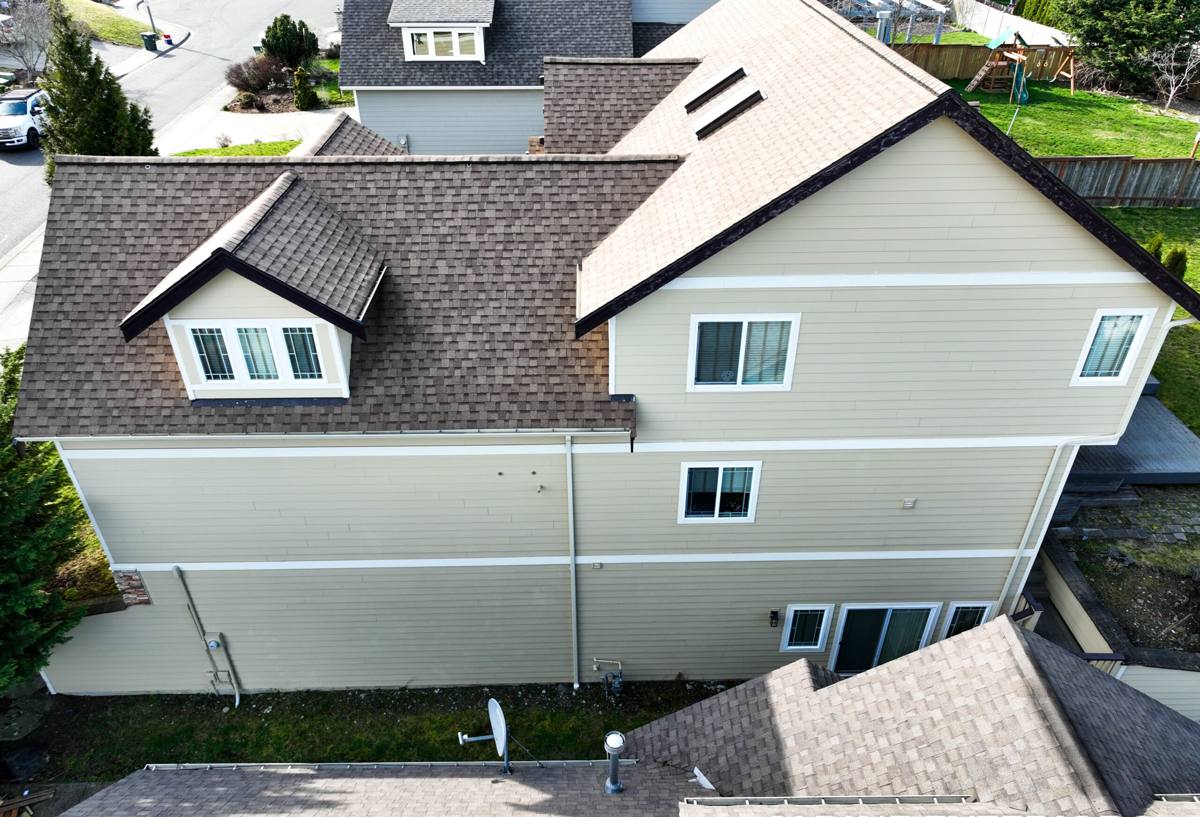
What This Climate Does to a Deck
Whatcom County's marine-influenced weather is mild, but mild doesn't mean easy on a structure. A few things happen here that don't happen in drier regions:
- Driving rain gets pushed sideways by wind off the water, which means ledger boards, rim joists, and any wall connection point take on more moisture exposure than a flat roof-style rain would suggest.
- Moss and algae colonize any shaded, damp surface — deck boards under trees or on the north side of a house especially. Moss holds moisture against wood far longer than open air would, which accelerates rot underneath it long before it's visible on top.
- Salt-influenced air moves inland from the bay on certain wind patterns, which speeds up corrosion on fasteners, hardware, and any exposed metal connectors that aren't rated for it.
- Freeze-thaw cycles, while not extreme here, still happen enough in winter to work water into small cracks in wood and concrete footings, widening them over a few seasons.
None of this means a deck can't last decades in Cordata. It means the framing, fasteners, flashing details, and material choice all have to be selected for wet-climate performance, not just for looks.
Decking Material Options
There's no single "best" decking material — the right choice depends on budget, how much upkeep you're willing to do, and how the deck will be used. Here's how the common options compare for this climate specifically:
| Material | Moisture Performance | Maintenance | Typical Lifespan Here |
|---|---|---|---|
| Pressure-treated fir/hem-fir | Good if properly sealed and gapped; treatment resists rot but surface still needs protection | Annual cleaning, re-sealing every 2-3 years | 15-20 years with upkeep |
| Cedar | Naturally rot- and insect-resistant, but softer surface holds moss without regular cleaning | Cleaning and oiling/staining every 1-2 years | 15-25 years with upkeep |
| Composite decking | Excellent — doesn't absorb water or rot, though board-to-board gaps still need airflow to prevent surface algae | Periodic washing, no sealing or staining | 25-30+ years |
| PVC decking | Excellent, fully synthetic, no wood fiber to feed rot or insects | Occasional washing | 25-30+ years |
We're upfront with homeowners about trade-offs rather than pushing one product. Composite and PVC cost more up front but remove most of the moss-and-rot maintenance cycle that wood decking demands in this climate. Cedar and treated wood cost less initially and give a more traditional look, but they only perform well long-term if the homeowner keeps up with cleaning and sealing on schedule. If that upkeep isn't realistic for your household, we'll say so and steer the conversation toward a lower-maintenance material instead of selling you something that needs more attention than you're planning to give it.
A Note on Fasteners and Hardware
Whatever decking material you choose, the hardware holding it together matters just as much. In this region we use fasteners and structural connectors rated for exterior, corrosion-resistant service — not standard interior-grade hardware that will streak and weaken within a few wet seasons.
What a Correctly Built Deck Actually Requires
A deck that looks finished on day one can still be built wrong underneath. The parts that matter most are the parts you won't see once the project is done:
Ledger Attachment and Flashing
Where a deck attaches to the house is the single most common failure point in this climate. Water that gets behind an improperly flashed ledger board doesn't just rot the ledger — it can work into the house's rim joist and wall framing. Correct flashing, proper standoff spacing, and sealed fastener penetrations at this connection are non-negotiable.
Footings Below Frost Depth
Footings need to be set at the correct depth for Whatcom County's frost line and sized for the load they're carrying. Undersized or shallow footings are one of the most common causes of a deck that starts to feel "bouncy" or uneven within a few years.
Joist Spacing and Board Gapping
Joist spacing has to match the decking material's span rating — composite and PVC boards generally need tighter joist spacing than solid wood. Gapping between boards needs to be consistent enough to let water drain and air circulate underneath, which is one of the biggest factors in how fast moss and algae take hold.
Ventilation Underneath
Low decks or decks built close to grade need enough airflow underneath to let the framing dry out between rain events. Skirting or landscaping that blocks all airflow under a deck is one of the more overlooked causes of hidden joist rot in this area.
Our Process for Cordata Deck Projects
We keep the process straightforward and give you real information at each step instead of surprises later:
- On-site assessment: we look at the attachment point to your house, existing grade and drainage, sun/shade exposure, and any existing structure being replaced.
- Material and layout discussion: we walk through decking material trade-offs based on your budget and maintenance preference, and discuss layout, railing, and stair placement.
- Written estimate: a clear scope covering materials, framing approach, permit handling, and timeline — no vague allowances.
- Permitting: we handle the permit application and inspection scheduling with Whatcom County or the City of Bellingham, whichever jurisdiction applies to the property.
- Demolition and framing: old structure removed if applicable, footings set, framing built to span and load requirements.
- Decking, railing, and finish work: boards installed with correct gapping, railing systems installed to code, all fasteners and hardware corrosion-rated.
- Final walkthrough: we go over the finished deck with you, including a plain-language maintenance rundown specific to the material you chose.
Permits and Local Code
Most new deck construction and many deck replacements in Whatcom County require a building permit, particularly for decks attached to the house, decks above a certain height off grade, or any project involving new footings. Requirements differ slightly depending on whether a property falls under Whatcom County or City of Bellingham jurisdiction, and setback rules can affect how close a deck can sit to a property line. We handle the permit application and inspections as part of the job rather than leaving that step to the homeowner — skipping it isn't worth the risk of a failed inspection or issues later at resale.
Living With a Deck in This Climate
Even a well-built deck needs some ongoing attention here — that's just the nature of the climate, not a defect in the work. A few things go a long way:
- Sweep leaves and debris off regularly, especially in fall — trapped organic matter is what moss needs to establish.
- Rinse or lightly scrub decking a couple of times a year to interrupt algae and moss growth before it gets a foothold.
- Keep gutters and downspouts near the deck clear so runoff isn't dumping directly onto the structure.
- Check railing posts and stair connections annually for movement — hardware can loosen slightly as wood moves through wet and dry cycles.
- If you chose wood decking, stay on the sealing/staining schedule rather than letting it lapse — catching up after a few missed years costs more than staying on top of it.
Why Hire a Crew That Already Works in Cordata
Deck construction that works fine in a dry climate can fail early here if it's built to a generic standard. A crew that regularly works Whatcom County jobs already knows which ledger flashing details actually keep water out through a wet winter, what footing depth the frost line calls for locally, which decking materials hold up against moss without heavy upkeep, and how the permitting process runs in this county specifically. That local repetition is what prevents the callback issues — squeaky boards, soft spots near the house, slick moss buildup in shaded corners — that show up on decks built by crews unfamiliar with this weather pattern.
If you're planning a new deck or replacing one that's showing its age, we're happy to come take a look, walk through material options honestly, and put together a clear, no-pressure estimate. There's a form below to get that conversation started.