 Whatcom County
 Decks in Silver Beach Face a Tougher Climate Than the Catalog Photos Suggest
Most deck-building guides are written for a dry climate. Whatcom County isn't one. Silver Beach sits in a corner of the county where damp, salt-tinged marine air, long stretches of driving rain, and a moss season that can run from October through May all put real stress on an outdoor structure. A deck built to a generic national spec will often look fine for a year or two, then start showing the classic signs of a Northwest build that wasn't detailed for this climate: soft spots at the ledger, black streaking on the boards, rusted fastener heads bleeding through the finish, and a surface that turns slick with algae every winter.
None of that is inevitable. It comes down to material choices, flashing details, and fastener selection that respect what this climate actually does to wood and metal over time. This page covers what a deck built for Silver Beach conditions needs, what we do differently, and what to expect if you're planning a new deck or replacing a tired one.
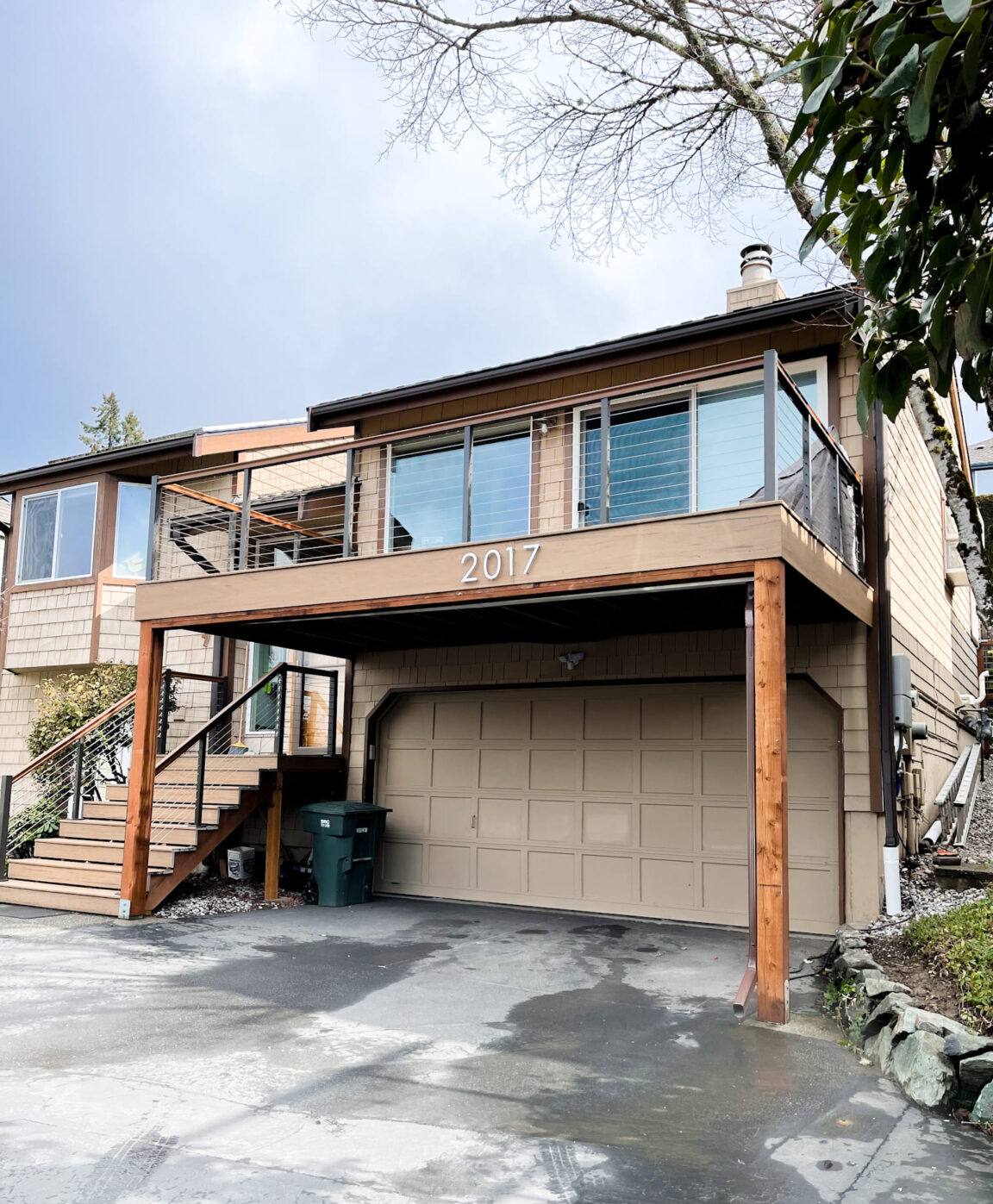
What Silver Beach's Climate Actually Does to a Deck
Driving rain and standing moisture
Rain here rarely falls straight down — wind off the water pushes it sideways, which means it gets up under rail caps, into end-grain cuts, and behind ledger boards if they aren't flashed correctly. Wood that stays wet longer than it can dry is wood that rots, and in this climate that "dry-out window" between storms is often short.
A long moss and algae season
Shaded decks, north-facing decks, and anything under tree cover in Whatcom County will grow moss and algae for a good chunk of the year. Beyond looking bad, a mossy deck surface is genuinely slippery — it's one of the more common reasons we get called out for repairs that turn into safety issues, not just cosmetic ones.
Salt air and corrosion
Homes closer to the water deal with a steady dose of salt-laden air that accelerates corrosion on anything less than fully rated hardware. Cheap or mismatched fasteners are usually the first thing to fail on an older deck, well before the framing lumber itself gives out.
Choosing the Right Decking Material for This Climate
There's no single "best" decking material — there's a best material for your budget, your sun exposure, and how much upkeep you actually want to do. Here's how the common options stack up under Whatcom County conditions specifically.
| Material | Moss/algae resistance | Maintenance in this climate | Typical lifespan | Relative cost |
|---|---|---|---|---|
| Pressure-treated wood | Low — needs regular cleaning and sealing | Annual wash, re-seal every 2-3 years | 10-15 years | Lowest |
| Cedar | Moderate — naturally rot-resistant but still grows algae in shade | Cleaning plus periodic oil/stain | 15-20 years | Mid |
| Composite decking | Good — capped boards resist moisture absorption | Occasional wash, no sealing needed | 20-25+ years | Mid-high |
| PVC decking | Best — non-porous surface, least hospitable to growth | Lowest — soap and water | 25+ years | Highest |
Composite and PVC decking have become the more common choice for shaded, damp, or water-facing lots in this area, mainly because the reduced maintenance burden matters more here than in a drier climate. That said, a well-detailed cedar or treated-wood deck still has its place, especially where budget or a specific look matters more than minimizing upkeep. We'll talk through the honest trade-offs for your specific site rather than pushing one material by default.
Framing, Fasteners, and the Details You Won't See Once It's Built
The decking boards get all the attention, but the framing underneath and the fasteners holding it together are what actually determine how long a deck lasts in this climate.
Ledger attachment and flashing
Where the deck attaches to the house is the single most common failure point we see on older decks in wet climates — if the ledger board isn't properly flashed and separated from the house wall, water gets trapped between the two and rot sets in from the inside out, often invisible until the deck starts to feel spongy. We flash every ledger connection properly and use a flashing/gap detail that lets water shed away from the house rather than pooling behind the board.
Fastener and hardware grade
Given the salt content in the air across parts of Whatcom County, we use stainless steel or high-grade hot-dip galvanized fasteners and structural hardware rather than the standard coated fasteners that are adequate in drier inland climates. It costs a bit more up front. It's also the difference between hardware that's still solid in fifteen years and hardware that's rust-streaking your decking in five.
Joist protection
Joist tops and cut ends are where treated lumber's factory protection is weakest — any field cut exposes untreated wood. We seal cut ends and cap joist tops so the framing doesn't start rotting from the top down before the decking even shows a sign of trouble.
Footings, Drainage, and Site-Specific Structure
Whatcom County's clay-heavy soils in many areas hold water longer than sandier ground, and footings need to be set below frost depth and on solid, well-drained bearing soil rather than assumed based on a generic span table. On sites with any slope — which describes a fair number of lots in and around Silver Beach — we also pay attention to how the deck's footings and drainage interact with the grading around the house, so runoff is directed away from the foundation rather than pooling under the deck itself. A deck that traps water underneath it stays damp for weeks after a storm, which feeds exactly the rot and moss problems this climate already encourages.
Permits and Code in Whatcom County
Most new decks and significant deck rebuilds require a permit locally, and the requirements can differ slightly depending on whether the property falls under county jurisdiction or a city. Guardrails, stair geometry, footing depth, and ledger attachment are the areas inspectors look at most closely, and they're also the areas that are hardest and most expensive to fix after the fact if they're done wrong the first time. We handle the permit and inspection process as part of the job so you're not the one chasing down requirements or scheduling inspections.
Our Process for a Silver Beach Deck Build
- On-site visit — we look at your slope, sun exposure, existing structure (if it's a replacement), and how the deck will tie into the house.
- Material and layout discussion — honest trade-offs between wood, composite, and PVC based on your budget and how much maintenance you want to take on.
- Written estimate — a clear scope with material specified, not a vague allowance.
- Permitting — we prepare and submit what's required and schedule inspections.
- Build — footings, framing, flashing, decking, and rail, in that order, with each stage built to hold up to what this climate does to it.
- Final walkthrough — we go over care and maintenance specific to the material you chose.
Keeping a Deck Ahead of Moss Season
Whatever material you choose, a little seasonal attention goes a long way toward keeping a Silver Beach deck safe and good-looking through the wet months.
- Sweep debris and leaves off the deck regularly in fall — trapped organic matter is what moss and algae actually feed on
- Wash the surface at least once a year with a deck-safe cleaner, more often on shaded sections
- Check rail post connections and fastener heads annually for early rust staining
- Keep gutters and downspouts clear so runoff isn't dumping directly onto or under the deck
- Re-seal wood decking on the schedule the product actually calls for, not "whenever it looks dry"
- Watch for soft or spongy spots near the house — that's the ledger area, and it's worth a look sooner rather than later
Why Local Experience Matters for This Job
Deck building isn't a one-size-fits-all trade, and a crew that mostly builds in a drier region can get the framing and code right while still missing the climate-specific details that matter most here — flashing, fastener grade, and material selection for a place with a long moss season and salt-influenced air. We work on homes across Whatcom County and have seen firsthand what fails first on decks built without those details, and what holds up. That's the standard we build to, not the minimum a generic plan set calls for.
If you're planning a new deck or need to replace one that's showing its age, we're happy to take a look and put together a straightforward, no-pressure estimate — just fill out the form below to get started.