 Whatcom County
 Why Edgemoor Decks Wear Out Faster Than Decks Inland
Edgemoor sits close to Bellingham Bay, and that proximity is a mixed blessing for anything built outside. The same water views that make the neighborhood desirable also mean homes here take a steady dose of salt-laden air, wind-driven rain, and shade from mature trees that never really lets the ground dry out. A deck built the same way you'd build one twenty miles inland simply doesn't hold up the same way in Edgemoor. Fasteners corrode faster, framing lumber stays damp longer, and moss gets a foothold on horizontal surfaces months before it would in a drier, more open lot.
None of this means a deck in Edgemoor is doomed to fail early. It means the repair has to account for the actual conditions the deck lives in, not generic conditions. That's the difference between a fix that lasts a few seasons and one that lasts a couple of decades.
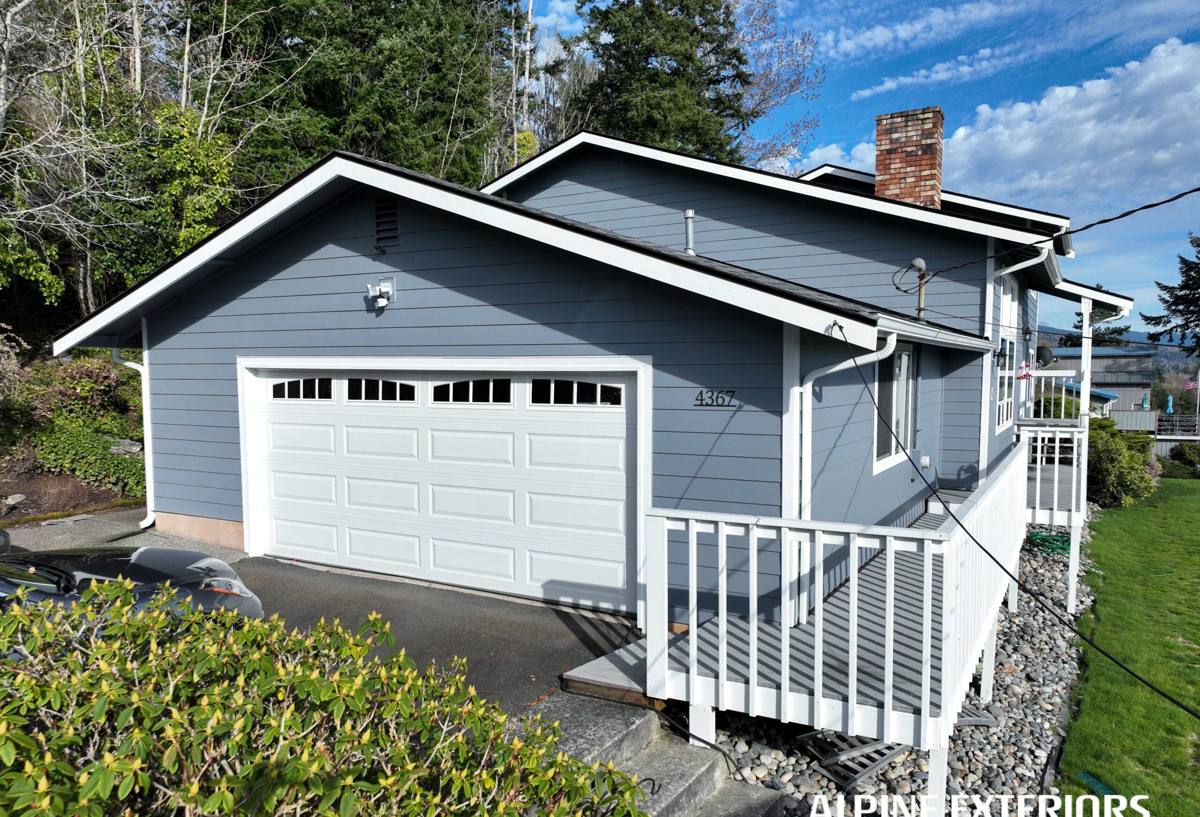
The Damage Patterns We See Most in This Neighborhood
Moss and Algae on the Deck Surface
Whatcom County's long wet season gives moss and algae months to establish themselves on decking, especially in shaded spots under tree cover or on the north side of a house. Left alone, moss holds moisture against the wood surface around the clock, which accelerates rot in the boards themselves and turns the deck into a slip hazard during the rainy months.
Corroded or Failing Fasteners
Salt air speeds up corrosion on any metal that isn't rated for coastal exposure. We regularly find nails, screws, and joist hardware that have rusted, weakened, or stained the surrounding wood on decks that are otherwise structurally sound. Corroded fasteners are one of the most common reasons a deck that "looks fine" is actually unsafe underneath.
Ledger Board and Rim Joist Rot
The ledger board — where the deck attaches to the house — is the single most important structural connection on most decks, and it's also the part most exposed to water intrusion if flashing was skipped or installed incorrectly. Driving rain off the bay finds its way behind poorly flashed ledgers over time, and by the time rot shows on the surface, the framing underneath is often further gone than it looks.
Soft or Spongy Decking and Railings
Wood that stays wet for extended stretches softens from the inside out. Railing posts set in ground contact or close to grade, and decking boards in shaded, poorly ventilated areas, are usually the first places this shows up.
What a Correct Deck Repair Actually Involves
A repair that's done right starts below the surface, not at it. Replacing a few rotten boards without checking the framing underneath just hides a problem instead of solving it. Here's what we check and address on every Edgemoor deck repair:
- Structural framing — joists, beams, and posts — checked for soft spots, rot, and undersized or corroded connectors
- Ledger board attachment and flashing, since this is the point most likely to hide water damage behind the house wall
- Fastener condition, with a plan to replace corroded hardware with fasteners rated for coastal, treated-lumber exposure
- Drainage and grading around posts and footings, since standing water at the base accelerates rot from the ground up
- Surface material condition — decking boards, railings, and stair treads — for rot, splitting, and moss buildup
- Ventilation underneath the deck, since poor airflow is a major reason moisture problems return after a repair
Skipping any one of these usually means the same problem resurfaces within a season or two, just in a slightly different spot.
Repair or Replace? How We Make That Call
Not every deck problem calls for a full rebuild, and not every deck is worth patching. The honest answer depends on how much of the structure is affected and how the deck was originally built. We look at it component by component rather than making a blanket call on the whole structure.
| Deck Component | Sign of Trouble | Usually Repairable | Usually Needs Replacement |
|---|---|---|---|
| Ledger board | Soft wood, water staining on the house wall behind it | Localized rot caught early, with flashing correction | Rot extends into the house rim joist or has been ignored for years |
| Joists and beams | Sagging, sponginess, visible rot | One or two isolated joists | Widespread rot across multiple framing members |
| Decking boards | Splitting, moss staining, soft spots underfoot | Scattered board replacement | Most boards showing the same wear at the same time |
| Railings and posts | Wobble, soft wood at the base, loose connections | Individual post or baluster repair | Posts rotted at grade or connection points failed structurally |
| Fasteners and hardware | Rust streaks, corrosion, loosening | Hardware swap without disturbing sound wood | Corrosion has damaged the wood fibers around the fastener |
As a rule of thumb: if the framing is sound and the damage is limited to the surface layer or a handful of connections, repair is the honest recommendation. If rot has reached multiple structural members or the original construction had shortcuts — missing flashing, undersized framing, ground-contact posts — a rebuild is usually the more cost-effective path over the next ten to fifteen years.
Our Process for an Edgemoor Deck Repair
1. On-Site Inspection
We walk the entire deck, probe suspect areas with an awl or moisture meter, and check underneath wherever we can access it. This is where we find the difference between a deck that needs a few boards and one that needs structural work.
2. A Straightforward Scope and Estimate
You get a plain-language explanation of what we found, what needs to happen, and what it will cost — broken out by component so you can see where the money is going, not a single lump number with no explanation.
3. The Repair Itself
We remove and replace only what's actually compromised, correct any flashing or drainage issues we find along the way, and use fasteners and hardware suited to a coastal, high-moisture environment. If we find something worse once we open things up — which happens more often near the bay than inland — we stop and talk to you before proceeding, not after.
4. Final Walkthrough
Before we consider the job done, we walk it with you, point out what was done, and go over any maintenance that will help the repair last.
Material Choices That Matter More Near the Bay
Every material decision on a deck repair carries more weight in a salt-air environment than it would inland. A few of the trade-offs worth understanding:
Fasteners and Hardware
Standard electro-galvanized fasteners corrode noticeably faster in coastal air. Our standard on Edgemoor repairs is hot-dip galvanized or stainless steel hardware rated for ACQ-treated lumber, since mismatched metals can accelerate corrosion through galvanic reaction rather than slow it down.
Decking Material
Pressure-treated lumber is the most affordable option and performs fine when detailed correctly, but it requires more regular maintenance — cleaning, sealing, and moss control — than most homeowners expect in this climate. Composite and PVC decking cost more upfront and don't need staining, but they still need the framing underneath to be sound, and moss and algae still grow on their surface if the deck sits in constant shade, so they're not a maintenance-free answer to Whatcom County's moss season.
Sealants and Flashing
Flashing at the ledger board and any point where the deck meets the house is not optional in this climate — it's the single detail most responsible for whether a deck lasts fifteen years or thirty. We use flashing systems designed to shed water away from the house structure rather than sealants alone, which degrade and need reapplication far sooner than proper flashing does.
A Homeowner's Deck Maintenance Checklist for This Climate
A repaired deck stays repaired longer with a little seasonal attention. This is the routine we recommend to Edgemoor homeowners:
- Sweep leaves and debris off the deck surface regularly through fall, especially in shaded spots where moss takes hold fastest
- Clean moss and algae off decking and stairs before the wet season sets in, using a deck-safe cleaner rather than a pressure washer alone, which can damage wood fibers
- Check railings and stair posts for wobble or soft wood once or twice a year
- Keep gutters and downspouts clear so runoff isn't dumping extra water onto or under the deck
- Look at the ledger board connection annually for staining or gaps in flashing
- Reseal or restain wood decking on the manufacturer's recommended schedule — don't wait until it looks obviously weathered
- Keep vegetation trimmed back from the deck to improve airflow and sun exposure underneath
Why Local Experience in Edgemoor Actually Matters
Deck repair isn't identical from one property to the next, and a crew that's worked around Bellingham Bay knows what to expect before they even start probing boards. That means recognizing how tree cover and bluff-adjacent lots hold moisture differently than an open inland yard, knowing which fastener and flashing combinations actually hold up to salt air over time instead of just on paper, and understanding local permitting requirements for structural deck work before a project starts rather than after an inspection stalls it. It also means showing up with the right materials the first time, instead of learning through a callback that standard hardware wasn't enough for this environment.
We work on siding and exterior systems throughout Whatcom County, and decks fail for many of the same underlying reasons siding does here — water finding a way behind a barrier it wasn't supposed to get behind. That overlap is part of why we look at a deck repair as a whole-envelope problem, not just a carpentry job.
Get an Honest Look at Your Deck
If your deck has soft spots, visible moss buildup, rusting hardware, or just feels less solid than it used to, it's worth having someone look before another wet season adds to the damage. We offer free, no-pressure estimates for deck repair in Edgemoor and the surrounding Whatcom County area — use the form below to get a straightforward assessment of what your deck actually needs.