 Whatcom County
 Decks Take a Beating in Edgemoor
Edgemoor sits close to Bellingham Bay, under a heavy tree canopy, which is a beautiful place to live but a hard place to keep a deck. The combination of salt-laden air off the water, near-constant fall and winter rain, and long stretches of shade from mature trees means decks here age differently than they would twenty miles inland. Fasteners corrode faster. Boards stay damp longer between rain events. Moss and algae get a foothold on any surface that doesn't dry out quickly, and once established, that moisture-holding growth accelerates rot in wood and traps grit that wears down composite and coated surfaces alike.
We've replaced enough decks in and around Edgemoor to know which failure patterns show up first, and to build the replacement so those same problems don't repeat in five years. This page walks through what that actually looks like — not a generic deck pitch, but what a correct deck replacement for this specific stretch of Whatcom County involves.
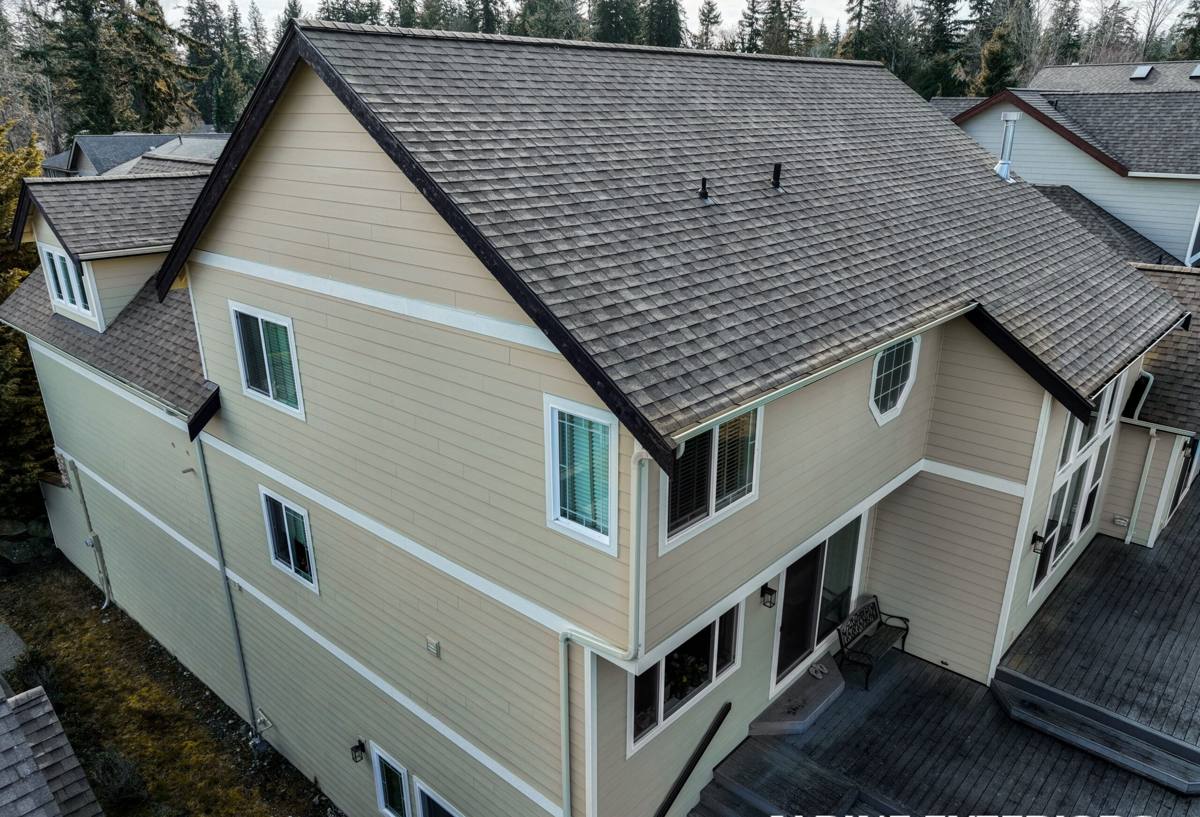
Why Decks Fail Faster Near the Water
Salt Air and Metal Fasteners
Airborne salt from the bay accelerates corrosion on anything metal — nails, screws, joist hangers, post bases. Standard electro-galvanized fasteners that would hold up fine in a dry inland yard can start rusting within a few seasons this close to the water. Once a fastener corrodes, it loses holding strength long before it looks obviously bad, which is part of why decks that "seem fine" from the top sometimes have a structurally compromised frame underneath.
Driving Rain and Trapped Moisture
Whatcom County doesn't just get rain — it gets sustained, wind-driven rain that finds its way into joints, ledger connections, and end grain that isn't properly sealed. On a shaded, tree-covered lot like much of Edgemoor, that moisture has less sun exposure to dry it back out. The result is wood that stays wet for days at a stretch, which is exactly the condition rot fungus needs to take hold.
Moss, Algae, and Surface Wear
A deck that stays damp under tree cover will grow moss whether it's wood or composite. On wood, moss holds moisture against the board and speeds decay. On composite or capped products, moss and algae mostly affect appearance and slip resistance, but aggressive pressure-washing to remove it can strip surface texture and void manufacturer warranties. The long moss season here means a deck's surface needs to be chosen and maintained with that reality in mind from day one, not treated as an afterthought.
What a Correct Deck Replacement Actually Involves
A deck replacement isn't just pulling up old boards and screwing down new ones. Done right, it starts below the surface:
- Full structural inspection of ledger board, posts, footings, and framing before any decking goes down — not after.
- Ledger flashing done correctly, since a poorly flashed ledger connection is the single most common source of hidden rot against the house.
- Corrosion-resistant fasteners and hardware rated for coastal or high-moisture exposure, not standard interior-grade hardware.
- Proper joist spacing and blocking for the decking material you're installing — composite and PVC products often require tighter spacing than wood.
- Drainage and airflow underneath the deck so the frame has a chance to dry between rain events instead of sitting wet.
- Footings sized and set to current code, especially on older Edgemoor homes where the original deck may predate current frost-depth and load requirements.
Skipping any one of these doesn't show up immediately — it shows up in three to seven years as soft spots, rust streaks, or a deck that starts to feel spongy underfoot.
Choosing the Right Decking Material for This Climate
There's no single "best" decking material — there's a best fit for your budget, your maintenance appetite, and how much sun your deck actually gets. Here's how the common options hold up under Edgemoor's shade-and-salt conditions:
| Material | Moisture/Moss Behavior | Maintenance | Typical Lifespan |
|---|---|---|---|
| Pressure-treated wood | Prone to moss and surface graying in shade; needs to dry out between rains to perform | Annual cleaning and periodic sealing | 10-15 years with upkeep |
| Cedar | Naturally rot-resistant but still needs to shed moisture; moss can still take hold in deep shade | Regular cleaning, periodic finish renewal | 15-20 years with upkeep |
| Capped composite | Resists rot completely; moss/algae sit on the surface rather than penetrating, easier to remove without damage | Occasional wash; no sealing or staining | 25-30 year warranty range, varies by brand |
| PVC decking | Fully moisture-proof core; best option for constantly shaded, damp areas | Lowest maintenance of the group | Similar to or longer than capped composite |
For heavily shaded Edgemoor lots close to the water, we generally steer homeowners toward capped composite or PVC for the decking surface itself, simply because the maintenance burden of keeping wood dry and moss-free under a tree canopy is real and ongoing. That said, plenty of homeowners prefer the look and feel of real wood and are willing to keep up with it — that's a legitimate choice too, as long as it's made with eyes open about the upkeep.
What We Won't Do
We don't install decking materials or fastening systems that we don't trust to perform in this specific climate, even if they're cheaper up front. That includes skipping proper ledger flashing to save time, using standard-grade fasteners where corrosion-resistant hardware is called for, or installing framing without adequate drainage. Those shortcuts don't fail on install day — they fail on the homeowner's timeline, years later, which isn't a trade-off we're willing to make on someone's largest outdoor living investment.
Our Deck Replacement Process
- On-site assessment — we inspect the existing deck, framing, ledger connection, and footings to see what's actually driving the need for replacement.
- Honest scope discussion — we tell you what's structural versus cosmetic, and what your material options realistically cost and require in upkeep.
- Permit and code check — Whatcom County and City of Bellingham permitting requirements vary by scope and deck height; we handle what's required for your project.
- Demo and structural rebuild — old decking, and any compromised framing, posts, or footings, is removed and rebuilt to current code.
- Flashing and waterproofing — ledger and any house connections are flashed correctly before decking goes down, not treated as an afterthought.
- Decking installation — installed per manufacturer spec for spacing, fastening, and gapping so the material performs as warrantied.
- Final walkthrough — we go over the finished deck with you, including basic care guidance suited to your material and site conditions.
Permits and Code Considerations in Whatcom County
Deck replacement in Whatcom County, including within Bellingham city limits where Edgemoor sits, generally requires a permit once you're doing more than a simple surface swap on an existing, code-compliant frame — particularly if footings, framing, or guardrails are involved. Requirements can include guardrail height and baluster spacing, footing depth tied to frost line, and proper attachment of the ledger to the house structure. We handle the permitting process as part of the job so you're not left tracking down inspections on your own, and so the finished deck is one that will pass inspection and hold up to an insurance review if it's ever needed.
What It Costs — and What Drives the Number
Every deck is different, but the factors that move the price are consistent. We'll always give you a firm number after seeing the site, but this is generally what drives cost up or down:
| Factor | Effect on Cost |
|---|---|
| Deck size and shape | Larger and more complex shapes (multi-level, angled) cost more per square foot than a simple rectangle |
| Decking material | Pressure-treated wood is the lowest upfront cost; composite and PVC cost more up front but less over time in maintenance |
| Framing condition | If posts, beams, or footings need replacement rather than reuse, that adds real cost but is not optional if they're compromised |
| Height and guardrails | Elevated decks require code-compliant railing systems, which adds material and labor |
| Site access | Tight, wooded, or sloped Edgemoor lots can add labor time for material staging and demo removal |
Maintenance Suited to a Long Moss Season
Whatever material you choose, a few habits make a real difference in how long your new deck stays solid and looks good in this climate:
- Sweep debris and standing leaves off the deck regularly, especially in fall — trapped organic matter holds moisture and feeds moss growth.
- Wash the deck surface at least once a year to remove early moss and algae growth before it establishes and stains the surface.
- Keep gutters and downspouts near the deck clear so runoff isn't dumping extra water onto or under the structure.
- Check the ledger flashing and any visible fasteners annually for early signs of rust or gaps.
- Trim back overhanging branches where practical to let more light and airflow reach the deck surface.
- For wood decks, plan on resealing on the schedule your finish product recommends — skipping a cycle in this climate shows up fast.
Why Hire a Crew That Already Works Edgemoor
A deck replacement crew that mostly works drier, sunnier parts of the county can absolutely build you a deck — but they may not default to the flashing details, fastener grades, and drainage planning that this shade-and-salt environment actually demands, because they don't run into those failure patterns every day. We do. Working regularly in Edgemoor and the surrounding Whatcom County waterfront neighborhoods means we're used to the tree-shaded lots, the tighter site access some of these older properties have, and the specific way salt air and driving rain shorten the life of a deck built to a lower spec. That local pattern-recognition is what keeps a replacement deck from becoming a repeat problem.
Get a Free, No-Pressure Estimate
If your deck is showing soft spots, rust streaks, persistent moss, or just isn't holding up the way it should for a home this close to the water, we're happy to take a look. The estimate is free, there's no pressure to commit on the spot, and you'll get a straight answer about what your deck actually needs — repair, partial rebuild, or full replacement. Use the form below to get started.