 Whatcom County
 Why Silver Beach Homes Put Windows to the Test
Silver Beach sits in a part of Whatcom County where windows work harder than the manufacturer's spec sheet ever accounts for. Homes here deal with a long wet season, wind-driven rain that hits window assemblies at an angle instead of straight down, and a persistent dampness that keeps moss and mildew active for much of the year. Add in salt-tinged air moving up from the water on breezy days, and you have a combination that's tough on seals, frames, and hardware alike.
None of that is a reason to panic about your windows. It's a reason to be specific about what "energy-efficient" needs to mean in this location. A window that performs well in a dry, mild climate can still underperform here if the installer didn't account for how water moves around a window opening during a real Pacific Northwest storm. We install and replace windows across Whatcom County, and the homes we see fail early almost always fail at the same two points: the glass package wasn't matched to the exposure, or the flashing and sealing around the frame wasn't done correctly. Both are fixable, and both matter more here than in most parts of the country.
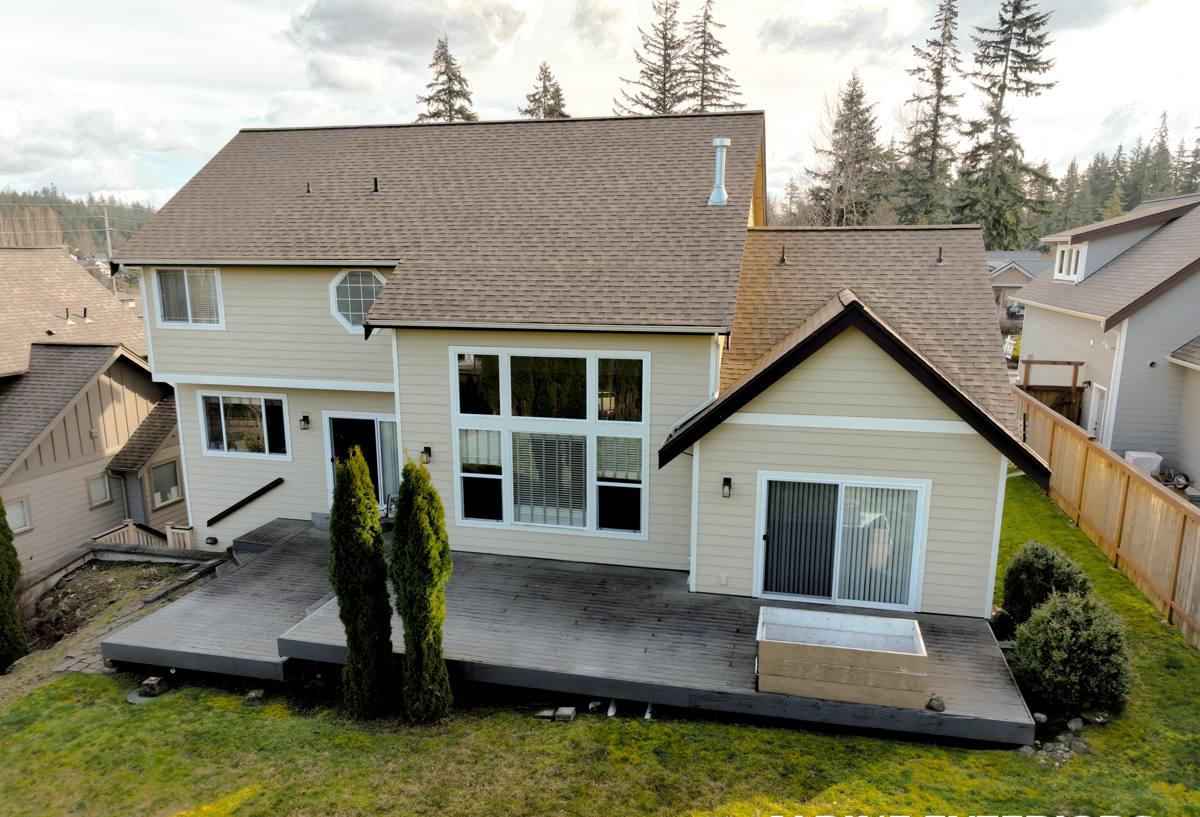
What "Energy-Efficient" Actually Means for This Climate
Energy efficiency in a window comes down to a handful of measurable things, and in a marine climate like ours, they don't all carry equal weight.
U-Factor: The Number That Matters Most Here
U-factor measures how much heat a window lets escape. Lower is better. Because Whatcom County winters are long, damp, and mild rather than bitterly cold, a solid U-factor window pays for itself steadily through fewer months of the year where your heating system is fighting a losing battle against a cold pane of glass.
Solar Heat Gain Coefficient (SHGC)
This measures how much solar heat passes through the glass. Homes on the water side or with a lot of west-facing glass benefit from a moderate SHGC to avoid overheating rooms on the rare sunny stretch, while north- and east-facing windows can usually run a bit higher without issue.
Frame Material and Weather Resistance
This is where a lot of window jobs go wrong in our climate. The glass package can be excellent and the whole window can still underperform if the frame material or the seal around it can't handle sustained moisture exposure and the mildew-prone conditions that come with it. We factor exposure — how much direct wind-driven rain a given wall or window actually sees — into the frame and glazing recommendation for every opening, not just the house as a whole.
| Frame Material | Moisture Tolerance | Maintenance | Typical Fit for This Climate |
|---|---|---|---|
| Vinyl | Very good — won't rot or corrode | Low; occasional cleaning | Strong all-around choice for most Whatcom County homes |
| Fiberglass | Excellent — very stable in wet/dry cycling | Low | Good for higher-exposure walls, slightly higher cost |
| Wood (clad or unclad) | Fair to good depending on cladding | Higher — needs upkeep on exposed wood | Best on protected elevations, or with full exterior cladding |
| Aluminum | Poor thermal performance, corrosion risk near salt air | Moderate | Generally not our first recommendation for exposed walls here |
Signs Your Current Windows Are Costing You Money
Most homeowners don't replace windows because they woke up thinking about U-factors. They replace them because something is visibly or physically wrong. Here's what we typically hear about, and what it usually means:
- Condensation between the panes — the seal has failed and the insulating gas fill is gone; this is a repair-or-replace situation, not a cleaning problem.
- Cold spots or drafts near the frame — often points to failed weatherstripping or, more seriously, a flashing and sealing problem letting air move around the frame.
- Soft or discolored trim around the window — usually a sign that water has been getting behind the frame, which is a moisture-management issue, not just a cosmetic one.
- Visible moss or persistent green staining near the window head or sill — a climate-specific sign that water is sitting where it shouldn't, often tied to drainage or flashing detail rather than the window itself.
- Windows that are hard to open, or won't stay latched — frame movement from moisture absorption or settling, common in older wood-frame windows in wet climates.
- A noticeably higher heating bill with no other explanation — worth an inspection before assuming it's the furnace.
What a Correct Installation Involves
Replacing a window is not just pulling out the old unit and setting a new one in the same hole. In a climate that gets sustained, wind-driven rain, the installation detail around the window is at least as important as the window itself.
Moisture Management Comes First
Before a new window ever goes in, the opening gets inspected for existing water damage, rot, or compromised sheathing. Installing a high-performance window into a wall that's already retaining moisture just traps the problem behind a new frame. We flag and address that before proceeding, not after.
Flashing and Sealing, Done in the Right Order
Proper installation uses a layered, shingle-style approach — sill pan flashing, side flashing, and head flashing installed in the correct sequence so that any water that does reach the assembly is directed out and down, never trapped behind the siding. This detail is invisible once the job is finished, but it's the single biggest factor in whether a window stays watertight through years of driving rain.
Interior and Exterior Sealing
Low-expansion foam and appropriate sealant are used around the frame — not just caulk smeared along the exterior trim. Interior air sealing matters too; a gap on the inside lets conditioned air escape even if the exterior looks finished.
Fit and Shimming
A window that's out of square or improperly shimmed will bind, won't seal evenly, and puts uneven stress on the frame over time. We check level, plumb, and square at every step, not just at the end.
Our Process, Start to Finish
- On-site assessment — we look at each window opening individually, not just the house as a whole, since exposure varies wall to wall.
- Honest recommendation — we'll tell you where a full replacement makes sense and where a repair might reasonably hold for now.
- Clear, written estimate — materials, scope, and timeline spelled out before any work begins.
- Opening prep — removal of the old unit, inspection of the framing and sheathing, and repair of any hidden moisture damage found along the way.
- Installation — proper flashing sequence, shimming, and sealing as described above.
- Interior and exterior finish work — trim, caulking, and touch-up so the job looks finished, not just functional.
- Walkthrough — we go over the finished windows with you before we consider the job done.
Cost Factors Worth Understanding
Window pricing varies by opening size, frame material, glass package, and how much prep or repair work is needed once the old window comes out. Rather than quote a number that won't mean much without seeing your home, here's what actually moves the price:
| Factor | Why It Affects Cost |
|---|---|
| Frame material | Vinyl is typically the most cost-effective; fiberglass and clad-wood run higher |
| Glass package (U-factor, SHGC, gas fill) | Higher-performance glass costs more but pays back through comfort and energy use |
| Hidden moisture or rot behind the old window | Repair work discovered during removal adds labor and materials |
| Window size and configuration | Larger units, custom shapes, or operable styles (casement vs. single-hung) vary in price |
| Number of windows done at once | Doing multiple openings in one visit is generally more efficient than one-off replacements |
Before You Sign With Any Contractor: A Quick Checklist
- Are they licensed and insured to do exterior work in Washington State?
- Will they inspect the framing and sheathing behind the old window before installing the new one, not just after a problem shows up?
- Do they describe their flashing and sealing method, or just talk about the window brand?
- Is the estimate itemized, or a single vague number?
- Do they have experience with homes in wet, wind-exposed parts of Whatcom County specifically, not just general remodeling experience?
- Is there a written warranty covering both the product and the installation labor?
Why Local Experience Matters for This Job
A window that's correctly installed for a dry-climate home isn't automatically correct for a home dealing with driving rain, salt-tinged air, and a moss season that runs for much of the year. Crews that work Whatcom County regularly learn which walls in a given neighborhood take the brunt of the weather, which older homes tend to have hidden moisture issues behind original trim, and which installation details actually hold up here versus what looks fine on paper. That local pattern recognition is hard to substitute for, and it's the difference between a window job that looks good at handoff and one that's still performing correctly five winters from now.
If you're weighing whether your windows need a repair, a partial replacement, or a full upgrade, we're happy to take a look and give you a straight answer. Request a free, no-pressure estimate using the form below, and we'll walk your home's windows with you before recommending anything.