 Whatcom County
 Building Decks for Fairhaven's Waterfront Climate
Fairhaven sits close to Bellingham Bay, which means homes here deal with a combination most inland Whatcom County neighborhoods don't get in equal measure: salt-laden air off the water, driving rain that comes in sideways during winter storms, and a moss season that can run eight months out of the year on shaded, north-facing decks. A deck built without those three things in mind will look fine for a year or two and then start showing problems — rust bleeding from fastener heads, soft spots where water pooled against the house, or a slick green film that turns stairs into a hazard every fall.
We build and repair decks throughout Fairhaven and the rest of Whatcom County, and the approach we take here is shaped by what actually fails on decks in this specific environment, not a generic build spec pulled from a drier climate.
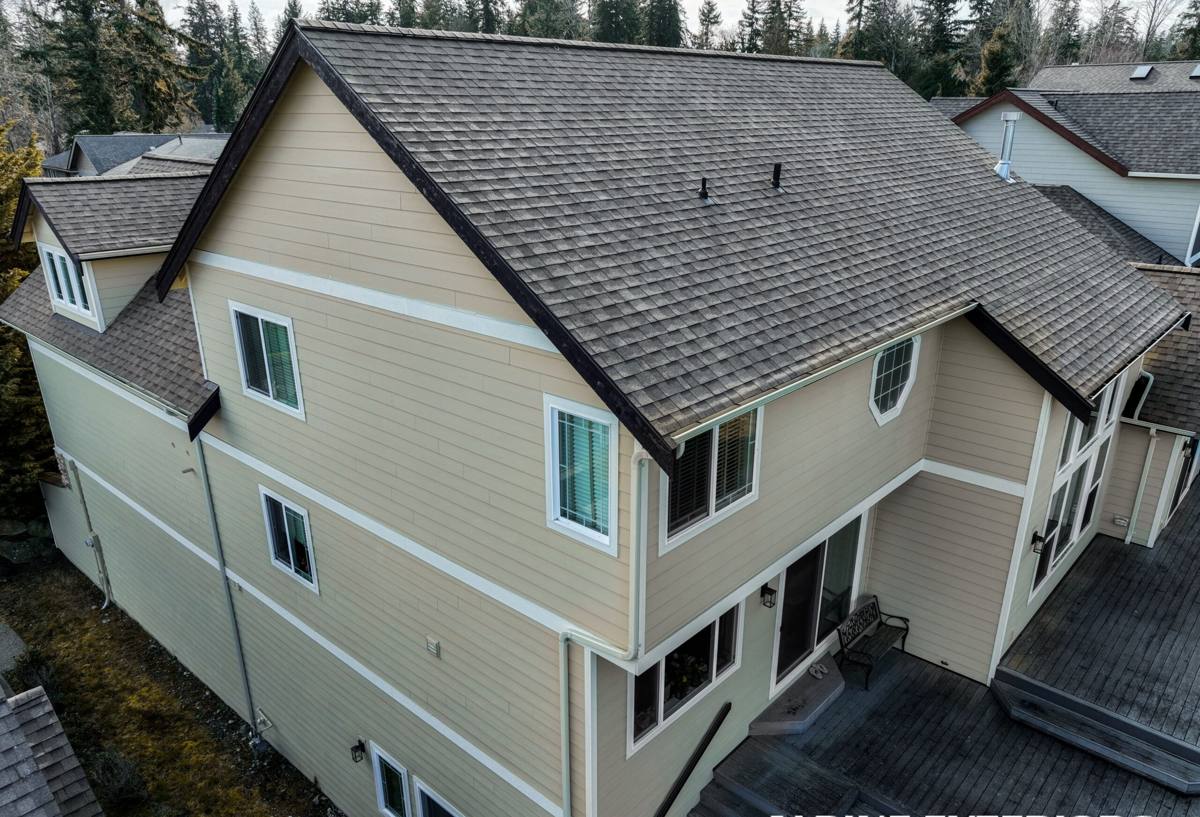
What Fairhaven's Climate Actually Does to a Deck
Salt Air and Metal Fasteners
Proximity to the bay means airborne salt settles on every exterior surface, including deck fasteners and hardware. Standard zinc-coated screws and nails corrode faster near the water than they would a few miles inland. Once a fastener starts rusting, it weakens, stains the surrounding wood or composite, and eventually needs to be drilled out and replaced — often after the surrounding material has already been damaged by the rust bleed.
Driving Rain and Water Intrusion
Whatcom County winters bring sustained, wind-driven rain rather than short downpours. On a deck, that means water gets pushed sideways into joints, under ledger boards, and behind rim joists — places a light rain would never reach. If flashing and gaps aren't detailed correctly, water works its way into framing and stays there, because our air stays damp for weeks at a time and doesn't dry things out quickly.
Moss and Shade
Many Fairhaven lots have mature trees and homes packed close together, which means partial shade on at least part of most decks for much of the day. Combined with our long wet season, that's ideal moss and algae growth conditions. Moss holds moisture against decking boards, which accelerates rot in wood and can degrade the surface layer of some composite products over time, and it makes stairs and low-traffic areas genuinely slippery.
What a Correctly Built Deck Needs Here
None of this means decks don't work in Fairhaven — they're everywhere in this neighborhood. It means the details matter more than they would somewhere drier. A deck built to hold up here includes:
- Stainless steel or high-grade coated fasteners rated for coastal/marine exposure, not standard exterior-grade hardware
- Properly lapped, sealed ledger board flashing where the deck attaches to the house — the single most common source of hidden rot we find on older decks
- A gap and slope at the ledger connection so water sheds away from the house rather than pooling against the siding
- Joist tape or a comparable barrier on top of framing members to keep standing water off exposed wood
- Footings set below frost depth and sized for our soil conditions, with proper drainage so water doesn't sit against concrete piers
- Board spacing and airflow underneath sufficient to let the structure dry out between rain events instead of staying damp for weeks
- A decking material chosen with this specific moss/shade/salt combination in mind, not just picked for looks
Choosing Decking Material for a Shaded, Damp Lot
There's no single "best" decking material for every Fairhaven yard — the right call depends on how much sun and shade the deck actually gets, how close it is to the water, and what maintenance the homeowner is realistically willing to do.
| Material | How it handles our climate | Maintenance |
|---|---|---|
| Pressure-treated wood | Affordable and structurally solid; needs regular sealing to resist moisture and moss in shaded spots | Annual cleaning, re-sealing every 1-2 years |
| Cedar | Naturally rot-resistant and handles our moisture well, but still needs upkeep to keep its color and resist moss in shade | Cleaning and oil/stain every 1-2 years |
| Composite decking | Very good moisture and rot resistance; some capped products also resist moss buildup better than wood, though algae can still grow on the surface film in deep shade | Periodic washing; no sealing or staining |
| PVC decking | Fully synthetic, essentially immune to rot; performs well in wet, shaded conditions | Occasional washing; higher upfront cost |
For decks with heavy shade or close proximity to the bay, we generally steer clients away from unsealed, uncapped lower-grade composite or lower-grade wood, not because either product is bad, but because the maintenance burden to keep them looking and performing well in this particular microclimate is higher than most homeowners expect going in. We'll walk through the honest trade-offs for your specific lot rather than push one product across the board.
Structural Work: What's Underneath Matters More Than What's On Top
A lot of deck problems in this neighborhood aren't about the decking boards at all — they're in the framing, ledger connection, and footings that don't get looked at once the deck is finished and looks good. On repair and rebuild jobs, we specifically check:
- Ledger board condition and flashing behind the rim joist
- Post and beam connections for rust, rot, or undersized hardware
- Footing condition and whether they've settled or shifted
- Joist spacing and whether the structure meets current code for the deck's size and use
- Railing post attachment, since this is a common failure point on older decks and a safety issue, not just a cosmetic one
If we find rot or corrosion during a resurfacing job, we address it before installing new decking rather than covering it up. A new deck surface over compromised framing doesn't hold up, and it hides a problem that gets more expensive to fix the longer it sits.
Permits and Whatcom County Requirements
Most new deck builds and many substantial repairs require a permit, and requirements depend on deck height, size, and attachment to the structure. We handle the permit process as part of the job so you're not left figuring out county requirements on your own, and we build to current code for railing height, guard spacing, and structural load — details that matter both for safety and for resale down the line.
Our Process
1. On-Site Assessment
We look at sun exposure, drainage, existing structure condition (for repairs or rebuilds), and how you actually use the space, then talk through material options honestly, including what each one will actually cost you in upkeep over the years.
2. Design and Proposal
You get a clear scope of work and cost breakdown before anything starts — no vague allowances that turn into surprise change orders partway through.
3. Permitting
We pull the necessary permits and coordinate inspections so the finished deck is code-compliant, not just good-looking.
4. Build
Framing, flashing, and fastener choices are handled to the standard this climate actually requires, not the minimum a spec sheet allows.
5. Final Walkthrough
We go over the finished deck with you, including basic maintenance guidance specific to the material you chose and your lot's sun/shade conditions.
Cost Factors for a Fairhaven Deck Project
Deck pricing varies widely based on size, material, height off the ground, and site access, so we don't quote broad numbers without seeing the site. What consistently moves the price up or down on jobs in this neighborhood:
- Decking material selected (wood, composite, or PVC)
- Deck height and whether stairs, multiple levels, or railings are involved
- Whether it's new construction or a rebuild that requires demolition and disposal of an existing structure
- Site access — some Fairhaven lots have limited equipment access, which affects labor time
- Condition of existing footings and framing on repair/rebuild jobs
- Additional features like built-in seating, lighting, or a pergola
Why Hire a Crew That Already Works in Fairhaven
Deck-building fundamentals don't change from town to town, but the details that determine whether a deck lasts do change with the site. A crew that regularly works Fairhaven and the rest of Whatcom County already knows which fastener grade holds up this close to the bay, how to detail a ledger connection for our rain patterns, and which spots on a shaded lot are going to fight moss no matter what material goes down. That's the difference between a deck that needs real attention in year three and one that's still solid well past the point most decks start showing their age.
If you're planning a new deck or dealing with an aging one showing rot, rust, or moss buildup, we're happy to come take a look. Reach out for a free, no-pressure estimate using the form below.