 Whatcom County
 Why Fairhaven's Location Changes What Siding Needs to Do
Fairhaven sits right against Bellingham Bay, and that waterfront position puts homes here under a different kind of stress than siding on the inland side of Whatcom County deals with. Salt-laden air moves off the water, wind-driven rain comes in sideways during winter storms, and the tree cover and marine humidity that make the neighborhood beautiful also keep exterior walls damp for long stretches of the year. Siding that gets installed without accounting for that combination tends to show problems years earlier than it should — not because the product failed, but because the installation didn't match the environment.
Salt Air and Metal Fasteners
Salt in the air accelerates corrosion on anything metal — fasteners, flashing, trim screws. Over time that shows up as rust streaking through paint, staining at nail heads, and eventually fastener failure that lets panels shift or loosen. The fix isn't complicated, but it has to be deliberate: corrosion-resistant fasteners and flashing rated for coastal exposure, used consistently, not just at the parts of the house that face the water.
Driving Rain and Wind Exposure
Storms off the Strait of Georgia and the Sound don't just drop rain straight down — they push it horizontally into wall assemblies, especially on gable ends and upper stories that catch wind. That means water gets tested at every seam, joint, and penetration on the house, not just at the bottom edge of the siding. A water-resistive barrier and flashing details that work fine on a sheltered inland lot can still let water in on a home exposed to Fairhaven's wind patterns.
Moss, Shade, and a Long Wet Season
Whatcom County's wet season runs long, and Fairhaven's mature tree canopy adds shade that keeps siding from drying out between rains. That combination is exactly what moss and algae need to take hold, particularly on north-facing walls and anywhere siding sits close to landscaping. Moss growth isn't just cosmetic — it holds moisture against the surface longer, which shortens the life of whatever's underneath it.
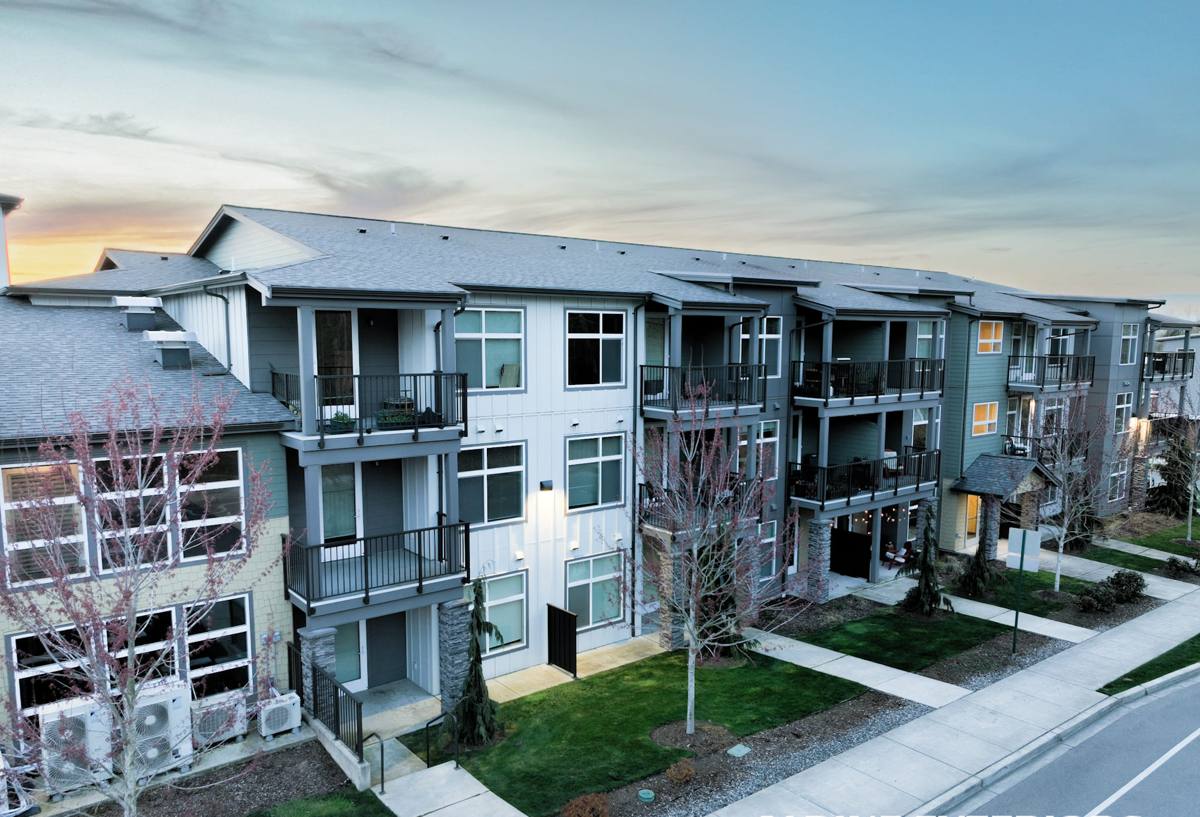
What a Correct Siding Installation Actually Involves
Siding is a system, not a single layer. The visible panels get the attention, but most of the actual protection comes from what's behind them — and that's where installation quality separates a job that lasts decades from one that causes problems in five years.
The Water Management System
Underneath every siding panel should be a continuous water-resistive barrier, properly lapped so water sheds downward and outward at every seam. Flashing goes above windows, doors, and any horizontal trim to direct water away from the wall assembly instead of behind it. On a home exposed to the wind and rain patterns near Bellingham Bay, these details matter more than they would on a sheltered lot — there's less room for error before a small gap becomes an active leak path.
Fastening and Clearances
Fiber cement siding has manufacturer-specified fastener patterns, nailing zones, and gaps at butt joints — skipping or fudging these isn't a shortcut that saves time without cost, it's how panels crack, cup, or pull loose. Clearance also matters at the bottom of the wall: siding installed too close to grade, decking, or roofing wicks up moisture and starts failing from the bottom edge regardless of how good the material is.
Caulking and Sealant Placement
James Hardie's installation instructions are specific about where sealant belongs and where it doesn't — some joints are meant to be sealed, others are meant to be left open so water can drain and the assembly can breathe. Sealing everything shut is a common mistake that traps moisture instead of managing it.
Why We Install Only James Hardie Fiber Cement
We don't install vinyl, LP SmartSide, primed wood, or other fiber cement brands. That's a deliberate standard, not a sales preference, and it comes down to how these products actually perform in a climate like Whatcom County's over the long run.
Vinyl siding is affordable and low-maintenance in dry climates, but it expands and contracts significantly with temperature swings, and long seams can let wind-driven rain work behind panels over time — a real concern on an exposed lot near the water. Engineered wood products like LP SmartSide use wood strand cores that are more moisture-resistant than raw wood but still rely on an intact protective coating; any breach at a cut edge, fastener, or joint gives moisture a path into a wood-based core. Primed cedar and spruce require the homeowner to stay on top of repainting and caulking on a strict schedule, or moisture intrusion and rot follow — a tough ask in a climate with this much sustained dampness.
James Hardie fiber cement is cement, sand, and cellulose fiber — it doesn't have a wood core to rot, it's non-combustible, and the HZ5 product line is engineered specifically for climates with sustained moisture exposure. The ColorPlus factory finish is baked on under controlled conditions, which holds up better against UV and moisture than field-applied paint, and it carries a strong transferable warranty. It's not the cheapest option on day one, but it's the one we're willing to put our name behind for a Fairhaven home.
| Factor | James Hardie Fiber Cement | Vinyl | Wood / LP SmartSide |
|---|---|---|---|
| Core material risk | No organic material to rot | No rot, but seams can admit water | Wood-based core vulnerable if coating breaches |
| Coastal/salt exposure | Engineered HZ lines for wet climates | Holds up but seams stress under wind | Coating wear speeds moisture entry |
| Fire resistance | Non-combustible | Combustible | Combustible |
| Finish durability | Factory-baked ColorPlus finish | Color molded in, can fade | Field-applied paint needs upkeep |
| Maintenance burden | Low with correct install | Low, but seam failures hard to spot | Regular repainting/caulking required |
Our Installation Process on a Fairhaven Home
- On-site assessment — we look at wall orientation relative to the water and prevailing wind, shade patterns from tree cover, existing moisture damage, and drainage around the foundation.
- Tear-off and sheathing inspection — old siding comes off and sheathing gets checked for rot or soft spots before anything new goes up. Damaged sheathing gets repaired first; siding installed over compromised sheathing fails regardless of how good the siding itself is.
- Water-resistive barrier and flashing — installed and lapped correctly at every window, door, and penetration, with attention to the wall faces that take the most wind-driven rain.
- Hardie panel installation — installed to manufacturer fastening specs, with corrosion-resistant fasteners appropriate for a coastal-influenced environment.
- Trim, caulking, and final inspection — sealant placed only where it belongs, clearances checked at grade and roof lines, and a final walkthrough before we call it done.
Why Hiring a Crew That Already Works Fairhaven Matters
A siding crew that mostly works dry inland neighborhoods can do fine work and still miss details that matter specifically here — how far back to hold siding from grade on a sloped waterfront lot, which walls need extra attention to flashing because of wind exposure, or how much clearance to leave near mature trees that keep a wall shaded most of the year. None of that is exotic knowledge, but it's the difference between a crew reading a manufacturer's general installation guide and one that's actually seen how Whatcom County's coastal weather plays out on a wall over several winters.
Maintenance After Installation
James Hardie siding installed correctly is low-maintenance, not zero-maintenance. A short annual routine keeps it performing the way it's supposed to:
- Rinse the exterior once or twice a year to clear salt residue and organic buildup, especially on walls facing the water or shaded by trees
- Check caulking at trim and penetrations for cracking or gaps and have it addressed before a wet season starts
- Trim back landscaping and branches that keep siding shaded and damp longer than necessary
- Watch for moss or algae starting on north-facing or shaded walls and address it early rather than letting it establish
- Confirm gutters and downspouts are directing water away from the wall, not dumping it against the siding
Cost Factors to Expect
Every Fairhaven home is different, so exact numbers require a walk-through, but the main cost drivers on most siding projects are consistent: the amount of tear-off and sheathing repair needed, the complexity of the roofline and number of penetrations, wall height and access, and the trim package chosen. Homes with existing moisture damage from prior siding failures typically need more sheathing work, which is worth budgeting for rather than being surprised by mid-project.
Getting Started
If your Fairhaven home's siding is showing moss, staining, soft spots, or just age, we're glad to take a look and give you a straightforward assessment of what it needs. Reach out for a free, no-pressure estimate — we'll walk the exterior with you, explain what we see, and lay out what correct installation would look like for your home.