 Whatcom County
 Why Ferndale Homes Need Siding Built for This Climate
Ferndale sits close enough to the water and the marine air moving off Bellingham Bay and the Strait of Georgia that homes here take a different kind of beating than siding further inland. It's not one big storm that does the damage — it's the daily grind of salt-laden air, wind-driven rain that gets pushed sideways into wall assemblies, and long stretches of gray, damp weather that never really let a house dry out between rain events. Add in the shade from mature evergreens on a lot of Ferndale properties, and you get moss and algae growth that can run most of the year, not just in winter.
Siding in this part of Whatcom County has to do three things well: shed water instead of absorbing it, hold its finish without chalking or fading in the wet-dry cycling, and resist the organic growth that thrives in cool, moist, shaded conditions. A lot of siding materials fail at one of those three. That's the lens we use when we talk to Ferndale homeowners about what to put on their homes.
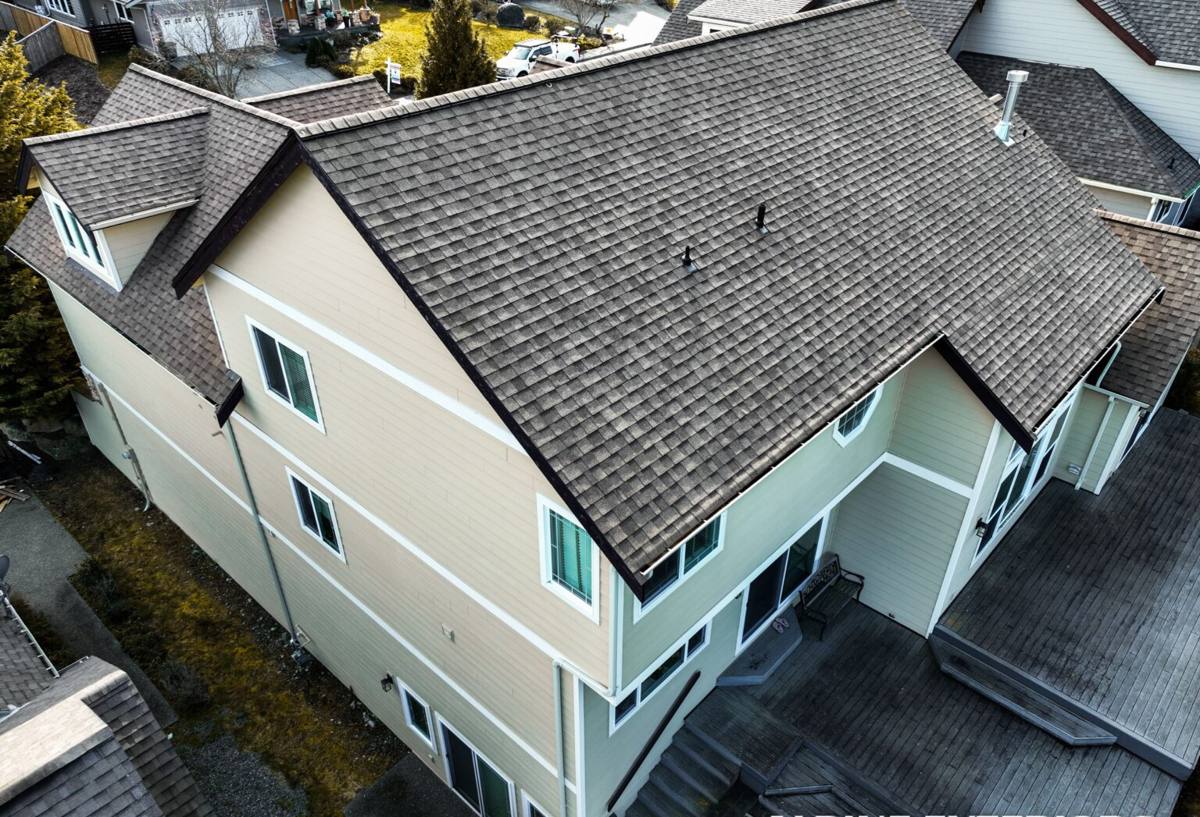
What Salt Air and Driving Rain Actually Do to Siding
Salt Air and Coastal Moisture
Homes closer to the water deal with airborne salt that settles on exterior surfaces and accelerates corrosion on fasteners, trim, and any exposed metal. It also holds moisture against the wall longer than dry inland air would. Siding materials that swell, delaminate, or absorb water at cut edges and seams are especially vulnerable in this kind of environment — moisture gets in and doesn't leave quickly.
Wind-Driven Rain
Ferndale's rain doesn't always fall straight down. Storms off the water push rain sideways into wall faces, which means the joints, laps, and penetrations in a siding system matter more here than they would in a drier climate. A siding job that looks fine on a calm day can still let water behind the cladding during a wind-driven event if the flashing, lap spacing, and caulking weren't done to spec.
Moss and Algae Season
Cool, shaded, and damp for large parts of the year — that's the exact recipe moss and algae need. On wood-based sidings, sustained moss growth holds moisture against the substrate and can lead to soft spots, rot, and paint failure over time. On vinyl, algae staining is mostly cosmetic but stubborn to clean. The material's surface matters as much as the material itself when it comes to how much maintenance a homeowner is signing up for.
Why We Only Install James Hardie Fiber Cement in Ferndale
We install James Hardie fiber cement siding exclusively — not vinyl, not LP SmartSide, not primed wood, not cedar. That's a deliberate standard, not a sales preference, and it's rooted in how those alternatives actually perform in a climate like this one.
- Non-combustible core: fiber cement won't ignite or contribute fuel to a fire the way wood-based products can.
- Engineered for moisture: Hardie's HZ5 product line is formulated for the freeze-thaw and wet climate conditions common to the Pacific Northwest, resisting moisture-related swelling and cracking better than wood-based composites.
- Factory-cured ColorPlus finish: the finish is baked on at the factory under controlled conditions, which holds up better against UV fading and moisture cycling than field-applied paint, and it resists the chalking that shows up on older painted sidings.
- Dense, stable substrate: fiber cement doesn't provide the same food source or moisture-retentive surface that encourages fungal and moss growth on wood products.
- Real warranty backing: Hardie's product warranty is transferable and long-term, which matters in a market where homes change hands and buyers want documented protection.
We're not going to tell you vinyl or LP SmartSide are junk — plenty of homes have them and get by fine in milder climates. But for a Whatcom County property exposed to salt air, sustained rain, and moss pressure, we've made the call that fiber cement done right is the material that holds up with the least maintenance drama over the decades a homeowner actually lives with it.
What Correct Fiber Cement Installation Looks Like
Fiber cement is only as good as the installation behind it. The material can perform exactly as engineered and still fail early if the details underneath it are wrong — and in a wind-driven rain environment, those details carry more weight than they would somewhere drier.
Water Management Comes First
Before a single piece of siding goes up, the wall needs a properly lapped weather-resistive barrier, correctly integrated window and door flashing, and a drainage plane that lets any moisture that does get behind the cladding find its way back out. This is the part of the job that's invisible once the siding is on — and it's also the part that determines whether the wall stays dry for the next 30 years.
Fastening and Lap Spec
James Hardie publishes specific fastener patterns, lap requirements, and clearances (from grade, roof lines, and decks) for its products. Skipping or eyeballing these specs is one of the most common ways fiber cement jobs go wrong — and it's also one of the fastest ways to void the manufacturer's warranty, since Hardie's warranty terms are tied to installation per their published instructions.
Caulking and Joint Treatment
Butt joints and trim transitions need to be treated correctly — either shot with the right sealant or engineered as a rain-screen detail — so wind-driven rain doesn't find a path in at the seams. This is exactly the kind of detail that separates a siding job that shrugs off a coastal storm from one that starts showing water staining at the joints within a couple of winters.
Field Cuts and Sealing Exposed Edges
Every field cut on fiber cement exposes raw material that needs to be sealed before installation, and cut edges at the bottom of the board need proper treatment too. Left unsealed, those exposed edges are where moisture intrusion typically starts.
Our Process for Ferndale Homes
- On-site assessment: we walk the exterior, check existing siding and sheathing condition, identify moisture entry points, and note shaded/high-moss areas that need extra attention.
- Water management plan: we spec the weather-resistive barrier, flashing details, and drainage approach specific to your wall assembly before anything comes off the house.
- Tear-off and substrate check: once old siding is off, we inspect sheathing for hidden rot or water damage — common on older Whatcom County homes — and address it before new siding goes up.
- Installation to Hardie spec: fastener pattern, lap spacing, clearances, and joint treatment are done to the manufacturer's published requirements, not shortcuts.
- Final walkthrough: we review the finished job with you, including care and cleaning guidance suited to a moss-prone, coastal-influenced property.
Comparing Siding Materials for Ferndale's Climate
| Factor | James Hardie Fiber Cement | Vinyl | LP SmartSide / Wood-Based |
|---|---|---|---|
| Moisture resistance in coastal/rain climate | Engineered for wet climates (HZ5 line) | Doesn't absorb moisture, but can warp/gap letting water behind it | Vulnerable to swelling and rot if moisture reaches the wood fiber core |
| Moss/algae resistance | Dense cement substrate, minimal organic food source | Surface algae staining is common, cosmetic but persistent | Susceptible to fungal growth if moisture is retained |
| Fire performance | Non-combustible | Can melt/deform under heat exposure | Combustible wood-based core |
| Finish longevity | Factory-cured ColorPlus finish, resists chalking/fading | Color molded in, can fade over time | Field-applied paint/primer, needs repainting on a cycle |
| Long-term maintenance | Low — periodic washing, no repainting cycle | Low — occasional cleaning | Higher — repainting, caulking, moisture monitoring |
Cost Factors Homeowners Should Understand
Fiber cement siding costs more upfront than vinyl and is comparable to or somewhat more than engineered wood products, but the honest way to think about it is total cost over the life of the siding, not just the install invoice. A few things that move the price on a Ferndale job specifically:
- Substrate condition: homes with hidden moisture damage under old siding need sheathing repair before new siding goes on — this is common enough in older coastal-adjacent homes that we always budget for the possibility.
- Wall complexity: multiple stories, dormers, and lots of trim/window penetrations mean more flashing and cutting labor.
- Siding profile and accessories: lap width, trim style, and whether you're adding features like board-and-batten accents affects material and labor.
- Access and site conditions: tree cover, tight lot lines, and staging space all factor into labor time.
We don't quote a job without walking the property first — anyone quoting a fiber cement re-side over the phone or from a photo is skipping the substrate check that actually determines the real cost.
What to Check Before Hiring Anyone for Fiber Cement Work
- Are they James Hardie certified or specifically experienced installing fiber cement, not just "siding in general"?
- Will they show you the water management plan (housewrap, flashing) before siding goes up, not just the finished product?
- Do they follow published fastener and lap specs, or eyeball it?
- Do they carry current liability insurance and workers' comp coverage?
- Have they worked in Whatcom County's coastal-influenced climate specifically, or mostly drier inland jobs?
- Will they put the manufacturer's warranty terms and their own workmanship warranty in writing?
Why Local Ferndale Experience Matters
A crew that's worked Whatcom County knows what a marine-influenced wall assembly needs before they pull the first piece of old siding off — where moisture tends to hide on a shaded north wall, how much lap clearance actually matters when storms come off the water, and what moss pressure does to a wall over a few damp winters. That's not something you get from a general contractor working from a national playbook. It shows up in the flashing details, the fastener spacing, and the sealing at every joint — the parts of the job nobody sees once the siding's up, and the parts that decide whether it's still performing in twenty years.
If you're weighing a re-side in Ferndale or want an honest read on your current siding's condition, we're glad to come take a look. The estimate is free, there's no pressure, and you'll get a straight answer about what your home actually needs — just fill out the form below.