 Whatcom County
 Why Siding Replacement in Lynden Is a Different Job Than It Looks
Lynden sits in the agricultural heart of Whatcom County, a few miles south of the Canadian border, in a stretch of Washington that stays wet, humid, and shaded for a large part of the year. Homes here don't fail because siding gets old in some abstract sense — they fail because moisture finds a way in and stays there. Driving rain off the Pacific pushes horizontally into wall assemblies during fall and winter storms, and the county's long, overcast stretches mean walls that get wet don't always get a real chance to dry out before the next system rolls through. Add in the salt-tinged marine air that moves inland across the county and a moss season that can run eight months or longer on north-facing walls and shaded elevations, and you have a climate that is genuinely hard on exterior materials, not just cosmetically but structurally.
That combination is why siding replacement in Lynden should be treated as a systems decision, not a materials swap. The product you choose, the water management details behind it, and the skill of the crew installing it all matter more here than they would in a dry climate. Get any one of those wrong and you're not looking at a paint problem in a few years — you're looking at rot, sheathing damage, and a second replacement long before it should have been necessary.
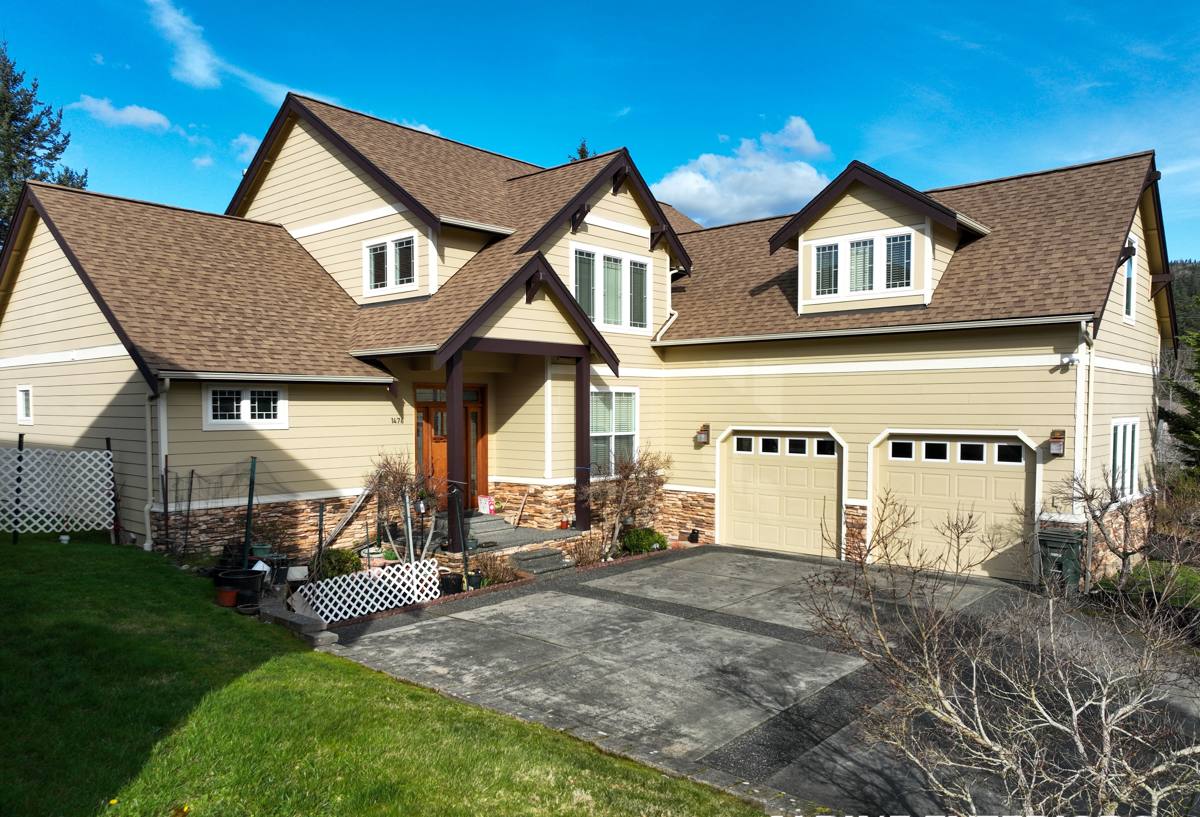
How to Tell Your Lynden Home Actually Needs Replacement
Not every tired-looking exterior needs full replacement — but in this climate, cosmetic symptoms often point to something happening behind the siding, not just on the surface. Worth taking seriously:
- Soft or spongy spots when you press on siding near the bottom courses, around window trim, or at butt joints
- Persistent moss or dark streaking that comes back within a season or two of cleaning, especially on shaded or north-facing walls
- Visible cupping, warping, or delamination in wood-based or engineered wood panels
- Paint that's failing faster than the repaint cycle should allow, particularly bubbling or peeling low on the wall
- Gaps opening up at seams, corners, or trim boards that weren't there when the siding was newer
- A musty smell in an adjacent interior room, or drywall/trim staining on an exterior wall
Any one of these can be isolated and repairable. Several together, especially on a home that's twenty-plus years old, usually means the underlying weather-resistive barrier and the siding system as a whole are due for a full replacement rather than another round of patching.
What a Correct Siding Replacement Actually Involves
A siding replacement done right in Whatcom County is as much about what goes on before the new siding as the siding itself. The visible product gets the attention, but the water management layer underneath it is what determines whether the job lasts.
Tear-off and inspection
Old siding comes off in sections so the crew can inspect sheathing as they go, not all at once at the end. Any soft, delaminated, or rot-damaged sheathing gets identified and replaced before anything new goes back up — covering damaged sheathing with new siding just hides the problem for a few more years.
Weather-resistive barrier
A new house wrap or weather barrier goes on with correctly lapped seams — upper courses over lower, so water sheds down and out rather than working its way behind the barrier. In a climate with as much horizontal, wind-driven rain as this one, sloppy lapping is one of the most common causes of hidden wall failure.
Flashing at every penetration
Windows, doors, hose bibs, light fixtures, and vents all need proper flashing integrated with the weather barrier — not just caulk. Caulk is a maintenance item that eventually fails; correctly lapped flashing is a permanent detail that doesn't depend on a homeowner remembering to re-caulk every few years.
Rainscreen or drainage gap
Where conditions call for it, a drainage gap between the siding and the wall assembly gives any moisture that does get past the outer layer a path to drain and air to dry the cavity out. In a county with Lynden's rainfall and humidity pattern, this detail earns its cost.
Fastening and clearances
Correct fastener type, spacing, and penetration depth, plus proper clearance from grade, decks, and roof lines, all affect how the siding performs over decades — not just how it looks on installation day.
Why We Install Only James Hardie Fiber Cement
We don't install vinyl, LP SmartSide, Cemplank, Allura, or primed wood siding — cedar included. That's a deliberate standard, not a sales position, and it's worth explaining honestly rather than just stating it.
Vinyl is inexpensive and low-maintenance in mild climates, but it's a thin plastic product that expands and contracts significantly with temperature swings, can crack in impacts, and doesn't hold up structurally the way a rigid cement-based product does — and in a climate where wind-driven rain is a real factor, the way panels overlap and seal at seams matters more than it does somewhere drier. Engineered wood products like LP SmartSide use wood strand cores that perform well when the water management behind them is flawless, but they're also more sensitive to sustained moisture exposure than fiber cement, which is a real consideration in a county that stays wet for much of the year. Other fiber cement brands, like Cemplank and Allura, are legitimate competitors to Hardie on paper, but we've standardized on one product line so our crews install one system to a consistent, well-practiced spec rather than switching materials and installation quirks project to project. Primed wood and cedar look great and age beautifully when maintained religiously, but that maintenance burden — repainting, sealing end grain, staying ahead of moisture — is a real ongoing cost that most homeowners underestimate when they choose the product.
What James Hardie gets right for this climate
Hardie fiber cement is non-combustible, dimensionally stable across temperature and moisture swings, and resistant to moss and mildew growth in a way that matters directly in a county with Lynden's moss season. The ColorPlus factory finish is baked on under controlled conditions rather than field-applied, which gives it better fade and chip resistance than a job-site paint job, and the HZ5 product line is engineered specifically for climates with freeze-thaw cycling and sustained moisture exposure — conditions this part of Washington sees regularly. Hardie also backs the product with a long, transferable limited warranty, which matters if you sell the home before the siding's functional life is up.
None of that makes Hardie a magic material — it still depends entirely on correct installation, the same flashing and drainage details described above. But it gives a well-installed job the best odds of a long, low-maintenance service life in this specific climate, which is why it's the only product we put our name behind.
Our Process, Start to Finish
- Walkthrough and assessment — we inspect the current siding, sheathing where accessible, trim, and problem areas like moss-prone walls and low-clearance spots before we scope anything
- Written estimate — a clear breakdown of tear-off, sheathing repair allowance, weather barrier, flashing, siding, trim, and labor, with the Hardie product line and profile specified
- Scheduling around Whatcom County weather — siding installation depends on dry working windows; we plan sequencing so exposed sheathing isn't left open longer than necessary
- Tear-off and sheathing repair — done in sections with inspection as we go, not all at once
- Weather barrier, flashing, and drainage details — installed to spec before the first piece of visible siding goes up
- Hardie installation — correct fastening, clearances, and joint treatment per manufacturer spec
- Final walkthrough — we go over the finished work with you before calling the job done
What Drives the Cost of a Siding Replacement
| Factor | Why It Matters in Whatcom County |
|---|---|
| Home size and wall complexity | More corners, dormers, and trim detail mean more flashing and labor time |
| Sheathing condition | Rot damage found during tear-off adds repair scope — common on homes with long-neglected moss or moisture issues |
| Siding profile and accessories | Lap width, trim style, and corner details affect material cost and labor time |
| Access and site conditions | Tight lots, landscaping, and multi-story sections affect staging and scaffolding needs |
| Weather barrier and drainage detailing | A proper rainscreen assembly costs more up front but reduces moisture risk substantially in this climate |
| Paint or color match needs | ColorPlus factory finish adds cost over field-primed siding but removes a recurring repaint expense |
We don't quote a number without seeing the home — anyone who does is guessing, and in a climate where hidden sheathing damage is common, that guess can be badly wrong.
Why It Matters That a Crew Already Works Lynden
A crew that regularly works Whatcom County jobs isn't guessing at how much drainage detailing a wall needs or how aggressive the moss growth will be on a shaded elevation — they've seen it repeatedly on homes with the same exposure. That matters for scheduling too: siding installation needs dry working windows, and a local crew plans tear-off and installation sequencing around this region's weather patterns rather than a generic timeline. It also matters for accountability. A contractor based in and working the area regularly has a reason to stand behind the work years later, not just get through the job and move on to the next region.
A Simple Pre-Estimate Checklist
- Note which walls show the heaviest moss or staining — usually a shade and drainage clue, not just a cleaning problem
- Press-test soft-looking areas near the bottom courses and around trim before we arrive, if it's safe to do so
- Have any past repair or leak history handy, even if it seems minor at the time
- Think about whether you want to address gutters, downspouts, or grading at the same time — water management around the house affects how the new siding performs
- Decide if there are areas (decks, additions, outbuildings) you want included in the same scope
If your Lynden home is showing any of the signs above, or you're simply planning ahead for a siding replacement, we're glad to walk the property with you and put together a straightforward, no-pressure estimate — just fill out the form below to get started.