 Whatcom County
 Roofing in Nooksack: A Different Set of Demands
Nooksack sits in a stretch of Whatcom County where the weather doesn't do a home any favors. Homes here deal with driving rain off the Sound, salt-laden air working its way inland, and a moss season that can run most of the year in shaded, north-facing sections of a roof. A roof that's correctly installed for this environment looks a lot like a roof installed anywhere else at first glance — but the underlayment, ventilation, and edge details underneath make the difference between a roof that holds up for its full service life and one that starts showing problems in year eight or nine.
When we install a new roof in Nooksack, we're not just matching shingles to a house. We're building a system that sheds water fast, breathes properly, and resists the moss and moisture that define this part of Washington. This page covers what that actually involves — the materials, the process, and the details that matter most for homes in this area.
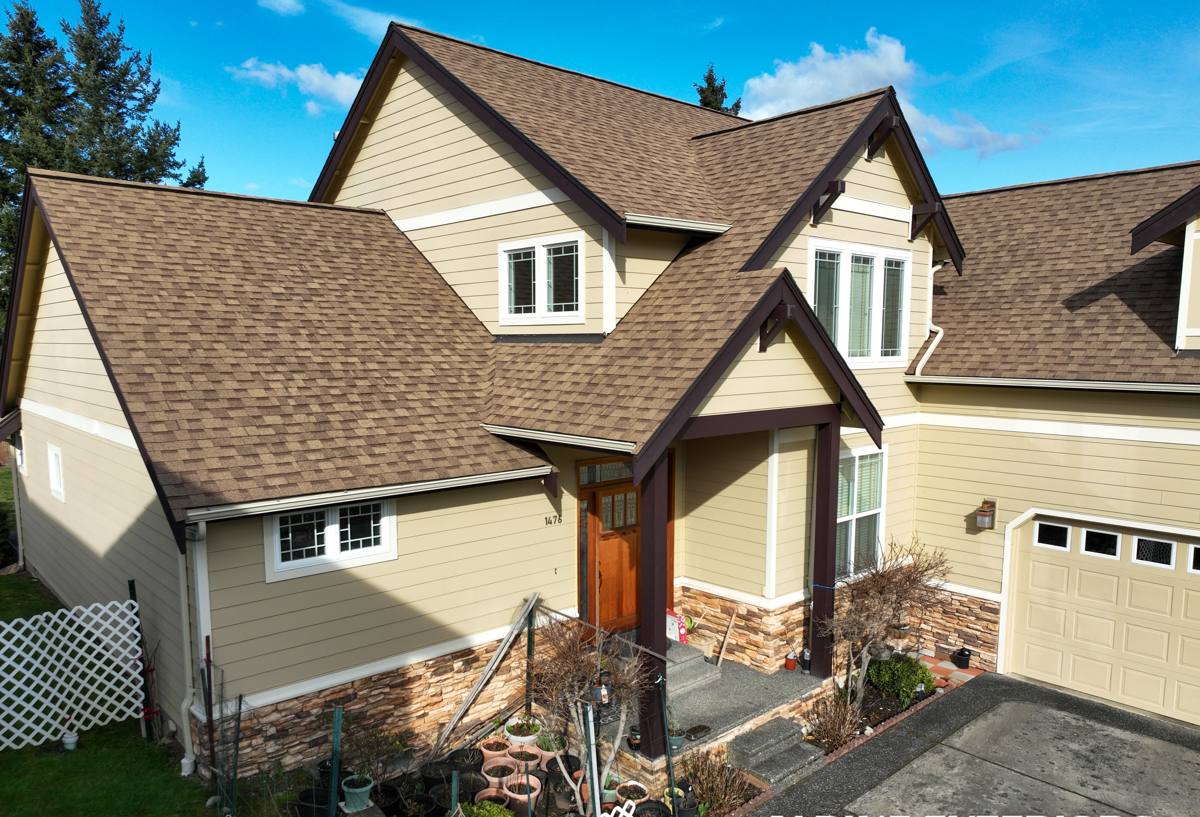
What Whatcom County Weather Does to a Roof Over Time
Understanding the climate here helps explain why we make the choices we do on every new roof install.
Driving Rain and Wind-Driven Moisture
Rain in this region doesn't always fall straight down. Wind off the water pushes it sideways, which means it can work its way under shingle tabs, around flashing, and into valleys if those areas aren't sealed and lapped correctly. A roof built for a drier climate, or installed without attention to wind-driven rain, will leak here even if it would hold up fine somewhere else.
Salt Air and Metal Fatigue
Homes closer to the water pick up salt in the air, and that salt accelerates corrosion on exposed metal — flashing, fasteners, vent boots, and gutter hardware. Untreated or lower-grade metal components corrode faster here than inland, which is why fastener and flashing choice matters more in Whatcom County than it does in a lot of other parts of the state.
Moss, Shade, and Moisture Retention
Roofs with tree cover or north-facing slopes stay damp longer after every rain, and that dampness is exactly what moss needs to establish itself. Once moss takes hold, it lifts shingle edges, holds water against the roof deck, and speeds up granule loss. A new roof install is the best opportunity to address this at the source — proper ventilation, the right underlayment, and in some cases zinc or copper strips that discourage moss growth going forward.
What a Correctly Installed Roof Actually Includes
A lot of roofing quotes look similar on paper because they list the same basic line items. The difference between a roof that performs and one that doesn't is almost always in the details underneath the shingles.
Tear-Off and Deck Inspection
We remove the old roofing down to the deck rather than layering over it. This lets us actually see the plywood or OSB underneath and catch soft spots, rot, or delamination before they're covered up and forgotten. In a climate this wet, hidden deck damage is common on roofs that are 20+ years old, and it has to be replaced — not roofed over — for the new system to last.
Underlayment
Underlayment is your roof's backup layer if water ever gets past the shingles, and given how much wind-driven rain this area sees, it's not a place to cut corners. We use synthetic underlayment across the field for its tear resistance and water shedding, with self-adhered ice-and-water membrane at eaves, valleys, and any low-slope transitions — the spots most likely to see standing or backed-up water.
Flashing and Metal Work
Flashing around chimneys, skylights, sidewalls, and roof-to-wall transitions is where most leaks actually start, not in the open field of shingles. We use corrosion-resistant metal and install it with proper step-and-counter-flashing technique rather than relying on sealant alone to do the job. Sealant fails; correctly lapped metal doesn't.
Ventilation
A roof that can't breathe traps moisture in the attic, which shortens the life of the roof deck from underneath and feeds moss and mold growth. We check intake at the soffits and exhaust at the ridge on every install, and we balance the two — exhaust without matching intake pulls conditioned air from the house and can do more harm than good.
Moss Prevention Details
Where shade and roof geometry make moss likely, we can install zinc or copper control strips near the ridge. Rain running over these strips picks up trace metal ions that discourage moss and algae growth down-slope. It's not a substitute for keeping trees trimmed back, but it meaningfully extends the time between cleanings.
Choosing Materials for This Climate
Material choice matters, but installation quality matters more — a premium shingle installed poorly will underperform a mid-grade shingle installed correctly. That said, here's how the common options stack up for a wet, moss-prone, salt-air environment like Whatcom County.
| Material | How It Handles This Climate | Maintenance | Typical Lifespan |
|---|---|---|---|
| Architectural asphalt shingle | Good performance with proper underlayment and ventilation; algae-resistant granules recommended | Periodic moss removal, gutter checks | 25-30 years |
| Metal roofing (standing seam) | Sheds rain and moss well due to steep, smooth surface; needs coastal-grade coatings near salt air | Low; occasional fastener/seam check | 40-50+ years |
| Cedar shake | Traditional regional look, but holds moisture and is more moss-prone without diligent upkeep | High; regular treatment and moss control | 20-30 years with upkeep |
| Synthetic/composite shingle | Resists moisture absorption well, holds up to wind-driven rain | Low to moderate | 30-50 years |
For most Nooksack homes, we recommend an architectural asphalt shingle with algae-resistant granules as the balance of cost, appearance, and climate performance, with metal roofing as the upgrade option for homeowners who want the lowest long-term maintenance and don't mind the higher upfront cost.
Our Installation Process
Here's what to expect when you hire us for a new roof install in Nooksack, start to finish.
- On-site inspection and estimate. We walk the roof, check the deck where accessible, look at ventilation and any moss or moisture patterns, and give you an honest written estimate — no pressure, no inflated numbers to "negotiate" down from.
- Material selection. We go over shingle or metal options based on your budget, the home's exposure, and how much maintenance you want to take on long-term.
- Scheduling around weather. We plan installs for dry windows where possible and have a plan for protecting an open roof deck if weather turns mid-project — this is standard practice in a region where rain can show up on short notice.
- Tear-off and disposal. Old roofing comes off completely and is hauled away; we don't leave debris on-site.
- Deck repair as needed. Any rotted or soft decking is replaced before anything new goes down.
- Underlayment, flashing, and ventilation installation. This is where the roof's long-term durability actually gets built.
- Shingle or metal installation. Installed to manufacturer spec, which protects your warranty coverage.
- Final walkthrough. We review the finished roof with you and answer any questions before we consider the job done.
Signs a Nooksack Home Needs a New Roof, Not a Repair
Not every roof problem calls for full replacement. Here's a general guide for weighing repair against replacement.
- Shingles that are curling, cracking, or losing granules across large sections rather than one isolated spot
- Persistent moss growth that returns quickly after cleaning, especially if it's lifting shingle edges
- Daylight visible through the roof deck from the attic, or damp insulation after rain
- A roof approaching or past 20-25 years old, even if it looks okay from the ground
- Multiple past repairs in different areas — a sign the whole system is aging out together
- Soft or spongy spots underfoot when walking the roof, indicating deck damage
- Visible sagging along the roofline, which can point to structural moisture damage
Cost Factors for a New Roof in This Area
Every roof is priced based on its own specifics, but these are the main factors that move the number up or down for homes in Whatcom County.
| Factor | Why It Matters |
|---|---|
| Roof size and pitch | More square footage and steeper pitches take more material and labor time |
| Number of layers to remove | Some older homes have two layers of shingles, which adds tear-off time and disposal cost |
| Deck condition | Rot or soft decking found during tear-off adds repair cost, but skipping this repair is not an option |
| Material choice | Asphalt, metal, and composite options carry different material costs and labor requirements |
| Roof complexity | Valleys, dormers, chimneys, and skylights all add flashing work and labor time |
| Ventilation upgrades | Adding or correcting soffit and ridge ventilation is a smaller add-on but worth including if needed |
We give straightforward, itemized estimates so you can see exactly what you're paying for rather than a single lump number.
Why Hire a Crew That Already Works in Whatcom County
Roofing crews that work across a wide range of climates sometimes default to standard, one-size-fits-all installation practices. A crew that regularly works in Whatcom County — including communities like Nooksack — already knows where moss tends to establish first, how far wind-driven rain can push water under improperly lapped flashing, and which details actually matter for homes exposed to salt air. That local pattern recognition shows up in the small decisions made on every roof: where to add extra underlayment, how much ventilation a particular roof geometry needs, and which fastener and flashing materials are worth the extra cost here versus a drier climate.
It also means we're accountable locally. If a question comes up after the job is done, we're not a crew that drove in from out of the area and moved on — we're working in this county on an ongoing basis.
Get an Estimate for Your Roof
If your Nooksack home has a roof that's aging, dealing with recurring moss, or you just want an honest assessment of where it stands, we're happy to take a look. Fill out the form below for a free, no-pressure estimate — we'll walk the roof, explain what we find in plain terms, and give you a clear written quote with no obligation.