 Whatcom County
 Windows Built for Sehome's Marine Climate
Sehome sits in a part of Whatcom County where the weather doesn't do extremes so much as it does relentlessness. Winters bring long stretches of driving rain pushed in off the water, summers can swing warm and dry, and in between there's a stretch of the year where moss and mildew get a foothold on anything that stays damp too long. Salt-laden air off the Sound works on metal and finishes year-round, even a few miles inland. Windows take the brunt of all of it — they're the thinnest, most joint-heavy part of the building envelope, and they're usually the first thing to show a comfort or moisture problem before the rest of the house does.
"Energy-efficient" gets used as a marketing word a lot. For a Sehome home, it should mean something specific: glass and frames that keep heat where it belongs, seals and flashing that actually shed Whatcom County's rain instead of trapping it, and materials that won't degrade under salt air and near-constant moisture exposure. That's the standard we install to.
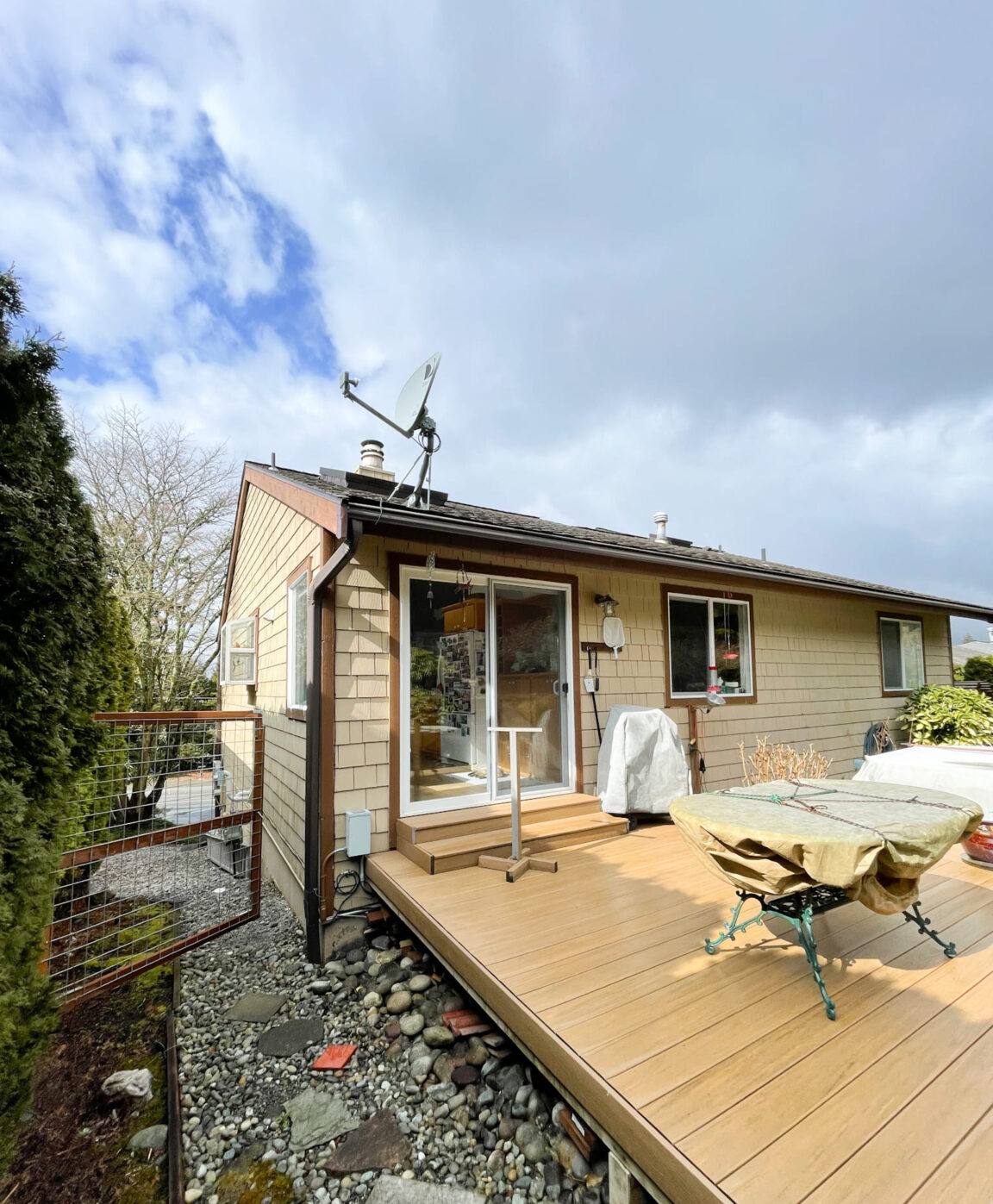
What Energy-Efficient Actually Means in a Window
A window's efficiency comes down to a handful of measurable properties, not a sticker on the glass. Understanding these helps you compare quotes on something more useful than price alone.
Glass and Coatings
Most new windows use two or three panes of glass separated by a sealed, gas-filled space (usually argon). A low-E coating — a microscopically thin metallic layer on the glass — reflects heat back into the room in winter and blocks solar heat gain in summer without darkening the view. The two numbers that matter most on the label are U-factor (how well the window resists heat loss — lower is better) and SHGC, or solar heat gain coefficient (how much solar heat passes through — for our climate, moderate SHGC balances winter gain against summer glare, since we don't deal with the intense summer heat that drives SHGC decisions in other regions).
Frame Material
Frame material affects both efficiency and how the window holds up to Whatcom County weather over time:
| Frame Type | Efficiency | How It Handles Our Climate |
|---|---|---|
| Vinyl | Good, multi-chamber designs insulate well | Won't rot or corrode; standard choice for coastal moisture exposure |
| Fiberglass | Very good, low expansion/contraction | Excellent moisture and salt-air resistance; higher upfront cost |
| Wood / Wood-clad | Good with proper cladding | Needs consistent maintenance in a long wet season; cladding failure lets moisture into the core |
| Aluminum | Poor unless thermally broken | Conducts heat and cold directly; can pit under prolonged salt exposure |
Installation Quality Matters as Much as the Window
A high-performance window installed with poor flashing will underperform a mid-grade window installed correctly. In a climate where wind-driven rain is normal, not occasional, the flashing and sealant details around the rough opening decide whether water gets managed or gets trapped behind the siding. This is where a lot of window problems in this area actually start.
Problems We See on Sehome Homes
Because of the mix of home ages in and around this neighborhood, we run into a consistent set of issues:
- Original single-pane or early dual-pane windows with failed seals — visible as fog or haze between the panes
- Wood trim and sills softened or rotted from years of driving rain finding a way past old caulk
- Noticeable drafts and cold spots near window frames in winter
- Moss, algae, or dark staining building up on north- and west-facing frames and sills that stay shaded and damp
- Condensation on the inside of glass in cooler months, a sign of poor insulating performance or interior humidity with nowhere to go
- Aluminum frames from older installs showing pitting or corrosion from salt-laden air
None of these are unusual for the area — they're the predictable result of decades of Whatcom County weather on materials that weren't built to fully resist it.
Choosing the Right Window for This Climate
There's no single "best" window — the right choice depends on your home's exposure, budget, and how it's built. A few factors we weigh with homeowners:
| Factor | Why It Matters Here |
|---|---|
| Sun and wind exposure | West- and south-facing walls take more driving rain; north sides hold moisture and grow moss longer |
| Existing wall assembly | Determines whether a full-frame replacement or an insert (pocket) replacement makes sense |
| Home age and construction | Older homes often need attention to the rough opening and flashing, not just the window itself |
| Glass package | Double-pane low-E is the practical baseline; triple-pane adds cost and weight for modest extra gain in our moderate climate |
| Frame material budget | Vinyl covers most homes well; fiberglass earns its premium on high-exposure walls or longer ownership horizons |
We don't push one brand or one glass package on every job. We size the recommendation to the wall it's going into.
How We Approach a Window Job in Sehome
- On-site assessment. We look at each window's exposure, the condition of the existing frame and trim, and any signs of water intrusion already in progress before we quote anything.
- Accurate measurement and product selection. Every rough opening on an older home is a little different — we measure each window individually rather than assuming uniformity.
- Careful removal. We check the condition of the sheathing and framing once the old window is out, since that's often the first real look anyone's had at that wall in years.
- Flashing and weatherproofing. This is the step that decides whether the new window actually performs in driving rain. Proper flashing tape, sill pans, and sealant sequencing keep water moving out and away from the wall cavity.
- Insulation and air-sealing around the frame. A gap packed poorly with the wrong material undercuts the window's efficiency rating no matter how good the glass is.
- Interior and exterior trim-out. We match finish work to the surrounding siding and trim so the new window looks original to the house, not bolted on.
- Final check and cleanup. Operation, seal, and finish are checked before we consider the job done.
What Affects Cost
Every home is different, so we quote after seeing the actual windows and openings, but the main cost drivers are consistent:
| Cost Factor | Impact |
|---|---|
| Number and size of windows | Largest single driver of overall project cost |
| Frame material chosen | Vinyl is the most budget-friendly; fiberglass and wood-clad cost more |
| Full-frame vs. insert replacement | Full-frame costs more but is often needed where there's rot or a failed opening |
| Access and home height | Second-story or hard-to-reach windows take more time and equipment |
| Trim, siding, and paint matching | Blending new windows into existing exterior finishes adds labor |
We give a written, itemized estimate before any work starts, and we're upfront about what's driving the number rather than a flat per-window rate that ignores your home's actual condition.
Living With a Long Moss Season
Even the best window installation benefits from a little seasonal attention, especially with the amount of damp shade many Sehome lots get for a good part of the year. A short annual routine keeps small issues from becoming replacement-level problems:
- Clear debris and moss buildup from sills and tracks before it holds moisture against the frame
- Check exterior caulking each fall for cracks or gaps before the wet season sets in
- Wipe down frames and glass periodically to clear salt residue and organic growth before it stains or etches
- Watch for condensation between panes — it means a seal has failed and the insulating gas is gone
- Make sure exterior grading and gutters are directing water away from window walls, not toward them
- Test that weep holes on vinyl and fiberglass frames stay clear so trapped water can drain out
Why Hire a Crew That Already Works in Sehome
Window performance in this climate isn't just about the product — it's about whether the person installing it understands how Whatcom County weather actually behaves against a wall. A crew that regularly works this area already knows which exposures take the worst of the driving rain, how local moss and moisture patterns affect long-term maintenance, and how to flash a window so it works with the rest of the exterior instead of against it. Because we work on siding as much as windows, we also look at the whole wall assembly — flashing, trim, and siding — as one connected system, not a window swapped in isolation and left to whatever's happening around it.
If you're weighing options for your windows, we're happy to take a look and give you a straightforward, no-pressure estimate — just fill out the form below and we'll get in touch.