 Whatcom County
 Siding Built for Lynden's Weather, Not Just Its Curb Appeal
Lynden sits far enough inland to feel a little different from the coastal edges of Whatcom County, but the same weather patterns still shape how a home's exterior ages here. Long stretches of damp, overcast weather, driving rain that comes in sideways off winter storms, and a moss season that seems to start earlier every year all put steady pressure on siding. Add in the salt-tinged air that drifts inland from the Salish Sea and Georgia Strait on windier days, and you have a climate that rewards durable materials and punishes shortcuts.
Homeowners in Lynden often ask us the same underlying question in different ways: why does my siding look tired after just a few years, when the house down the road still looks sharp after a decade or more? The answer almost always comes down to two things — the material itself, and whether it was installed the way the manufacturer actually specifies. This page focuses on exactly that: what a correct siding installation looks like for a Lynden home, and why we've built our whole business around doing it one way, with one product system.
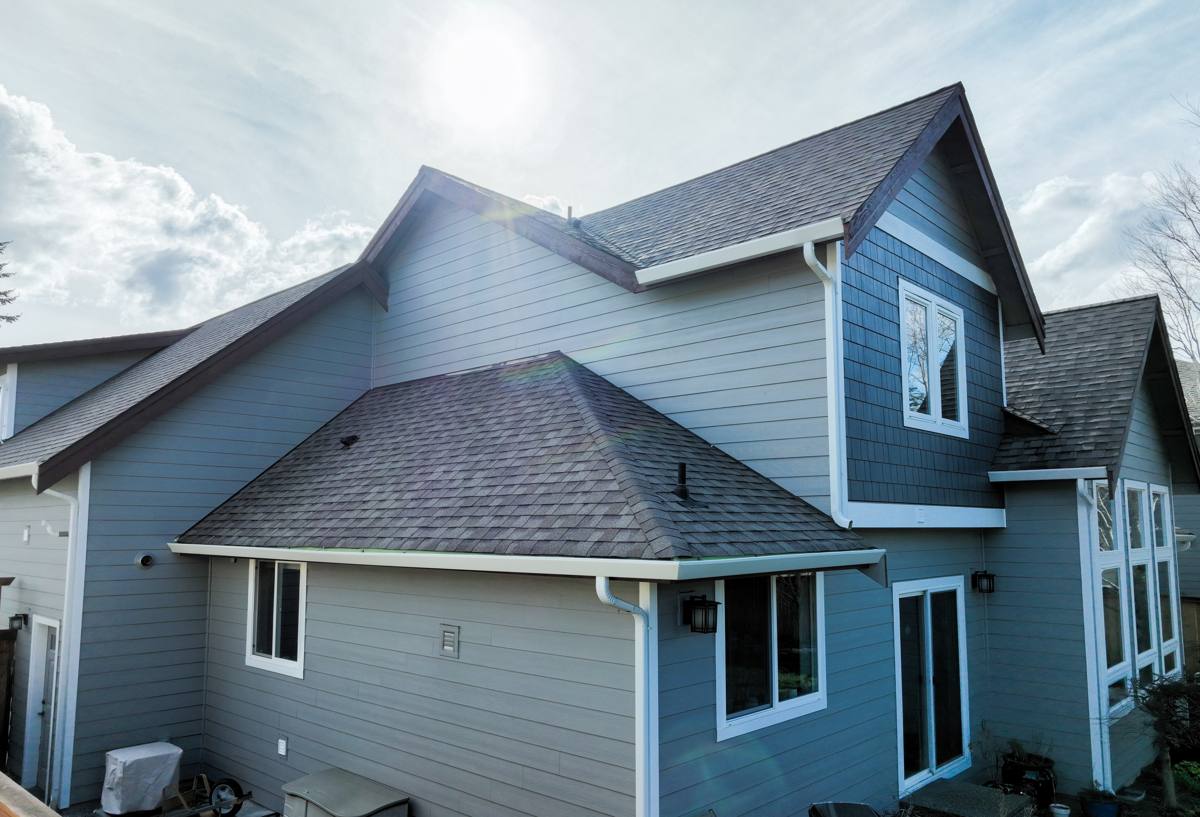
What Whatcom County's Climate Actually Does to Siding
Moisture Is the Real Enemy
Whatcom County doesn't get dramatic weather so much as relentless weather. Rain that falls for days at a time, combined with cool temperatures that slow drying, means siding here spends a lot of its life slightly damp. Materials that absorb moisture or trap it behind their surface are the ones that fail first — through swelling, delamination, or rot at the edges and seams.
Moss and Organic Growth
The same dampness that's hard on siding is ideal for moss, algae, and mildew. On north-facing walls and shaded sides of a house — common in Lynden's tree-lined residential streets — organic growth can take hold within a season or two if the siding surface and finish don't resist it well.
Salt Air, Even Inland
Lynden isn't on the water, but Whatcom County as a whole sits close enough to Puget Sound and the Strait that airborne salt can still reach inland properties, especially during windier weather systems. Salt exposure accelerates corrosion of fasteners and trim hardware and can degrade lower-quality paint finishes faster than homeowners expect.
Temperature Swings and UV
Summers bring longer stretches of direct sun, and the freeze-thaw cycles of winter put mechanical stress on any material that expands and contracts unevenly. Siding that isn't dimensionally stable can crack, cup, or pull away from fasteners over time.
Why We Only Install James Hardie Fiber Cement
We made a deliberate decision as a company to install one siding system: James Hardie fiber cement. We don't install vinyl, LP SmartSide, primed spruce, cedar, or other fiber cement brands. That's not a marketing angle — it's a standard we hold because of what we've seen happen to homes in this exact climate over years of exterior work in Whatcom County.
- Non-combustible core: fiber cement doesn't feed a fire the way wood-based or vinyl products can, which matters for insurance conversations and long-term peace of mind.
- Moisture stability: fiber cement doesn't absorb and swell the way engineered wood products can when installation details aren't perfect.
- Factory-applied ColorPlus finish: baked-on color resists fading and chipping far better than field-applied paint, which matters when your siding is going to sit under gray skies and intermittent sun for months at a time.
- Climate-engineered product lines: Hardie's HZ5 formulation is specifically engineered for regions with the freeze-thaw and moisture patterns we get in the Pacific Northwest.
- A real, transferable warranty: one backed by a large manufacturer with a long track record, not a regional startup or a product line with thin field history.
We won't pretend other products don't have their own merits — vinyl is inexpensive and low-maintenance in mild climates, and engineered wood has a warmer, more traditional look for some buyers. But when we weigh those benefits against how Lynden's climate actually treats a home over 15, 20, or 30 years, fiber cement done right is the product we're willing to put our name behind.
What Correct Installation Actually Involves
Fiber cement siding is only as good as its installation. Hardie's own technical specifications are detailed for a reason — small deviations from them are exactly where problems start, especially in a wet climate.
Before the First Board Goes Up
- Inspect and repair the existing wall sheathing for hidden rot or moisture damage.
- Install a code-compliant weather-resistive barrier (housewrap) with properly lapped and taped seams.
- Flash all windows, doors, and penetrations so water is directed out and away from the wall assembly.
- Confirm proper drainage plane or rainscreen approach where called for, so water that gets behind the cladding can drain and dry.
During Installation
- Correct nail type, spacing, and placement — this affects both structural performance and warranty validity.
- Proper clearance from grade, roofing, decks, and other transitions to prevent wicking moisture.
- Butt joints and corners sealed and flashed per Hardie's published details, not just caulked as an afterthought.
- Factory-cut edges used wherever possible, with field cuts sealed to prevent moisture intrusion at raw cut edges.
Skipping or rushing any one of these steps doesn't usually show up as a problem on day one. It shows up two, five, or ten winters later — as a soft spot near a window, a stained wall below a poorly flashed transition, or trim that's started to separate. That delayed failure pattern is exactly why installation quality matters as much as the product choice.
Our Process for a Lynden Siding Installation
| Stage | What Happens | Why It Matters Here |
|---|---|---|
| On-site assessment | We inspect existing siding, sheathing, and trouble spots specific to your home's exposure and shading | Identifies moisture or rot issues before they're covered up by new siding |
| Product and color selection | Walk through Hardie board profiles, trim options, and ColorPlus palette choices | Matching finish and profile to the home's style and sun/shade exposure |
| Weather barrier and flashing | Install or repair housewrap, window and door flashing, and drainage details | This is the layer that actually keeps a wet climate out of your walls |
| Siding installation | Install Hardie panels, lap siding, or shingle-style products to manufacturer spec | Correct fastening and sealing prevents the delayed failures common with rushed jobs |
| Trim, caulking, and final detail | Corner boards, trim, and joint sealing completed and inspected | Detail work is where moss, staining, and water intrusion problems usually start |
| Final walkthrough | Review the finished work with the homeowner | You should understand what was done and why before we consider the job finished |
Choosing a Siding Line for Your Home
James Hardie offers several product lines, and the right one depends on your home's style and your priorities:
- HardiePlank lap siding — the most common choice, available in multiple textures, suited to traditional and modern home styles alike.
- HardiePanel vertical siding — often used for accent sections, gables, or modern architectural styles.
- HardieShingle — for homes wanting a shingle or shake look without the maintenance burden of real wood shingles.
- HardieTrim — matching trim boards that complete the system around windows, corners, and fascia.
We'll walk through these options during your estimate and make a recommendation based on your home's exposure, existing architecture, and budget — not a one-size-fits-all pitch.
Signs Your Lynden Home May Need New Siding
Not every home needs a full siding replacement, but certain warning signs are worth taking seriously in this climate:
- Soft or spongy spots when you press on the siding, especially near the bottom edge or below windows
- Persistent moss or algae staining that returns quickly after cleaning
- Visible cupping, cracking, or separation at seams and corners
- Paint that's chalking, peeling, or fading unevenly across the exterior
- Rising heating bills that suggest air and moisture are moving through the wall assembly
Any one of these can be a cosmetic issue or an early sign of something more serious happening behind the siding. A proper inspection is the only way to know which.
What a Local Crew Brings That an Out-of-Area Contractor Doesn't
Siding installation isn't just a product — it's a set of judgment calls made on-site: how much flashing overlap a particular wall assembly needs, where a rainscreen gap is worth the extra step, how a home's specific sun and shade exposure should influence color choice. Crews that work Whatcom County regularly have already seen how different assemblies perform through a full wet season here, which shortens the learning curve on your project instead of using your home to learn it. Local availability also matters for warranty service — if a question comes up two or five years down the road, you want a crew that's still working in Lynden, not one that passed through once.
If you're weighing a siding replacement or repair for your Lynden home, we're happy to walk your property, answer questions honestly — including about products we don't install — and put together a clear, no-pressure estimate using the form below.