 Whatcom County
 Why Ferndale Siding Wears Differently Than Siding Inland
Ferndale sits close enough to the water and the marine air moving off Bellingham Bay and the Strait that homes here take a different kind of beating than a house twenty miles inland. Salt-laden moisture settles on exterior walls, driving rain gets pushed sideways during winter storms, and the long stretch of gray, wet months between fall and spring keeps siding damp for days at a time. Add in the shade from mature evergreens common on Whatcom County lots, and you get a moss season that can run eight or nine months out of the year on north- and west-facing walls.
None of that is unusual for this part of Washington. But it does mean siding repair in Ferndale isn't just about patching a cracked board — it's about understanding why that board cracked, failed, or rotted in the first place, and fixing the actual cause so the repair holds.
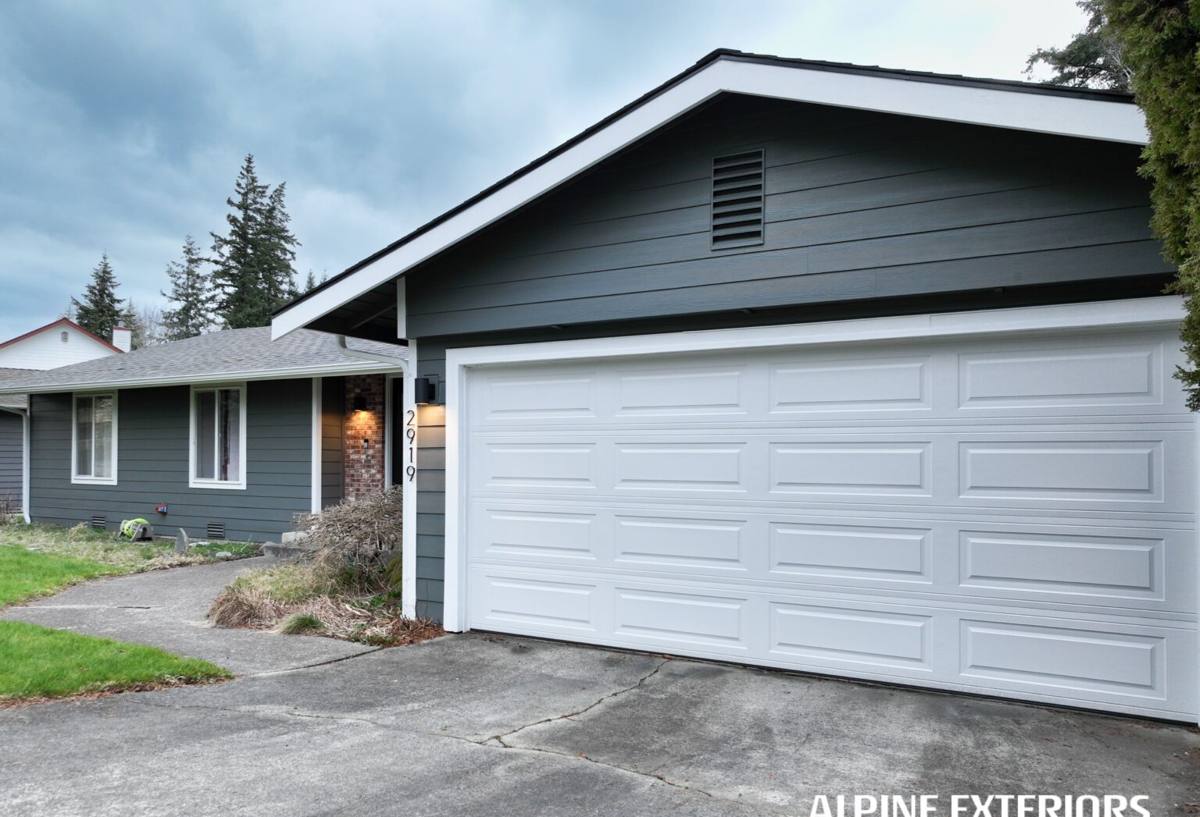
What Actually Fails on Ferndale Homes
After years of working on siding up and down Whatcom County, a few failure patterns show up again and again on Ferndale properties specifically:
- Moisture wicking at butt joints — where two pieces of siding meet, especially on older wood or engineered wood products that weren't sealed correctly at installation
- Soft or delaminating panels on walls that face prevailing wind-driven rain, usually the west and southwest exposures
- Moss and algae staining that traps moisture against the siding surface long after the rain stops, accelerating rot underneath
- Corner and trim separation from repeated wet-dry cycling, which opens gaps that let water behind the cladding
- Salt-accelerated fastener corrosion on homes closer to the water, where nail heads rust and lose their grip on the siding
A lot of this damage hides in plain sight. Paint can look fine on the surface while the substrate underneath is already soft. That's why a proper repair starts with an honest inspection, not just a patch over whatever's visibly wrong.
What a Correct Siding Repair Involves
Diagnosing the Cause, Not Just the Symptom
Before any board comes off, we look at why that section failed. Was it a flashing problem at a window or door? A gap in the house wrap? A gutter that's been overflowing onto the wall below? Repairing the siding without addressing the underlying moisture source just buys you a few more years before the same spot fails again.
Checking What's Behind the Siding
Once damaged panels are removed, we inspect the sheathing, house wrap, and flashing underneath. In a climate this wet, it's common to find that the visible siding damage is smaller than what's happening behind it. Soft sheathing needs to be addressed before new siding goes back on — covering it up just hides a bigger problem.
Matching Materials the Right Way
Repair work only looks right and performs right when the replacement material matches the existing siding in profile, reveal, and finish. On homes where we're patching sections of James Hardie fiber cement, matching is straightforward because the product line and color are documented and consistent. On homes with older wood, vinyl, or other engineered wood siding, matching gets harder — colors fade unevenly and some profiles are discontinued, which is one of the practical reasons full-wall or full-elevation replacement sometimes makes more sense than a patch.
Sealing and Flashing Details
The repair isn't finished when the new board is nailed up. Proper flashing at joints, correct caulking only where caulking belongs (not everywhere, which traps moisture), and attention to the drainage plane behind the siding are what keep a repair from becoming a repeat visit in two years.
Repair vs. Replacement: How We Help You Decide
Not every siding problem in Ferndale needs a full re-side. But repair isn't always the cheaper long-term answer either. Here's how we walk homeowners through that decision:
| Situation | Repair Usually Makes Sense | Replacement Usually Makes Sense |
|---|---|---|
| Damage extent | Isolated to one or two wall sections | Spread across multiple elevations |
| Underlying materials | Sheathing and house wrap are sound | Rot has spread into structural framing |
| Siding age | Under 10-15 years, product still available | Original siding is near end of service life |
| Material match | Color/profile can be matched closely | Discontinued color or profile, mismatch would be obvious |
| Moisture source | Identifiable and fixable (flashing, gutter) | Widespread moisture intrusion, unclear origin |
We'll tell you honestly which category your home falls into. If a targeted repair will hold up through another Whatcom County winter, that's what we'll recommend and price. If the damage says otherwise, we'll explain exactly why before you spend money on a repair that won't last.
Why We Repair With James Hardie Fiber Cement, Not Alternatives
When a repair calls for new material — whether patching a section or replacing a full wall as part of a repair project — we install James Hardie fiber cement exclusively. We don't install LP SmartSide, vinyl, Cemplank, Allura, primed spruce, or cedar, and that's a deliberate standard, not a lack of options.
Fiber cement is non-combustible and dimensionally stable in a way that matters specifically in this climate: it doesn't swell, warp, or absorb water the way engineered wood products can when they sit wet for extended periods, which is exactly the condition Whatcom County winters create. James Hardie's ColorPlus factory finish is baked on and warrantied against fading and peeling, which matters when you're trying to match a repair patch to older siding years down the road — the color holds truer than field-applied paint typically does. Hardie also engineers specific product lines (HZ5) for climates like ours, accounting for moisture exposure rather than using a one-size-fits-all formulation.
Vinyl can crack in cold snaps and doesn't hold up structurally the way fiber cement does. Untreated or primed wood products need more diligent maintenance to resist the moss and moisture cycle this area sees for most of the year. We're not saying every other product is unusable everywhere — we're saying that after years of pulling failed siding off Whatcom County homes, fiber cement is what we're willing to warranty our workmanship on.
Our Process for a Ferndale Repair
- On-site inspection — we look at the damaged area and the surrounding wall, not just the spot you called about
- Moisture and cause assessment — checking flashing, house wrap, gutters, and grading near the affected wall
- Written scope and estimate — a clear explanation of what's being repaired, why, and what it costs, with no pressure to upsell into a full re-side unless it's genuinely warranted
- Material matching — sourcing the closest match for existing siding, or discussing replacement scope if matching isn't realistic
- Repair execution — removing damaged material, correcting any underlying moisture issues, installing new material with proper flashing and fastening
- Final walkthrough — showing you what was found and what was fixed before we consider the job done
Preventive Checklist for Ferndale Homeowners
Between repairs, a few habits go a long way in this climate:
- Clean gutters at least twice a year — overflow onto siding is one of the most common causes of localized rot
- Trim back vegetation and tree limbs that keep siding shaded and damp longer than it needs to be
- Wash off moss and algae buildup before it has months to sit against the surface
- Walk your home's exterior each fall and look for soft spots, cracked caulking, or separated trim before winter rains set in
- Address small issues promptly — a small repair in Ferndale's climate rarely stays small if it's ignored through a wet winter
Why Local Experience Matters for This Kind of Work
Siding repair looks straightforward from the outside, but doing it correctly requires knowing how a specific area's weather behaves against a wall over years, not just what a manufacturer's install manual says in general terms. A crew that regularly works Ferndale and the rest of Whatcom County has already seen which exposures fail first, how moss actually behaves on local roof and wall lines, and where flashing tends to get skipped on older construction typical of this area. That experience shows up in fewer callbacks and repairs that actually last through the next rainy season instead of needing attention again in a year or two.
If you've got a section of siding that's cracked, soft, stained, or separating, we're happy to take a look and give you a straightforward assessment — free, no pressure, and no obligation to move forward. Fill out the form below and we'll get an estimate scheduled.