 Whatcom County
 New-Construction Windows in Silver Beach
New-construction windows are a different job than replacement windows, even though both end with glass in a wall. On a new build or an addition in Silver Beach, the window goes in before the siding, before the trim, and often before the house has weathered a single storm. That means the installer is setting the water-management plan for the next several decades, not just filling a hole. Get the flashing and integration with the weather-resistive barrier right at this stage, and the wall stays dry for the life of the house. Get it wrong, and the mistake gets buried behind siding where nobody sees it until there's rot, mold, or a stained ceiling below a header.
We install new-construction windows on homes and additions around Silver Beach and the rest of Whatcom County, working directly with builders, framers, and homeowners acting as their own general contractor. This page covers what the job actually involves, what the local climate demands from the work, and how to tell a correct install from one that just looks finished.
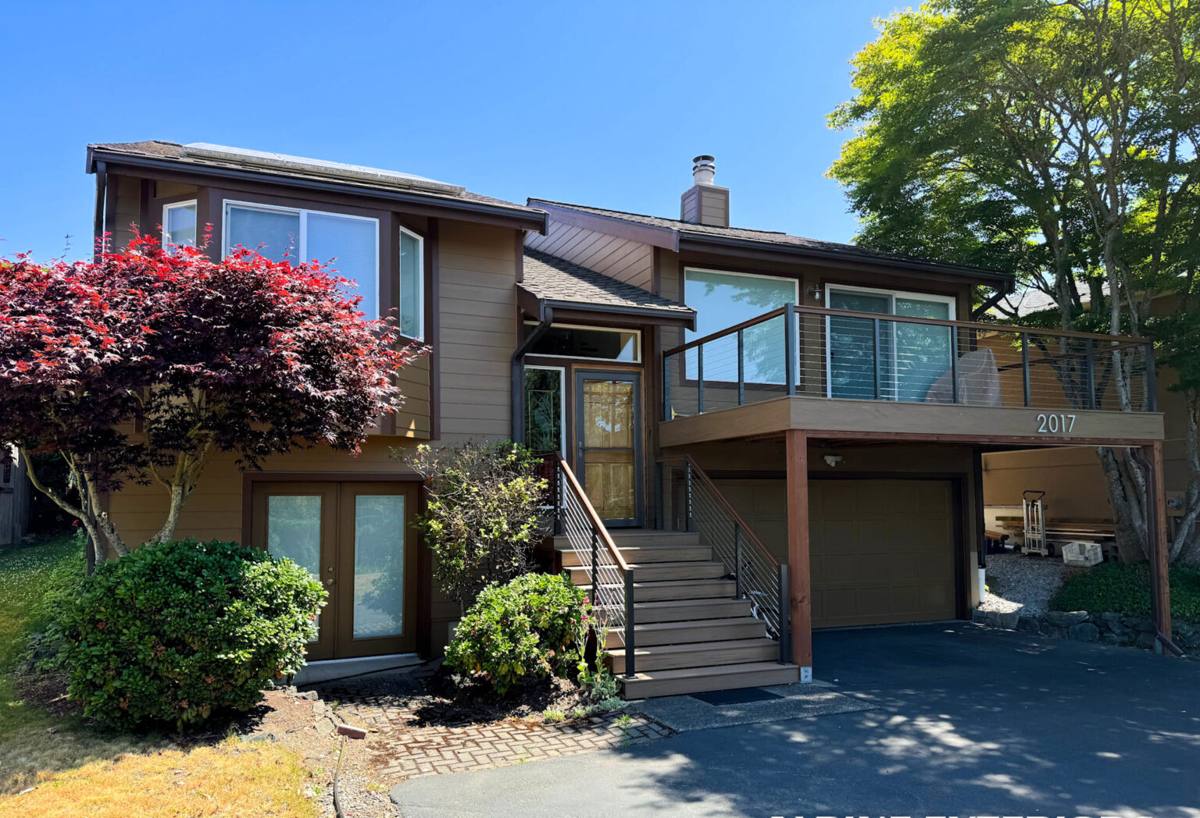
What Whatcom County's Climate Demands From a New Window
Whatcom County's marine climate is the reason new-construction window work here can't be treated like a generic install. Salt-tinged air off the water accelerates corrosion on hardware, screws, and lesser-grade flashing metals. Driving rain — often wind-driven, not just falling straight down — pushes water sideways into any gap in the flashing or sealant a lot harder than a calm rain would. And the long stretch of grey, damp months each year gives moss, algae, and mildew plenty of time to take hold on any surface that stays wet, including window sills and the trim around them.
None of that is exotic information, but it changes real decisions on a job: how deep the sill pan needs to be, what fastener coating gets used, how much slope is built into the sill, and which frame materials hold up without babying. A window detail that's fine in a dry climate can fail here in a handful of wet seasons.
What This Means in Practice
- Sill pans with a real back dam and forward slope, not just a bead of caulk under the frame
- Corrosion-resistant fasteners, especially near any point where salt-laden air reaches the wall assembly
- Flashing tape and sealants rated for the temperature range and UV exposure they'll actually see here, not just whatever was on the truck
- Drip caps and head flashing sized to shed wind-driven rain, not just vertical rain
What a Correct New-Construction Install Actually Involves
A new-construction window is set into a rough opening in the framing and secured through a nailing flange into the sheathing, then integrated into the building's weather-resistive barrier (WRB) — typically house wrap or a fluid-applied membrane. The order of operations matters as much as the window itself.
Flashing and Water Management
Water management starts below the window, not at it. A sill pan goes in first, lapped over the WRB below and tucked under the WRB at the jambs, so any water that gets past the window sheds out and down, never behind the WRB into the wall cavity. Jamb flashing comes next, then head flashing, each piece lapped over the one below it — always shingle-style, so gravity carries water outward at every layer. Skipping or reversing this sequence is the single most common defect we find on jobs we're called in to fix after the fact.
Fastening and the Nailing Flange
The nailing flange gets fastened per the manufacturer's schedule — spacing and fastener type aren't optional details, they're part of the product's structural and warranty requirements. Over-driving or under-driving fasteners, or skipping corners, both create leak paths and can void the manufacturer's warranty outright.
Air Sealing and Insulation at the Rough Opening
The gap between the window frame and the rough framing needs to be sealed against air leakage without over-filling it with a rigid foam that can bow the frame and cause the sash to bind. A low-expansion foam or backer rod and sealant, applied evenly around the perimeter, keeps the window operating smoothly and keeps conditioned air from leaking out around it — a real factor in heating costs through a Whatcom County winter.
Choosing a Frame Material for a Silver Beach Build
Frame material is one of the few decisions a homeowner or builder makes that directly affects long-term maintenance in this climate. There's no single right answer for every project — budget, style, and how much upkeep you're willing to do all factor in — but the trade-offs are worth knowing before the order gets placed.
| Frame Material | Performance in Wet, Salt-Air Climate | Maintenance | Relative Cost |
|---|---|---|---|
| Vinyl | Good — won't rot or corrode, handles moisture well | Low — occasional cleaning | Lower |
| Fiberglass | Very good — stable, resists warping and corrosion | Low | Higher |
| Wood-clad (aluminum or vinyl exterior, wood interior) | Good on the exterior; any breach in the cladding exposes wood to moisture | Moderate — watch cladding seams and sills | Higher |
| Aluminum | Fair — conducts cold and can pit or corrode near salt air without a quality finish | Moderate | Moderate |
For most new-construction projects in this area, we steer homeowners toward vinyl or fiberglass unless the design calls for a wood interior look, in which case a well-made wood-clad unit with a properly detailed sill is still a sound choice — it just needs the flashing done right, since the consequence of a leak is worse with a wood-core frame.
Our Process for New-Construction Window Installs
We coordinate directly with the builder's schedule, since window install falls at a specific point in the framing-to-dry-in sequence and delays here can hold up siding and interior work.
- Rough opening check. We verify every opening is square, plumb, and sized to the manufacturer's tolerances before a single window is set. Framing errors caught here are cheap to fix; caught after siding, they're not.
- Sill pan and flashing installation. Sill pans, jamb flashing, and head flashing go in per the sequence above, integrated with whatever WRB the builder has specified.
- Window setting and fastening. The unit is set, shimmed level and plumb, and fastened per the manufacturer's schedule.
- Air seal and insulation. The perimeter gap is sealed with an appropriate low-expansion product.
- Quality check. Before we move to the next opening, we check operation, squareness, and that flashing laps are correct and fully adhered — not just visually flat.
- Handoff documentation. We note anything relevant for the builder's records, especially for openings that will be inspected before siding closes them in.
Common Mistakes We Catch on New Builds
Most of the callbacks we see on new-construction windows trace back to a small handful of shortcuts. If you're a homeowner overseeing your own build, or a builder bringing in a second set of eyes, this is what to check before the siding crew shows up:
- Sill pan missing a back dam, so water pools toward the interior instead of draining out
- Flashing laps installed out of order (head flashing tucked under jamb flashing instead of over it)
- Fasteners driven at the wrong spacing or skipped at corners
- Rigid foam packed too tightly into the perimeter gap, bowing the frame and binding the sash
- WRB not properly lapped into the window flashing, leaving a gap water can find
- Wrong fastener type used near areas exposed to salt-laden air, inviting early corrosion
Timing It Into the Build Schedule
New-construction windows have to land at the right moment — after the rough opening is framed and the WRB is on, but before siding starts. Coming in too early means working around incomplete WRB coverage; too late holds up the entire exterior schedule. We work off the builder's timeline directly rather than asking the homeowner to relay dates back and forth, which is where delays usually creep in on owner-managed projects.
Why Hire a Crew That Already Works Silver Beach
New-construction window detailing that works in a dry inland climate can underperform here. A crew that regularly works Silver Beach and the rest of Whatcom County already knows to size sill pans for driving rain, spec fasteners that won't corrode in salt air, and choose sealants that stay flexible through a long wet season instead of cracking after a couple of winters. That's not a marketing point — it's the difference between a window that's dry in year one and still dry in year fifteen.
Living With New-Construction Windows Here
Once the house is finished, the climate keeps working on the windows, not just the walls behind them. Moss and algae can build up on sills and in tracks during the long wet season if they're shaded or don't get much sun exposure — an occasional rinse and a soft brush keeps that from becoming a bigger cleaning job. Hardware exposed to salt-laden air benefits from a periodic wipe-down and a check that weep holes in the sill stay clear, since a blocked weep hole defeats the drainage the sill pan was built to provide.
If you're planning a new build or addition in Silver Beach and want the window installation done right the first time, we're happy to walk the plans and give you a straightforward, no-pressure estimate — just fill out the form below.