 Whatcom County
 Building a Deck That Belongs in South Hill
South Hill sits up on the hillside above Bellingham, which means most of the homes here deal with two things a flat-lot neighborhood doesn't: real changes in grade, and a lot of mature tree cover. Both of those shape how a deck should be built. Sloped and terraced lots often call for taller posts, deeper footings, and sometimes a multi-level design just to get from the back door to usable yard space. Heavy tree canopy means more shade, more falling debris, and more moisture sitting on the deck surface long after the rest of the yard has dried out. A deck built without accounting for either of those things tends to show problems within a few seasons — soft spots, green boards, footings that shift.
We've built and repaired decks across Whatcom County long enough to know that a "standard" deck design rarely fits a hillside lot without some adjustment. The framing, the footing depth, and even the choice of decking material all get decided differently once you factor in the slope and the tree line.
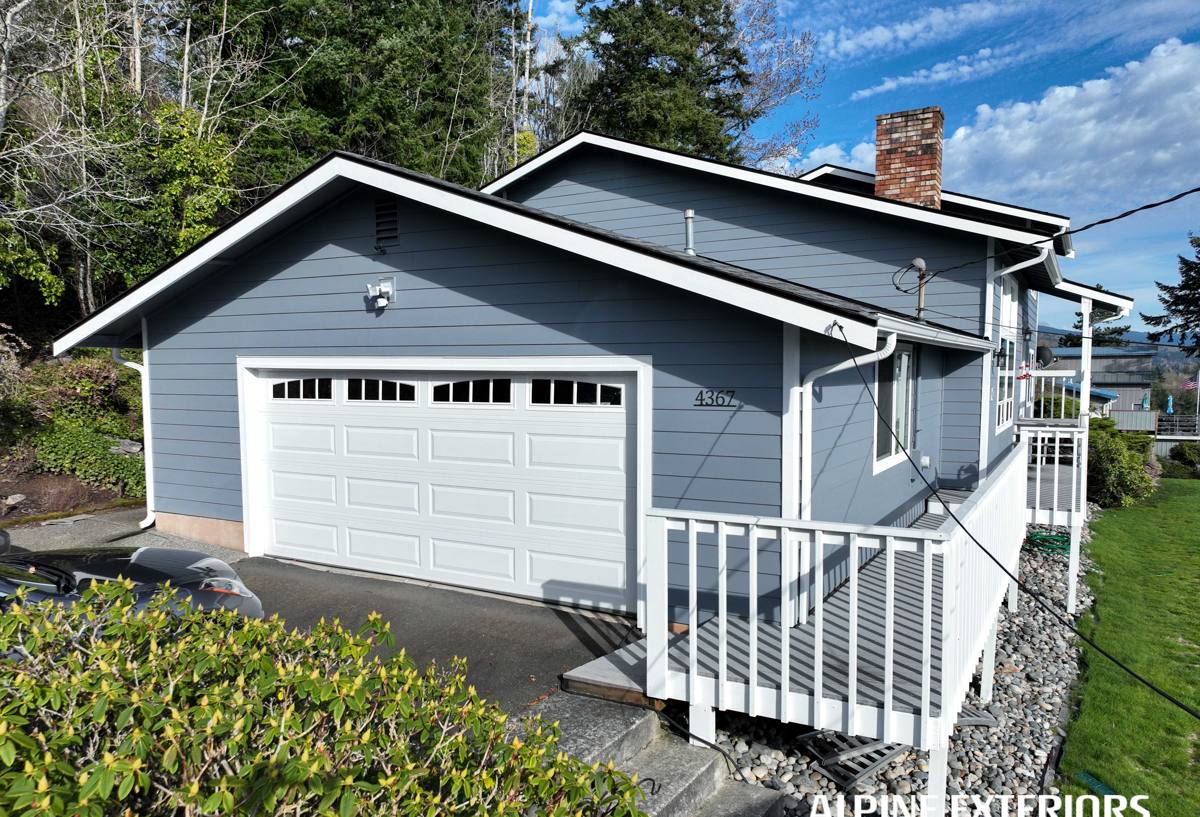
What Whatcom County's Climate Actually Does to a Deck
Rain and Rot
Whatcom County gets a long, steady wet season, and a deck spends most of that season either soaked or damp. Water doesn't just fall on a deck — it runs off the roof onto it, splashes back up from the ground underneath it, and gets trapped wherever two pieces of wood meet without a gap for drainage. The places that fail first are almost always the same: the ledger board where the deck attaches to the house, the tops of posts, and any spot where a fastener has been driven without proper flashing or sealant. Rot doesn't announce itself — it works quietly under the surface until a board flexes or a post feels soft.
Salt Air and Corrosion
Being close to Bellingham Bay means the air carries a fine amount of salt, and that salt is hard on metal. Fasteners, joist hangers, and hardware that would last for decades inland can start corroding noticeably sooner here. Once a fastener starts to rust, it loses grip strength long before it looks bad enough to worry about, which is part of why we don't treat hardware selection as an afterthought.
Moss, Algae, and Slip Risk
Shaded, damp decking is exactly what moss and algae need to take hold, and a lot of South Hill lots have both in abundance thanks to the tree cover. Beyond the cosmetic issue, a mossy deck surface gets slick fast, especially on stairs and any sloped transition. Deck design that ignores airflow and drainage is signing up for a moss problem within the first year or two, regardless of what the decking is made of.
Getting the Structure Right
The parts of a deck nobody sees are the parts that determine whether it lasts fifteen years or thirty-five. On a hillside lot in particular, we pay close attention to a few things that are easy to shortcut:
Footings
Post footings need to go below frost depth and land on undisturbed, load-bearing soil — not fill dirt, which is common on graded and terraced lots. On a slope, footing depth can vary significantly from one end of the deck to the other, and each one needs to be sized and set individually rather than assumed to match its neighbor.
Ledger Board Flashing
The ledger board — where the deck bolts into the house framing — is the single most common source of rot and structural failure on decks in this climate. It has to be flashed correctly so water sheds away from the house rather than running behind the siding or pooling against the band joist. This is the detail we see skipped most often on decks that come to us for repair.
Joist Spacing and Decking Choice
Joist spacing has to match whatever decking material goes on top. Composite and PVC boards generally need tighter joist spacing than solid wood to avoid flexing over time, and that spacing decision has to be made before the frame goes up, not after.
Choosing Decking Material for This Climate
There's no single "correct" decking material — it's a trade-off between upfront cost, how much upkeep you're willing to do, and how the material behaves in a wet, shaded environment. Here's how the common options generally compare:
| Material | Upfront Cost | Maintenance | Moisture & Moss Resistance | Typical Lifespan |
|---|---|---|---|---|
| Pressure-treated wood | Lowest | Annual cleaning, periodic staining/sealing | Fair — needs sealing to hold up | 10–15 years with upkeep |
| Cedar | Moderate | Regular cleaning and periodic sealing | Good natural resistance, still needs care in deep shade | 15–20 years with upkeep |
| Composite decking | Higher | Occasional washing, no staining | Very good — doesn't rot, but can still grow surface algae | 20–30 years |
| PVC decking | Highest | Occasional washing | Excellent — fully moisture-resistant surface | 25–30+ years |
For heavily shaded South Hill lots, we lean toward recommending composite or PVC for the main deck surface, or at minimum cedar over pressure-treated pine, simply because the extra moisture resistance buys back a lot of the maintenance time you'd otherwise spend fighting moss and re-sealing wood every year. That said, plenty of homeowners are happy with treated lumber as long as they're realistic about the yearly cleaning and sealing it needs to look and perform its best.
Permits and Local Requirements
Most deck projects that involve structural framing, or that sit above a certain height off grade, require a building permit through the appropriate local jurisdiction — the City of Bellingham or Whatcom County, depending on exactly where the property sits. Sloped and terraced lots can also trigger additional review around setbacks, drainage, or grading. We handle the permit process as part of the job so homeowners aren't left figuring out which department to call or what paperwork a hillside lot might need — but we'd always encourage confirming current requirements with the local building department before work begins, since rules and fee schedules change.
Our Deck Building Process
- Site walk and design. We look at the slope, drainage, sun/shade pattern, and how the deck will connect to the house before recommending a layout.
- Material and structure plan. We size footings and framing to the actual site conditions and match joist spacing to the decking material you choose.
- Permitting. We prepare and submit what's required for the project and coordinate any inspections along the way.
- Footings and framing. This is where we take the most time — footing depth, ledger flashing, and hardware selection all get done to hold up in this climate, not just to pass inspection.
- Decking, rails, and stairs installed. Boards are laid with proper gapping for drainage and airflow, which matters more here than in a dry climate.
- Final walkthrough. We go over the finished deck with you, including what upkeep it will need and roughly how often.
Maintaining a Deck on South Hill
A well-built deck in this climate still needs some seasonal attention, especially where tree cover keeps things damp. A short annual routine keeps most problems from ever starting:
- Sweep leaves and debris off the deck surface regularly through fall — trapped organic matter is what feeds moss and algae growth
- Rinse or wash the deck surface at least once a year to remove built-up grime and slow moss growth, more often in heavily shaded spots
- Check the ledger board and flashing annually for gaps, cracks, or signs of water staining on the siding above it
- Inspect fasteners and hardware yearly for early rust or corrosion, particularly on decks closer to the bay
- Reseal or stain wood decking on the manufacturer's recommended schedule — don't wait until it visibly needs it
- Keep gutters and downspouts near the deck clear so roof runoff isn't dumping directly onto or under it
Why Hiring a Local Crew Matters Here
A deck design that works fine in a dry, flat climate can fail early in Whatcom County if it's built the same way. Crews that don't build here regularly often miss the flashing detail on the ledger board, undersize footings for a sloped lot, or spec hardware that isn't rated for a salt-air environment. We build decks across South Hill and the rest of Whatcom County, so the footing depths, drainage details, and material choices we recommend come from what actually holds up here — not from a generic spec sheet. That local knowledge is the difference between a deck that needs real repair work in five years and one that's still solid in twenty-five.
If you're planning a new deck or need an honest look at one that's already showing its age, we're happy to come out, walk the site, and put together a straightforward estimate — no pressure, no upsell, just what the job actually needs. Use the form below to get started.