 Whatcom County
 New-Construction Windows for South Hill Homes
South Hill is one of Bellingham's older, elevated neighborhoods, and that elevation cuts both ways. The views and light that make the hillside desirable also mean homes here take wind-driven rain and salt-tinged air off the bay more directly than houses tucked into lower, more sheltered blocks. When you're building new or adding an addition on South Hill, the windows aren't just a product choice — they're a water-management system built into the wall, and getting that system wrong is one of the most common (and most expensive to fix) mistakes in new construction.
We install new-construction windows as part of full siding and exterior envelope work, which means we're not treating windows as an isolated trade. The window opening, the flashing, the weather-resistive barrier, and the siding all have to work together as one continuous drainage plane. That's the difference between a window that stays dry for thirty years and one that starts showing stains on the interior sill within a few winters.
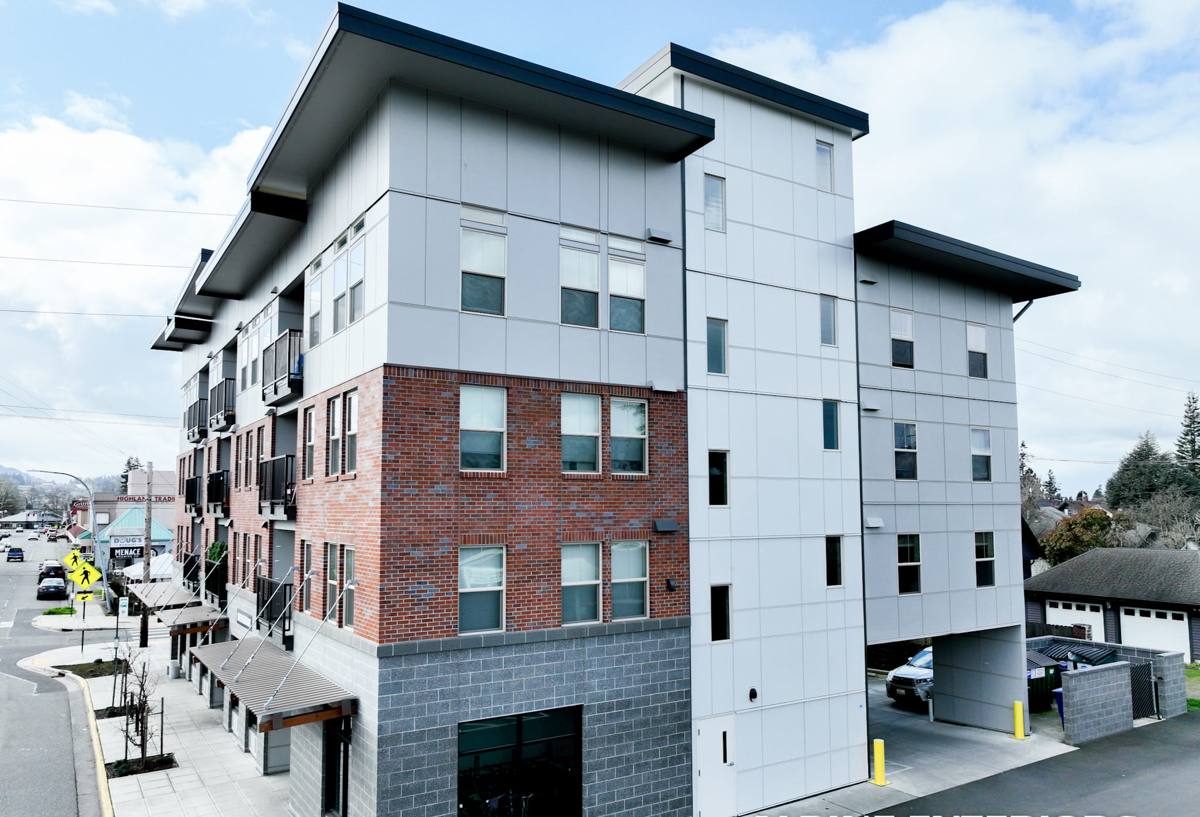
Why New-Construction Windows Are a Different Job Than Replacements
New-construction windows have a nailing flange (fin) around the perimeter that gets integrated directly into the rough opening, the weather-resistive barrier (WRB), and the flashing before siding ever goes on. This is different from a retrofit or "pocket" replacement window, which gets inserted into an existing frame without touching the flashing layers behind it.
Because the flange is exposed and sequenced into the wall assembly, a new-construction install gives us full control over how water is shed away from the opening — but only if every layer goes on in the right order, with the right laps, and with materials that are actually compatible with each other. Skip a step or get the sequence backward, and you've built a leak path directly into the framing, hidden behind siding that will look fine for years before the damage shows.
What "Correct" Actually Means Here
- Sill pan flashing installed first, sloped to drain outward, before the window ever sets into the opening
- Window set in sealant/backer at the sill, not just caulked around the outside after the fact
- Side flashing lapped over the sill pan, head flashing lapped over the side flashing — always shingle-style, top piece over the one below
- WRB integrated so water sheds over the flange and flashing, never behind it
- Sealants and tapes matched to the WRB and window manufacturer's chemistry — some products are not compatible with each other and will fail to bond or will degrade over time
- Weep paths at the sill left clear so any incidental water that does get behind the cladding can still get out
What South Hill's Climate Asks of a Window Install
Whatcom County gets a long, wet stretch of the year, and South Hill's exposure means a few specific things matter more here than they might on a more sheltered lot:
Driving Rain and Wind Exposure
Elevated, more open sites catch wind-driven rain at angles that push water sideways into wall assemblies, not just straight down. That's why head flashing with a proper drip edge and end dams matters as much as the sill pan — water hitting a window at an angle will find any gap that a straight-down assumption leaves open.
Salt Air and Fastener Corrosion
Proximity to Bellingham Bay means a measurable amount of salt in the air, which accelerates corrosion on unprotected metal — flashing, fasteners, and window hardware included. We spec corrosion-resistant flashing and fasteners for coastal-exposed elevations rather than treating every wall the same.
Moss and Prolonged Dampness
Whatcom County's moss season is long, and moss holds moisture against surfaces far longer than open rain does. Around windows, that means sills, trim, and the siding-to-window transition need details that shed water quickly rather than trapping it — tight overlaps, no flat horizontal ledges where organic growth can take hold and hold moisture against the wall.
Temperature Swings and Material Movement
Coastal Whatcom County doesn't see extreme heat, but it does see enough seasonal and daily temperature swing that sealants and flashing tapes need to stay flexible rather than becoming brittle. We use products rated for the temperature range they'll actually see here, not generic all-climate products chosen on price alone.
Our Process for New-Construction Window Installs
- Site and plan review. We look at the rough openings, the wall assembly (WRB type, sheathing, any exterior insulation), and the elevation's exposure to wind and rain before ordering flashing materials or scheduling install.
- Coordination with the builder or GC. On new construction, timing matters — windows need to go in after the WRB is up but before siding, and we coordinate directly with your general contractor or framer so nobody's waiting on anybody.
- Sill pan and flashing installation. Sloped sill pans go in first, tested for drainage before the window sets.
- Window setting and shimming. Windows are set plumb, level, and square, shimmed at the manufacturer's specified points so the frame isn't racked or under stress that can crack seals over time.
- Head, jamb, and sill flashing integration. Flashing is lapped in the correct shingle order and tied into the WRB so the whole wall drains as one system.
- Interior and exterior sealant pass. Air sealing on the interior side (separate from the exterior weather seal) to control condensation and drafts without trapping moisture in the wall cavity.
- Final inspection walk. We check every opening against the flashing sequence before siding covers it up — because once siding goes on, that inspection window is gone.
Choosing Window Frame Materials for This Climate
The frame material affects how the window holds up to the wet season, how much upkeep it needs, and how it performs against salt air over the long run. There's no single "right" answer for every project — it depends on budget, the home's style, and how much maintenance you want to take on.
| Frame Material | Moisture Behavior | Maintenance | Typical Fit |
|---|---|---|---|
| Vinyl | Won't rot; performs well in wet climates | Low — occasional cleaning | Budget-conscious new builds, rental/spec homes |
| Fiberglass | Dimensionally stable, resists moisture and salt air well | Low | Higher-end new construction, larger openings |
| Wood, clad exterior | Good if the cladding and flashing details are correct; the wood core is vulnerable if water gets behind the cladding | Moderate to high — interior finish upkeep, watch for any exterior seal failure | Traditional or historic-style homes where wood interior trim matters |
| Aluminum | Durable but thermally conductive; prone to condensation in cold, wet climates unless thermally broken | Low, but check thermal break integrity over time | Contemporary designs, larger commercial-style openings |
Whatever the frame material, the installation details we described above matter more to long-term performance than the material choice itself. A well-installed vinyl window will outlast a poorly flashed wood-clad window on this hillside every time.
Cost Factors for New-Construction Window Work
Every project is different, and we'll walk you through actual numbers during an estimate, but the main things that move the price on a South Hill new-construction window job are:
| Factor | Why It Matters |
|---|---|
| Number and size of openings | More openings and larger units mean more flashing detail work and labor time |
| Elevation exposure | Wind- and rain-exposed elevations may warrant upgraded flashing and sealant systems |
| Frame material and glazing package | Fiberglass and higher-performance glazing cost more upfront but ask less in upkeep |
| Wall assembly complexity | Exterior insulation, deep window bucks, or unusual siding transitions add coordination and material |
| Access and scheduling | Multi-story or hillside access can affect labor and equipment needs |
What to Check Before Siding Covers the Windows
If you're a homeowner working with a builder, or a builder coordinating trades, this is the point in the schedule where mistakes get buried. Before siding goes on, it's worth confirming:
- Sill pans are sloped outward and drain freely, not flat or pitched toward the house
- Flashing laps follow shingle order — head over jamb, jamb over sill — with no reverse laps
- All seams and the nailing flange are sealed with a product compatible with the WRB, not just "whatever caulk was on hand"
- Weep holes or drainage paths at the sill are unobstructed
- Fasteners and any exposed flashing are corrosion-resistant, not standard galvanized left exposed to salt air
- The window is square, plumb, and shimmed correctly — not just visually straight from outside
If any of these are unclear on a project you're overseeing, it's worth asking the installer to walk you through it before the wall closes up. It's a five-minute conversation now versus a torn-out wall section later.
Why Work With a Crew That Already Knows South Hill
New-construction window flashing isn't exotic work, but it's detail-sensitive work, and details that get skipped or done wrong don't show up as a problem until years later — usually as a stain on drywall or rot found during a remodel. A crew that installs windows and siding together in Whatcom County, on hillside and coastal-exposed lots like South Hill, has already seen how wind-driven rain and long wet seasons expose weak flashing details that hold up fine in drier climates. That's not something you can fully substitute with a spec sheet — it's pattern recognition built from doing this work, on this kind of exposure, repeatedly.
We also work directly with builders and GCs on new construction, so window install gets sequenced correctly with framing, the WRB, and siding rather than treated as a disconnected trade that shows up whenever there's a gap in the schedule.
Get an Estimate for Your South Hill Project
If you're building new or adding on in South Hill and want windows installed the way this climate actually requires, we're happy to walk the plans or the site with you. The estimate is free, there's no pressure, and you'll get a straight answer about what your project needs — use the form below to get started.