 Whatcom County
 Building a Deck That Can Actually Handle Sunnyland's Weather
Sunnyland is a solid, established residential neighborhood on Bellingham's north side, and a lot of the homes here have decks that were built decades ago for a drier climate than the one we actually get. A deck in Whatcom County isn't just outdoor furniture — it's a structure that spends most of the year wet, gets a steady dose of salt-laden air off Bellingham Bay, and grows moss faster than most homeowners expect. A custom deck built for Sunnyland needs to be designed and assembled with that reality in mind from the framing up, not just finished with a nice-looking surface.
This page is about one thing: what it actually takes to build a deck in this neighborhood that holds up, looks right, and doesn't turn into a maintenance headache or a safety issue five years in.
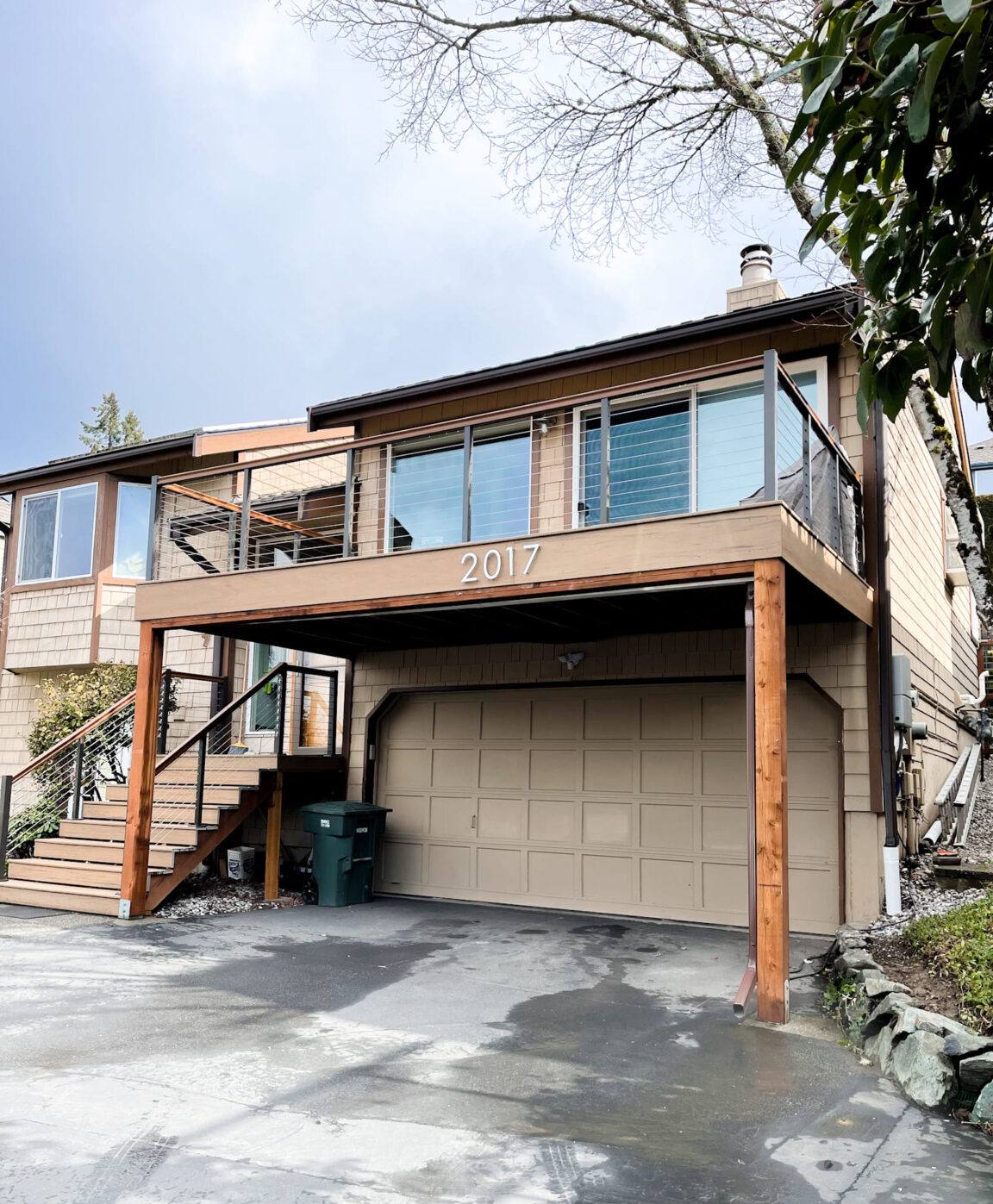
What Whatcom County's Climate Actually Does to a Deck
We don't get hurricanes or brutal winters here, but the combination of moisture, salt air, and low winter sun is harder on outdoor structures than people assume. Three things matter most for decks specifically.
Salt Air and Hardware Corrosion
Sunnyland's proximity to Bellingham Bay means the air carries a fine salt content that settles on exposed metal. Over time, that accelerates corrosion on fasteners, joist hangers, and railing hardware that weren't rated for it. A deck can look fine on the surface while the screws and connectors holding it together are quietly rusting away underneath. This is one of the most common failure points we find on older decks in this area — not the boards, the hardware.
Driving Rain and Trapped Moisture
Whatcom County gets a lot of rain that doesn't fall straight down — wind-driven rain gets pushed sideways under railings, into ledger connections, and between deck boards that are spaced too tight. When water gets into a structure and has nowhere to drain or dry out, that's when you get rot in framing, soft spots in decking, and eventually structural problems that are expensive to fix compared to what it would have cost to build it right the first time.
Moss, Algae, and Slick Surfaces
The long moss season here isn't just cosmetic. Moss and algae hold moisture against the wood surface, and on stairs or a sloped deck they create a genuine slip hazard, especially in the low-light months when decks stay damp for days at a time. Material choice, board spacing, and even which way a deck faces all affect how bad this problem gets.
Choosing a Decking Material That Fits Sunnyland Homes
There's no single "best" decking material — it depends on your budget, how much maintenance you're willing to do, and how the deck will be used. Here's an honest comparison for our climate specifically.
| Material | How It Handles Our Climate | Maintenance | General Cost Range |
|---|---|---|---|
| Pressure-treated lumber | Handles moisture well when properly sealed; needs reapplication of finish to resist moss and graying | Annual cleaning and re-sealing recommended | Lowest upfront cost |
| Cedar | Naturally moisture- and insect-resistant, but still needs regular finish maintenance in our rain | Periodic staining/sealing to prevent graying and moss buildup | Mid-range |
| Composite decking | Won't rot, resists moss better than wood, but can still get slick when damp if not textured well | Occasional washing; no staining or sealing | Higher upfront cost |
| PVC/cellular decking | Fully moisture-proof board, best resistance to mold and moss staining of the options here | Lowest ongoing maintenance | Highest upfront cost |
For a lot of Sunnyland homeowners, the right answer is a hybrid: composite or PVC decking on the walking surface where moss and slip resistance matter most, with pressure-treated lumber in the substructure where it's protected from direct weather. That balances cost against long-term performance instead of overspending or underspending across the whole structure.
Framing and Substructure Details We Don't Skip
The framing is the part of a deck nobody sees after it's built, which is exactly why it's the part most likely to get shortcut. In this climate, a few details matter more than they would somewhere drier:
- Footings set on solid, undisturbed bearing soil and sized for the actual load, not just the minimum that will pass inspection
- Joist protection (tape or a compatible flashing product) on the top edge of every joist, so standing water doesn't sit directly on cut lumber
- Board spacing calculated for drainage, not just appearance — too tight and water and debris sit on the surface and feed moss growth
- Proper air flow underneath the deck so the substructure can actually dry out between rain events instead of staying damp for weeks
None of this is visible once the deck is finished, but it's the difference between a deck that's still solid in fifteen years and one that needs structural repair in five.
Fasteners, Flashing, and Hardware
Given what salt air does to standard hardware, we treat fastener selection as a real decision, not an afterthought. Stainless steel or high-grade coated fasteners rated for coastal exposure cost more than standard deck screws, but replacing a handful of corroded connectors is far cheaper than replacing rotted framing later because a cheap hanger failed.
The single most important flashing detail on most decks is where the deck ledger board attaches to the house. That connection point takes on wind-driven rain directly and, if it's not flashed correctly to shed water away from the house wall, it can lead to rot in both the deck framing and the home's own wall structure behind it. It's a small detail on the plans and a big deal if it's done wrong.
Railings, Stairs, and Finish Choices for a Wet Climate
Railings and stair treads see more hand contact and foot traffic than any other part of the deck, which makes them the first place moisture and moss problems become obvious. A few things worth thinking through:
- Composite or aluminum railing systems shed water and resist moss buildup better than untreated wood railings, which tend to gray and roughen with age
- Stair treads benefit from a textured or grooved surface — smooth boards get noticeably slicker than flat deck sections during the wet season
- Cable rail systems look great but require stainless cable and hardware in this environment; standard-grade cable will corrode faster near the bay
- Fascia boards and skirting should use the same moisture logic as the decking itself, since they're just as exposed to driving rain
Our Process for a Custom Deck Build in Sunnyland
We keep the process straightforward and give you real information at each step, not just a quote at the end.
- On-site assessment of your yard, existing structure (if replacing a deck), drainage patterns, and sun/shade exposure
- Design conversation covering layout, material options, and railing/stair choices matched to your budget and how you'll use the space
- Written estimate that spells out materials, hardware grade, and scope so there are no surprises
- Permit handling where required — deck projects in Bellingham and unincorporated Whatcom County can require a permit depending on height, size, and attachment to the home, and we handle that paperwork as part of the job
- Framing and substructure work built to the details above, not just code minimums
- Decking, railing, and finish work completed and inspected before we call the job done
A Simple Maintenance Checklist for Whatcom County Decks
Even a well-built deck needs some seasonal attention in this climate. This is the short list we give homeowners:
- Sweep debris off the deck surface regularly, especially in fall — trapped leaves hold moisture and feed moss
- Wash the deck surface and railings at least once a year to remove salt residue and early moss growth before it spreads
- Check fastener heads and hardware annually for early signs of rust, especially on older decks with standard-grade screws
- Inspect the ledger board connection to the house periodically for any staining or soft wood, which can signal a flashing failure
- Reapply sealant or stain on wood decking on the manufacturer's recommended schedule, not just when it looks bad
- Keep gutters and downspouts near the deck clear so runoff isn't dumping extra water directly onto or under the structure
Why Hire a Crew That Already Works in Sunnyland
Deck-building fundamentals don't change from neighborhood to neighborhood, but local conditions do. A crew that regularly works in Sunnyland and the surrounding Bellingham area already knows how close you are to salt exposure, how your lot likely drains, and what the local permitting process actually requires — instead of learning it on your project. That familiarity shows up in the small decisions: which hardware grade is worth the upgrade, where extra flashing pays for itself, and how to orient a deck relative to sun and rain exposure on a typical Sunnyland lot.
It also means we're not far away if something needs a look after the fact. A deck is a long-term structure, and having a contractor who's still local and reachable years later matters more than most people think about at the time of the build.
If you're planning a new deck or replacing one that's showing its age, we're happy to come take a look and put together a free, no-pressure estimate — just fill out the form below.