 Whatcom County
 Deck Replacement in Sunnyland
Sunnyland's older housing stock, mature tree canopy, and proximity to Bellingham Bay make for a neighborhood that's easy on the eyes and hard on wood. If you've been patching boards, chasing soft spots, or watching your deck stay damp longer than it should after every rain, you're not imagining it — this part of Whatcom County simply doesn't give a deck much of a break. We replace decks in Sunnyland with materials and framing details chosen specifically for that reality, not a generic build that happens to work somewhere drier.
This page covers what a deck replacement actually involves here, what tends to fail first on Sunnyland homes, and how we approach the job so the new deck outlasts the one it's replacing.
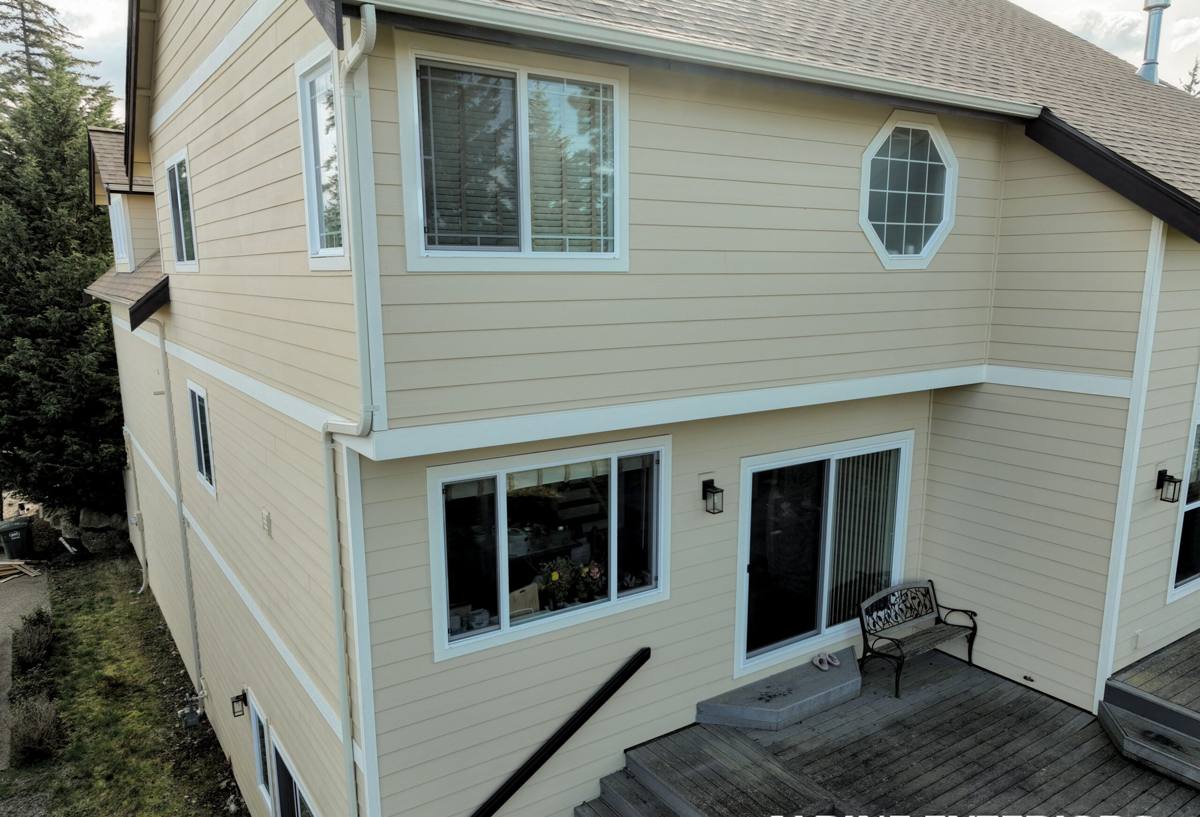
Why Sunnyland Decks Wear Out Faster Than the Manual Says
Every deck material comes with a lifespan estimate, and almost none of those numbers account for a marine climate. A few things stack up against decks in this neighborhood specifically:
- Salt air off the bay accelerates corrosion on fasteners, joist hangers, and any exposed metal hardware — long before the wood itself gives out.
- Driving rain pushed sideways by wind gets under railings, into end-grain cuts, and behind ledger boards that weren't flashed correctly the first time.
- A long moss season — often eight months or more of the year — keeps deck surfaces damp, shaded, and slick, which both rots wood faster and makes the deck genuinely unsafe underfoot.
- Tree cover common in older Sunnyland lots means less sun exposure to dry a deck out between storms, so moisture just sits.
None of this means a deck can't last decades here — it means the build has to plan for standing moisture instead of assuming it away.
What We See Most Often on Replacement Calls
On tear-outs in this neighborhood, the failure almost never starts with the decking boards themselves. It starts underneath: rotted ledger connections where the deck meets the house, rusted-through joist hangers, posts that have been wicking moisture from ground contact, and joists that look fine on top but are soft and dark when you push a screwdriver into the end grain. By the time decking boards are visibly cupping or splintering, the structure underneath has usually been compromised for a while.
Signs Your Sunnyland Deck Needs Replacing, Not Just Repair
Repair makes sense when the damage is isolated. Replacement makes sense when the problems are structural or spread across the deck. Here's how to tell which situation you're in:
| Sign | Usually Repairable | Usually Needs Replacement |
|---|---|---|
| A few boards cupped or splintering | Yes | |
| Soft, spongy feel when you walk on it | Yes — points to joist or beam rot | |
| Railing posts wobble at the base | Sometimes | Yes if post base is rotted or under-sized |
| Persistent moss/algae you keep power-washing off | Yes, with better drainage detailing | |
| Gap or staining where deck meets the house | Yes — sign of ledger/flashing failure | |
| Deck is 20+ years old, original ledger and hardware | Yes — hardware has likely exceeded its service life |
If you're not sure which column your deck falls into, that's a normal reason to ask for an inspection rather than guess.
What a Correct Deck Replacement Involves Here
A deck replacement done right in Sunnyland isn't just swapping old boards for new ones on the same frame. It's an opportunity to fix the drainage, flashing, and hardware decisions that caused the original failure.
The Ledger and House Connection
This is the single most common point of failure we find, and it's also the easiest to get wrong on a rebuild if it's rushed. The ledger board needs proper flashing that sheds water away from the house framing, not just caulk covering a gap. Given how much rain this area sees sideways as well as straight down, we treat ledger flashing as non-negotiable, not an upsell.
Framing and Hardware
We use corrosion-resistant, code-rated hardware throughout — joist hangers, structural screws, and post bases rated for exterior and coastal-adjacent exposure. Standard interior-grade fasteners corrode faster near the bay, and a deck is only as strong as its weakest connection.
Post Bases and Ground Contact
Wherever posts meet concrete or soil, we keep wood off direct ground contact using appropriate post bases, and grade or slope the surrounding area so water doesn't pool at the base. Standing water at a post base is one of the fastest ways to shorten a new deck's life right back down to a short one.
Decking Material
Material choice matters a lot in a moss-prone, shaded, wet climate. Here's the honest tradeoff breakdown:
| Material | Upside Here | Tradeoff Here |
|---|---|---|
| Pressure-treated wood | Lower upfront cost, familiar repair/replacement of individual boards | Needs regular sealing/staining to resist moss and moisture; shorter maintenance-free window |
| Cedar | Naturally rot-resistant, ages well aesthetically | Still needs periodic maintenance; softer surface shows wear |
| Composite decking | Resists rot and moisture absorption, low maintenance | Can still grow moss/algae on the surface in heavy shade; higher upfront cost; installation sensitivity around ventilation and fastening matters more |
We'll walk you through what fits your budget and how much shade your specific lot gets, since that's often the deciding factor more than personal preference.
Designing for Drainage and Airflow
A deck that can't dry out between storms will always struggle here, no matter what it's built from. Two details make a real difference:
- Board spacing and gapping that lets water drain through instead of sitting on the surface.
- Under-deck ventilation so the framing itself has airflow, not just the walking surface — this is often skipped on budget rebuilds and is a major reason joists rot from underneath while the top looks fine.
We also consider sun exposure and tree cover when we can — sometimes light trimming of overhanging branches (coordinated with you, never something we decide unilaterally) makes a meaningful difference in how fast moss returns.
Our Process for a Sunnyland Deck Replacement
- On-site inspection. We check the ledger connection, probe joists and posts for soft spots, and assess drainage around the deck's footprint.
- Honest scope discussion. We tell you plainly whether you're looking at a repair, a partial rebuild, or a full replacement, and why.
- Material and design conversation. Based on your budget, sun exposure, and how you use the space, we go over decking material options and railing choices.
- Permit handling. Deck replacements in Whatcom County often require permitting depending on size and height — we handle that process rather than leaving it to you.
- Tear-out and structural rebuild. Old decking, framing, and hardware come out; ledger flashing, joists, hangers, and post bases go in correctly the first time.
- Decking, railing, and finish work. Boards, railings, and any stairs are installed with attention to drainage gaps and fastening.
- Final walkthrough. We go over the finished deck with you before calling the job done.
What to Ask Any Contractor Before You Hire (Including Us)
- Will you inspect and replace the ledger flashing, or just re-attach to what's there?
- What hardware grade are you using for joist hangers and fasteners?
- Is under-deck ventilation part of the plan, or just the visible decking?
- Do you pull the required permit, and is that included?
- What's your warranty on workmanship versus what the material manufacturer covers?
A contractor who can't answer these clearly on the spot is worth a second opinion.
Why a Crew That Works Sunnyland Regularly Matters
Deck problems in this neighborhood follow patterns — the same ledger flashing shortcuts, the same moss buildup in shaded lots, the same hardware corrosion near the bay. A crew that's replaced decks throughout Whatcom County has already seen how these specific conditions play out over time, not just how a deck looks the day it's finished. That matters when you're choosing materials, planning drainage, and deciding what actually needs to be rebuilt versus what's fine to leave alone.
It also matters for permitting — knowing what Whatcom County typically requires for a deck of a given size or height means fewer surprises and delays once work starts.
Cost Factors to Expect
We won't quote a number without seeing the deck, but the main variables that move the price are consistent:
- Size and height of the deck (multi-level decks and stairs add cost)
- Decking material chosen (pressure-treated, cedar, or composite)
- Extent of structural rot found once old decking comes off
- Railing style and code requirements based on deck height
- Permit fees and any required engineering for larger structures
The honest answer to "how much will this cost" almost always depends on what we find once the old decking is off — we'll flag anything that changes scope before we proceed, not after.
If your deck in Sunnyland is showing soft spots, persistent moss, or just isn't holding up the way it used to, we're glad to take a look. Reach out for a free, no-pressure estimate using the form below.