 Whatcom County
 Siding in Sunnyland Has to Answer to Bellingham's Climate
Sunnyland is one of Bellingham's older, established neighborhoods, and a lot of the homes here were sided decades ago with materials that were never built for what Whatcom County actually throws at a house year after year. Proximity to Bellingham Bay means a steady dose of salt-laden air. The marine weather pattern that defines this part of Washington means driving, wind-pushed rain rather than gentle vertical rainfall. And the long, wet, low-sun stretch from fall through spring gives moss, algae, and mildew months to establish themselves on anything that holds moisture. None of that is unusual for Whatcom County — it's just the baseline. Siding installed here has to be chosen and installed with that baseline in mind, not treated like it's going on a house in a dry inland climate.
This page is specifically about siding installation for Sunnyland homes — what the local conditions demand, what a correct installation actually involves, and why the contractor doing the work matters as much as the material itself.
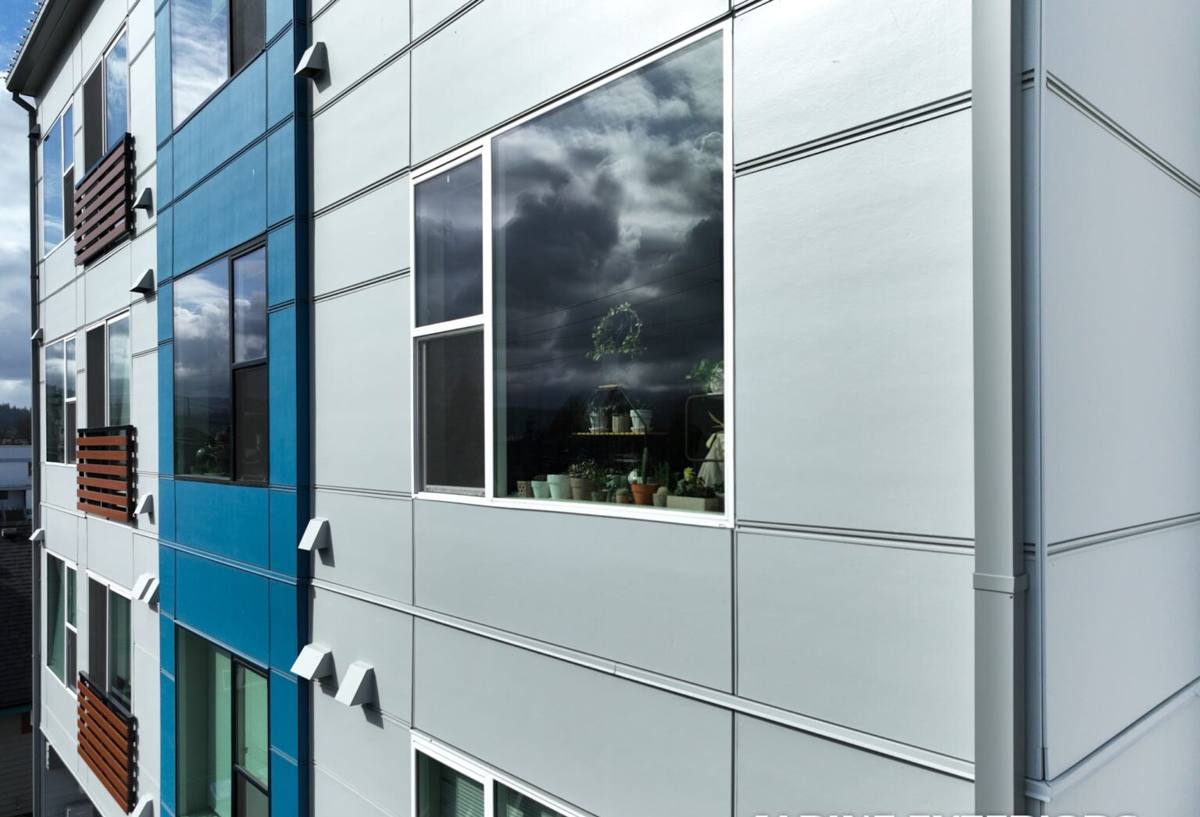
What Salt Air, Driving Rain, and Moss Season Actually Do to Siding
Salt-laden air
Airborne salt from the bay accelerates corrosion on fasteners, flashing, and any metal trim that isn't rated for a marine-adjacent environment. It also breaks down cheap or low-grade paint finishes faster than manufacturers' lab tests in drier regions would predict, which is why factory-cured finishes matter more here than they do fifty miles inland.
Driving rain and wind-driven moisture
When rain comes in sideways off the water, it doesn't just wet the face of the siding — it tests every seam, every joint, every place where siding meets a window, door, or trim board. A siding system with weak flashing details or gaps in the drainage plane will eventually let water behind the cladding, and once moisture gets behind siding in a climate this wet, it rarely dries out on its own before the next storm arrives.
Extended moss and mildew season
Whatcom County's wet season runs long, and shaded sides of a home — especially in a tree-canopied neighborhood like Sunnyland — can stay damp for days at a stretch. Siding materials and finishes that absorb moisture or that trap organic debris in surface texture give moss and mildew a foothold that's hard to fully clean off and even harder to keep off.
What a Correct Siding Installation Involves
Most siding problems homeowners eventually deal with aren't a failure of the siding panel itself — they're a failure of the details around it. A correct installation gets these right the first time:
Weather-resistive barrier and drainage plane
A continuous, properly lapped weather-resistive barrier goes on before any siding, with a drainage gap behind the cladding so that any moisture that does get past the siding has somewhere to go besides your wall sheathing.
Flashing and window/door integration
Every window, door, and penetration needs flashing that's integrated with the weather barrier in the correct shingle-lap order — flashing on top of the layer below it, never the reverse. This is where driving rain finds weak installations, and it's not something you can inspect from the ground once the siding is up.
Fastening and clearances
Fastener type, spacing, and depth all matter, and they change depending on the siding material, the substrate, and local wind-exposure conditions. Correct ground clearance and clearance from roof lines, decks, and grade keep splash-back and standing moisture away from the bottom courses, which is typically where siding fails first.
Field-cut sealing and factory finish
Any cut edge made on site exposes raw material that wasn't part of the factory finish. Sealing those cuts properly — and choosing a product where the factory finish is doing most of the protective work to begin with — is a detail that's easy to skip and expensive to have skipped for you.
Why We Install James Hardie Fiber Cement and Nothing Else
We get asked why we don't offer vinyl, LP SmartSide, or other fiber cement brands as cheaper alternatives. The honest answer is that we standardized on James Hardie because, installed correctly, it holds up to exactly the conditions Sunnyland deals with, and we'd rather install one product well than several products with trade-offs we'd have to talk homeowners through every time.
- Non-combustible: fiber cement doesn't feed a fire the way vinyl or wood-based products can, which matters more every year as wildfire smoke seasons extend even into western Washington.
- Engineered for this climate: Hardie's HZ5 product line is engineered for moisture and freeze-thaw conditions common to the Pacific Northwest, rather than being a one-size-fits-all national product.
- ColorPlus factory finish: the color is baked on at the factory under controlled conditions, which holds up to salt air and UV exposure far better than field-applied paint, and it eliminates the repaint cycle that other sidings eventually demand.
- Doesn't rot or delaminate: fiber cement is dimensionally stable and won't swell, rot, or delaminate the way wood-based or lower-grade composite sidings can when they take on repeated moisture.
- Transferable warranty: a strong warranty on both the substrate and the finish, and one that transfers to a new owner if you sell the home — which matters in a market where siding condition is a real line item in a home inspection.
We're not going to tell you every other product on the market is junk — vinyl is cheap and easy to install, and other fiber cement brands have their own merits. But we've made a professional decision to install one system we can stand behind fully in this climate, rather than offer options we'd have reservations about recommending for a Whatcom County exterior.
Our Installation Process for Sunnyland Homes
- On-site assessment: we look at your existing siding, sheathing condition, trim, flashing, and any moisture staining or soft spots before quoting anything.
- Tear-off and substrate check: old siding comes off and we inspect the sheathing underneath — this is often the first time hidden moisture damage from a previous installation gets found and addressed.
- Weather barrier and flashing: a new, continuous weather-resistive barrier goes on with correctly lapped flashing at every window, door, and penetration.
- Hardie installation to manufacturer spec: panels or planks are installed with the fastening pattern, clearances, and joint treatment James Hardie specifies for this climate zone — not a generic install method.
- Trim, caulking, and touch-up: factory-finished trim is installed and any factory-approved touch-up is applied to cut edges and fastener heads.
- Final walkthrough: we walk the exterior with you before calling the job done, so nothing gets discovered after we've left.
Signs Your Sunnyland Home May Need New Siding
- Visible warping, bubbling, or soft spots when you press on the siding surface
- Paint that's peeling or blistering repeatedly in the same spots, even after repainting
- Persistent moss or algae growth that returns quickly after cleaning
- Rising heating bills without another clear explanation
- Visible gaps, cracking, or separation at seams, corners, or around windows and doors
- Musty odors or moisture staining on interior walls that back up to exterior siding
- Siding that's original to a home built more than 20-25 years ago and has never been replaced
Cost Factors for Siding Installation
Every Sunnyland home is different, and we don't quote sight-unseen — but these are the main variables that move a siding installation estimate up or down:
| Factor | Why It Matters |
|---|---|
| Home size and wall complexity | More square footage and more corners, gables, and dormers mean more material and labor |
| Substrate condition | Rotten or water-damaged sheathing found during tear-off has to be replaced before new siding goes on |
| Existing siding removal | Full tear-off costs more than installing over a prepared surface, but it's usually the right call when there's hidden damage |
| Trim and detail work | Windows, corner boards, and architectural trim add labor time beyond flat wall coverage |
| Product line and profile | James Hardie offers multiple plank widths, textures, and colors, and pricing varies by which you choose |
| Access and site conditions | Multi-story sections, tight lot lines, or landscaping that limits staging area can affect labor time |
Why Hiring a Crew That Already Works in Sunnyland Matters
Siding installation isn't just about the product — it's about whether the crew installing it understands the conditions the house actually faces. A crew that regularly works Whatcom County knows to plan around the wet season's install windows, knows how local moisture and salt exposure show up in older homes here, and knows the flashing and drainage details that matter most in a marine climate versus a dry inland one. That local pattern recognition is worth more than a generic national install guide, because it's built from having actually opened up walls in this specific climate and seen what does and doesn't hold up.
It also matters for accountability. A contractor who works this area regularly has a reputation to maintain with your neighbors, not just with you — which is a real, practical form of quality control that an out-of-area or one-time crew doesn't have the same incentive to uphold.
After Installation: Keeping Hardie Siding Performing in This Climate
One of the advantages of a correctly installed Hardie system is how little ongoing maintenance it demands compared to wood or lower-grade composite sidings — but "little" isn't "none," especially given Sunnyland's moss season and salt exposure.
- Rinse the exterior periodically to clear salt residue and organic buildup before it establishes, especially on shaded elevations
- Keep gutters clear so overflow doesn't run down the siding face repeatedly
- Trim back vegetation that keeps a wall shaded and damp longer than the rest of the house
- Address any caulking gaps at trim or penetrations promptly rather than waiting for a full maintenance cycle
- Have the exterior looked at after any major windstorm to check for displaced trim or flashing
If you're weighing a siding replacement for a Sunnyland home, we're glad to come take a look, walk you through what we're seeing, and put together a straightforward, no-pressure estimate — no obligation, and no pressure to sign anything on the spot.