 Whatcom County
 Why Sunnyland Siding Wears Differently Than Siding Inland
Sunnyland sits close enough to Bellingham Bay that homes here deal with a combination most inland Whatcom County neighborhoods don't: salt-laden air moving in off the water, driving rain that comes in sideways during fall and winter storms, and a moss season that can stretch from October well into spring. None of these factors is dramatic on its own. Together, over ten or fifteen years, they're exactly what breaks down siding that wasn't built or installed for this kind of exposure.
Salt air is corrosive to exposed fasteners and metal trim, and it accelerates the breakdown of paint films on wood and wood-composite sidings. Driving rain doesn't just wet the surface of a wall — wind-driven moisture gets pushed up under laps and around penetrations that would stay dry in a calm rain. And moss doesn't just grow on roofs; it colonizes damp, shaded siding, especially on north- and west-facing walls, holding moisture against the substrate for months at a time. A siding system has to be able to shed water, dry out between storms, and resist organic growth, or it's fighting a losing battle from day one.
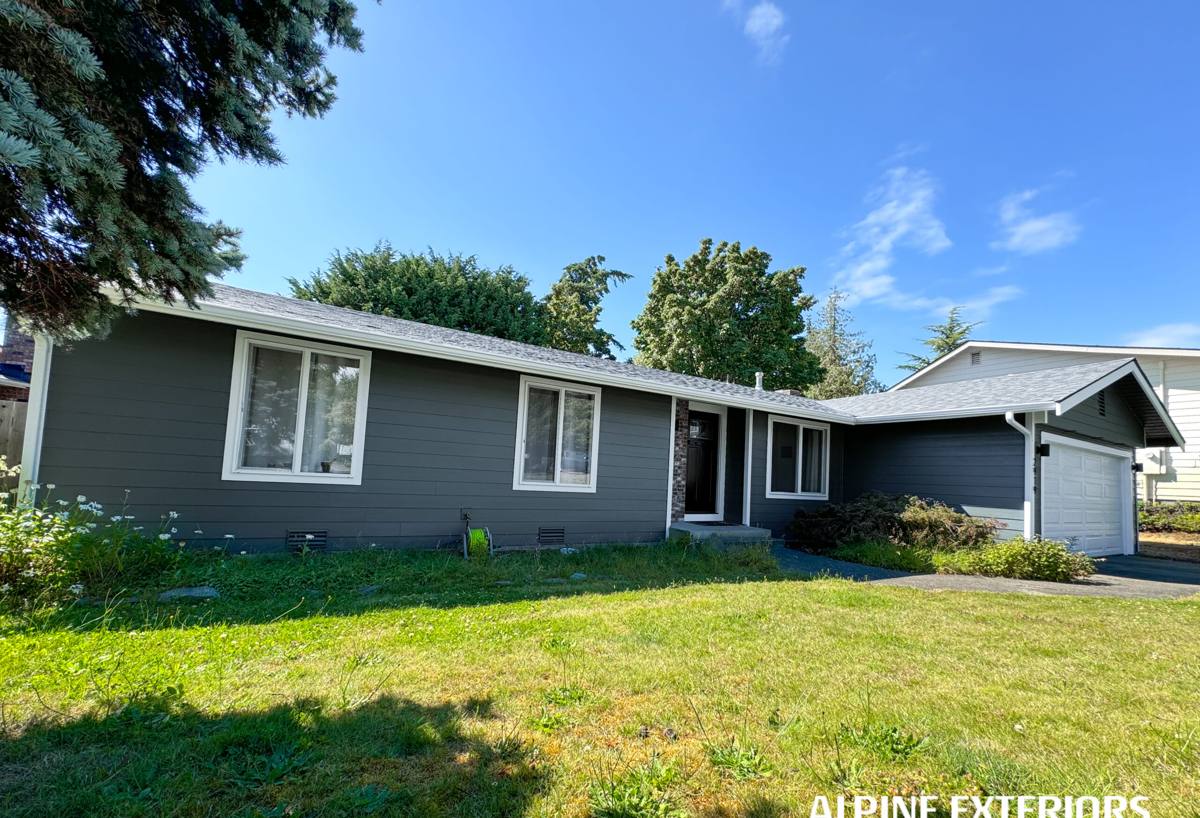
Signs a Sunnyland Home Needs Siding Replacement, Not Just Repair
Not every siding problem calls for a full tear-off. But there's a point where patching becomes a waste of money, and homeowners in this neighborhood should know what that point looks like.
- Soft or spongy spots when you press on the siding, especially near the bottom courses or around windows
- Paint that keeps failing within a year or two of repainting, even with a quality product
- Visible moss or algae staining that returns quickly after cleaning
- Cupping, warping, or delamination in wood or wood-composite panels
- Gaps opening up at seams, corners, or trim that let daylight or drafts through
- Rust streaking from fasteners, or fasteners that have backed out or corroded
- Interior signs — musty smell, stained drywall, or peeling interior paint on an exterior wall — that suggest moisture has already gotten past the siding
If you're seeing two or more of these, the siding is no longer doing its job as a weather barrier, even if it still looks presentable from the street.
What a Correct Siding Replacement Actually Involves
It starts underneath the siding, not at the siding
The siding itself gets the attention, but the layers behind it determine whether a replacement lasts. A proper job includes removing the old siding down to the sheathing, inspecting for rot or water damage and repairing it before anything new goes up, and installing a code-compliant weather-resistant barrier (WRB) that's lapped correctly — upper courses over lower — so water is directed out and down, never trapped behind the wall.
Flashing is where most failures start
Windows, doors, deck ledgers, hose bibs, and any other wall penetration need proper flashing integrated with the WRB. In a neighborhood that takes driving rain seriously, this isn't optional detailing — it's the single biggest factor in whether a siding job stays dry for the next twenty years or starts showing water intrusion in five.
Fastening and gapping to manufacturer spec
Fiber cement siding has specific nailing patterns, fastener types, and gap requirements at butt joints and corners. Installed loose, over-driven, or with the wrong fastener, it will crack, cup, or let water behind the plane — problems that show up as cosmetic defects but are really installation defects. This is a large part of why we control the install ourselves rather than treating it as generic carpentry.
Material Comparison: What Actually Holds Up in This Climate
| Material | Moisture Behavior | Moss/Algae Resistance | Maintenance |
|---|---|---|---|
| James Hardie fiber cement | Dimensionally stable; won't swell, rot, or delaminate from moisture | Factory finish resists staining better than raw wood or composite | Repaint cycle extended by ColorPlus factory finish; occasional wash |
| Vinyl | Doesn't rot, but can warp/buckle with heat and gaps at seams let water behind it | Moss and algae still colonize the surface, especially shaded walls | Low, but color fades and can't be repainted to match easily |
| LP SmartSide (wood-strand composite) | Engineered to resist moisture better than raw wood, but edges are still vulnerable if cut or damaged in the field | Prone to surface staining without regular cleaning | Needs repainting/recoating on a regular cycle |
| Cedar / primed spruce | Natural wood movement; absorbs moisture, especially at end grain and laps | High — organic material feeds moss and mildew directly | Frequent repainting/staining and moss treatment required |
Every one of these products has a legitimate place in the market. Our position is narrower than that: given what Sunnyland's climate does to a wall over a decade or two, we've standardized on one system rather than installing several and hoping each one gets maintained perfectly.
Why We Install Only James Hardie Fiber Cement
We don't install vinyl, LP SmartSide, Cemplank, Allura, primed spruce, or cedar. That's a deliberate standard, not a lack of options. Fiber cement is non-combustible, which matters as wildfire smoke and ember exposure become a bigger concern even in Western Washington. It's dimensionally stable, so it doesn't expand and contract the way wood or vinyl does with temperature swings, which keeps joints and paint lines tighter over time. James Hardie's ColorPlus factory finish is baked on under controlled conditions, which holds color and resists the chalking and peeling that field-applied paint is prone to — a real advantage in a neighborhood dealing with salt air and prolonged damp seasons. Their HZ5 product line is engineered specifically for climates with freeze-thaw cycles and moisture exposure like the Pacific Northwest. And the warranty is transferable, which matters to homeowners who may sell before the siding's functional life is up.
None of that means other products are junk — cedar has real appeal, vinyl is inexpensive, LP SmartSide performs reasonably well when detailed correctly. We simply won't put our name behind an install where the long-term maintenance burden or moisture risk in this specific climate is higher than we're willing to stand behind.
Our Process for a Sunnyland Siding Replacement
- On-site assessment: We walk the exterior, check for hidden moisture and rot, and look at drainage, roof overhangs, and shaded/damp areas that are more moss-prone.
- Scope and product selection: We recommend the appropriate James Hardie line, plank width, and finish based on the home's exposure and style.
- Tear-off and sheathing inspection: Old siding comes off, sheathing is checked and repaired as needed before anything new is installed.
- WRB and flashing: Weather barrier and flashing details are installed to manufacturer and code spec, with particular attention to window heads and any wall penetrations.
- Installation: Siding is installed to Hardie's fastening, gapping, and clearance specifications.
- Final walk-through: We review the finished job with you before calling it complete.
Cost Factors for Sunnyland Homes
| Factor | Why It Matters Here |
|---|---|
| Extent of hidden damage | Homes with years of moisture intrusion behind old siding may need sheathing repair before new siding goes on |
| Number of stories and access | Affects labor time and equipment needs |
| Trim and detail complexity | Window and door counts, corner details, and architectural features add labor |
| Product line and plank profile | HZ5 lines and specific ColorPlus colors vary in material cost |
| Removal and disposal | Full tear-off of old siding adds disposal cost versus a straightforward re-side |
We give a firm, itemized estimate after the on-site assessment rather than a phone-quote guess — hidden damage and access issues vary enough house to house that a ballpark number isn't useful to either of us.
Why Hiring a Crew That Already Works This Neighborhood Matters
A contractor who works across Whatcom County regularly, including neighborhoods like Sunnyland, has already seen how the local combination of salt exposure, driving rain, and moss buildup plays out on real houses — which walls fail first, where flashing tends to get skipped, which product details actually hold up. That's different from a crew working from a generic install manual with no feel for how this specific stretch of coastline behaves. It also means we're a known, reachable business if a warranty question comes up five or ten years down the road, not a name that did one job in the area and moved on.
If your siding is showing wear, or you're planning ahead before it becomes a moisture problem, we're happy to take a look and give you a straightforward, no-pressure estimate for a Sunnyland siding replacement — just fill out the form below.