 Whatcom County
 Window Installation Built for Sehome, Not a Generic Climate
Sehome sits close enough to Bellingham Bay that salt-laden air is a real factor in how windows age here, and far enough into the hills that wind-driven rain finds every gap a lesser installation leaves behind. The neighborhood's housing stock is a mix — older craftsman and mid-century homes near Western Washington University, along with newer infill construction — and each of those building types has different window needs. A one-size-fits-all install, the kind you'd get from a crew that mostly works somewhere drier, tends to fail here faster than it should. We work Whatcom County homes specifically, and that changes how we flash, seal, and spec a window before we ever pick up a drill.
This page is about one job in one place: replacing or installing windows on a home in Sehome. Not a national buying guide, not a generic "why replace your windows" pitch — what actually matters for a house in this neighborhood, in this climate, done correctly.
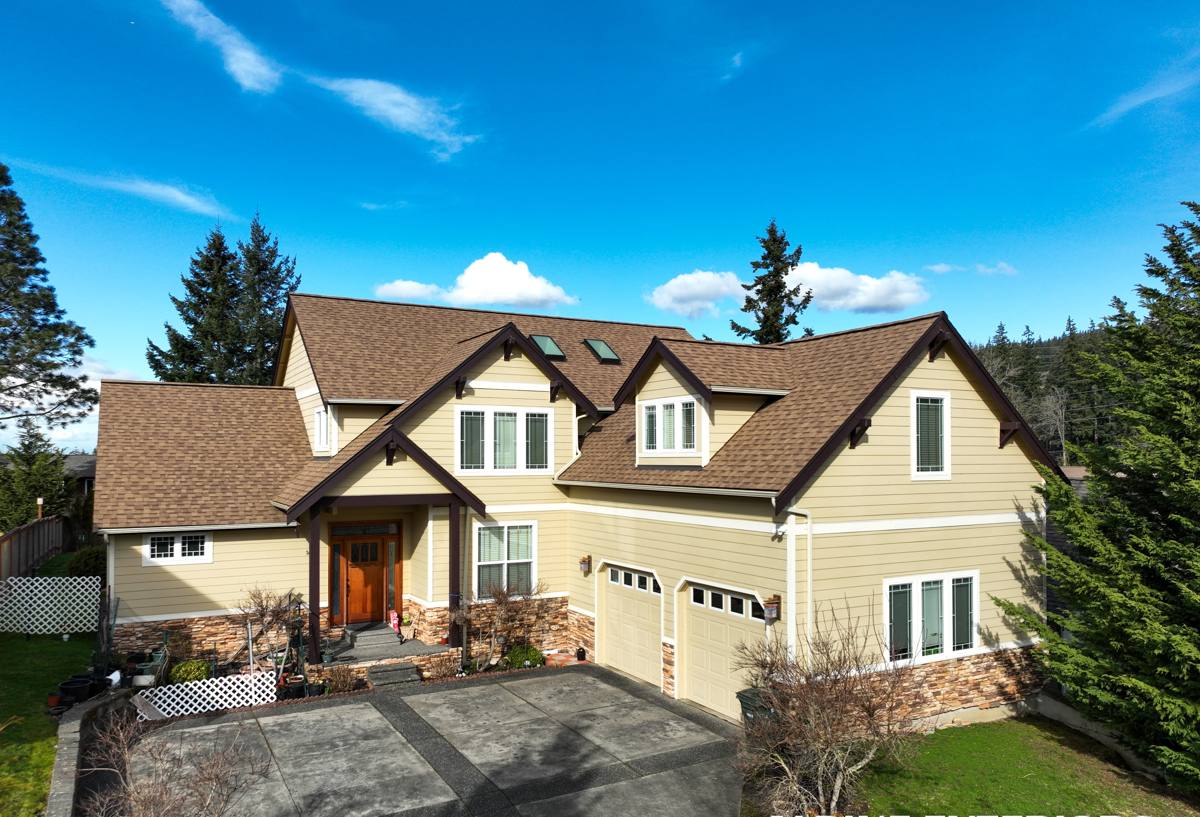
What Whatcom County's Climate Does to Windows Over Time
Three things drive window failure around here, and they compound each other.
Salt Air
Proximity to the bay means a fine mist of salt settles on exterior surfaces more often than most homeowners realize. On windows, that accelerates corrosion of hardware — hinges, cranks, locking mechanisms, and especially aluminum components that aren't rated for coastal exposure. It also breaks down poor-quality sealants faster than a dry inland climate would.
Driving Rain
Whatcom County doesn't just get a lot of rain — it gets a lot of wind-driven rain, which behaves very differently than a straight-down shower. Wind pushes water sideways and upward into gaps that would stay dry in calmer weather. This is why flashing detail and the water management plane behind the window matter more here than the window unit itself. A great window with a mediocre installation will leak. A decent window installed correctly usually won't.
The Long Moss Season
Extended damp periods mean moss and algae get a long runway to establish themselves on north-facing walls, sills, and anywhere water sits instead of draining. Around windows, that moisture retention is what rots sills and sheathing from the outside in — often silently, behind trim, for years before it becomes visible.
None of these three problems shows up overnight. They show up as a slow decline: a window that used to open easily starts sticking, a sill that used to look fine develops soft spots, a room that used to be warm in winter starts feeling drafty. By the time it's obvious, there's usually water damage behind the wall that costs more to fix than the windows themselves.
Signs Your Sehome Home's Windows Need Attention
- Visible gaps, soft or discolored wood at the sill or bottom corners of the frame
- Windows that are hard to open, close, or lock — often a sign of frame movement or swelling
- Condensation between panes on double- or triple-glazed units (a sign the seal has failed)
- Noticeable draft near the window even when it's fully closed and latched
- Peeling paint or bubbling drywall on the interior wall below or beside a window
- Musty smell near a window that doesn't go away with cleaning
- Visible moss, algae, or persistent dark staining on the exterior trim around the window
Any one of these on its own isn't necessarily an emergency. Several together, especially condensation plus a musty smell, usually means moisture has already gotten past the sill and it's worth having someone look before it spreads.
What a Correct Window Installation Actually Involves
Most window problems trace back to installation, not the window itself. A correct job in this climate includes several steps that are easy to skip and impossible to see once the trim goes back on:
Removal Without Damage
Old windows come out carefully, with the surrounding framing, sheathing, and existing weather barrier inspected for hidden rot before anything new goes in. If we find soft framing or a compromised weather barrier, that gets addressed — installing a new window into a wet or rotted opening just locks the problem behind new trim.
Flashing and Water Management
This is the step that matters most for wind-driven rain. Flashing tape and pan flashing at the sill need to be installed in the correct shingle-lap order — each layer overlapping the one below it — so any water that does get behind the cladding drains out and away from the framing instead of pooling at the sill. This is the single biggest difference between an installation that survives a Whatcom County winter and one that leaks by the second season.
Air Sealing and Insulation
The gap between the window frame and the rough opening gets sealed with the right materials — not just spray foam alone, but a combination that manages both air leakage and any incidental moisture without trapping it against the wood.
Level, Plumb, and Square
A window that's out of square binds, doesn't lock properly, and stresses the seals over time. This is basic, but it's also the step that gets rushed on a crew that's moving too fast.
Proper Trim and Sealant
Exterior sealant needs to be rated for the movement and moisture exposure it'll actually see here, applied at the right joints — not everywhere, since sealing the wrong joints can trap moisture instead of letting it drain.
Window Type and Material — What Fits a Sehome Home
There's no single "best" window material — it depends on the home's age, exposure, and what you're trying to solve. Here's how the common options hold up under salt air and heavy rain exposure specifically:
| Material | Coastal/Salt Air Behavior | Maintenance | Typical Fit |
|---|---|---|---|
| Vinyl | Doesn't corrode; performs well near the bay | Low — occasional cleaning | Most replacement projects, good value |
| Fiberglass | Excellent — dimensionally stable, resists salt and moisture well | Low | Higher-exposure walls, long-term durability priority |
| Wood (clad exterior) | Good if exterior cladding is intact; bare wood suffers in this climate | Higher — exterior cladding and any exposed wood need monitoring | Historic or period-correct homes where appearance matters most |
| Aluminum | Poor unless specifically coastal-rated; standard aluminum corrodes and conducts cold | Moderate to high | Generally not our recommendation this close to the bay |
For most Sehome homes we install vinyl or fiberglass, largely because both shrug off salt air and driving rain without the ongoing upkeep that wood or standard aluminum demand. On older homes where period-correct wood trim matters for the look of the house, we'll talk through what maintaining that will actually require — that's a legitimate choice, but it's an honest trade-off, not a maintenance-free one.
What Drives Cost
| Factor | Why It Matters |
|---|---|
| Number and size of openings | More windows and larger units mean more material and labor |
| Condition of the existing opening | Rot repair or reframing adds time before the new window even goes in |
| Material choice | Vinyl is typically the most budget-friendly; fiberglass and clad-wood cost more upfront |
| Access and story height | Second-story or hard-to-access windows take longer and may need staging |
| Trim and finish work | Matching existing trim profiles, especially on older homes, adds labor |
We don't quote a job over the phone with real numbers — every home's openings and condition are different, and a fair quote needs a look at the actual house.
How Our Process Works
- Walkthrough and assessment — we look at each window opening, check for existing water damage, and talk through what you're trying to solve (comfort, drafts, appearance, or all three).
- Honest quote — written, itemized, no pressure to decide on the spot.
- Scheduling around the weather — we plan installs to minimize how long an opening sits without a window in it, which matters a lot more here than in a dry climate.
- Removal and inspection — old windows come out, framing gets checked, any rot or moisture issues get flagged before we proceed.
- Installation — flashing, air sealing, and leveling done to the standard described above, not shortcuts to save an hour.
- Trim, finish, and cleanup — interior and exterior trim finished to match, site cleaned up, old windows hauled away.
- Final walkthrough — we check operation on every window with you before we consider the job done.
Why a Crew That Already Works Sehome Matters
Window installation isn't exotic work, but installation quality in a place like Sehome depends on details that a crew unfamiliar with the area might not prioritize — how aggressively to detail flashing for wind-driven rain, which sealants actually hold up under sustained salt exposure, and how to sequence a job around Whatcom County's wetter stretches so an opening isn't sitting exposed during a storm. A crew that works this county regularly has already made — and corrected — the mistakes that come from underestimating this climate. That experience shows up in details you won't see once the trim is back on, but that determine whether the installation is still watertight in five years.
Maintaining Your Windows After Installation
A correct installation dramatically reduces upkeep, but it doesn't eliminate it. A short seasonal routine keeps things in good shape:
- Rinse salt residue off exterior frames and hardware periodically, especially after dry spells followed by wind
- Clear debris and moss from sills and tracks before it holds moisture against the frame
- Check that weep holes (on vinyl and fiberglass units) are clear and draining
- Inspect exterior caulk lines once a year for cracking or separation
- Operate every window through its full range a few times a year so hardware doesn't seize
- Watch for condensation between panes — it signals a failed seal, not a cleaning problem
If you're noticing drafts, sticking sashes, or just want a straight answer on whether your windows are still doing their job, we're glad to take a look. Estimates are free and there's no pressure — fill out the form below and we'll set up a time to come by.