 Whatcom County
 Window Replacement Built for Birchwood's Climate
Birchwood sits close enough to Bellingham Bay that salt-laden air reaches every home in the neighborhood, and it sits inside a stretch of Whatcom County that gets some of the wettest, greyest stretches of weather in the Pacific Northwest. Windows here don't fail the way they do in drier climates. They fail from the outside in — seals give out from constant moisture cycling, aluminum and lower-grade vinyl hardware corrodes from salt exposure, and frames that stay damp too long start growing moss and mildew in the shaded corners of a house. If you're replacing windows in Birchwood, the job has to account for all of that from the start, not as an afterthought.
This page is about one thing: window replacement for homes in and around Birchwood. Not a general overview of every siding or roofing service we offer — just what local homeowners need to know before they replace windows here, what a correct installation actually involves, and why it matters that the crew doing the work already knows this neighborhood's conditions.
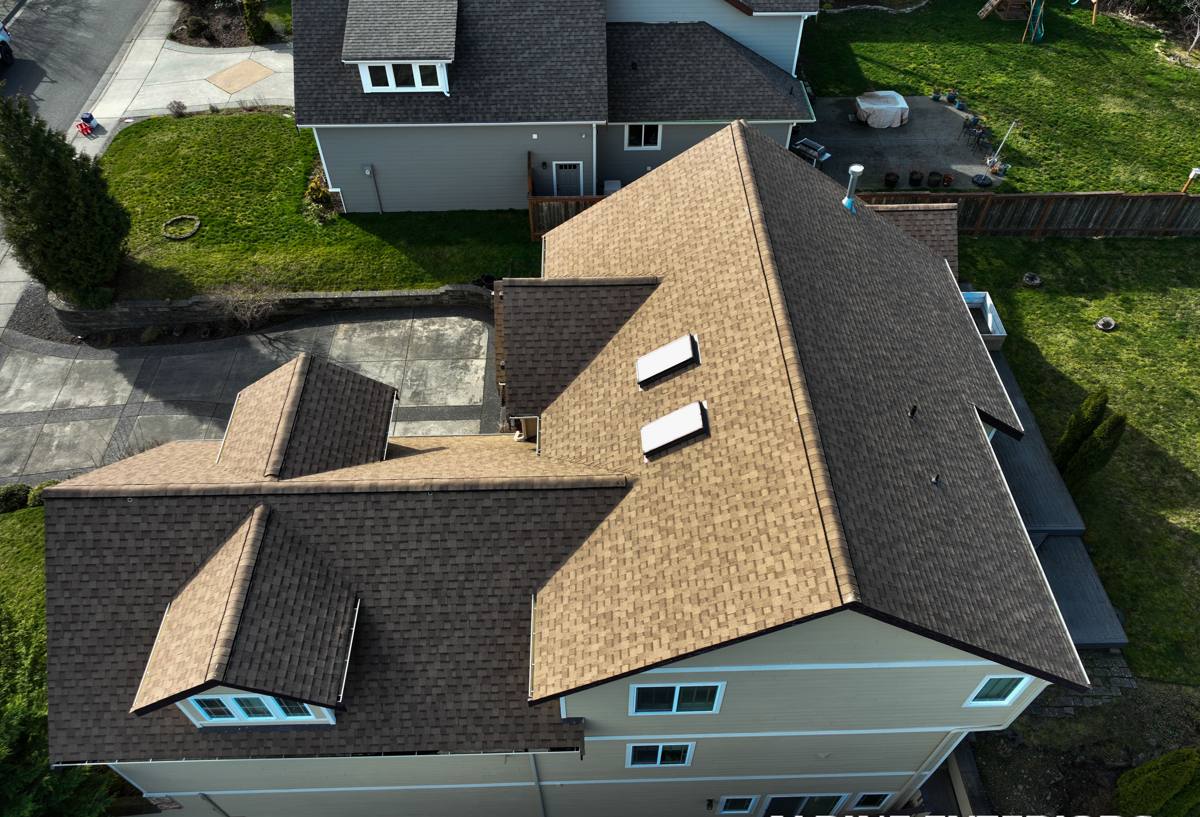
How Salt Air, Rain, and Moss Season Wear Down Windows
Three regional factors drive most of the window problems we see in Birchwood homes:
Salt Air
Proximity to Bellingham Bay means a fine layer of salt settles on exterior surfaces over time, especially on homes with more exposed western or southern faces. Salt accelerates corrosion on window hardware, screen frames, and lower-quality metal components. It also breaks down some sealants faster than inland installations, which is part of why we pay close attention to hardware finish and sealant selection on coastal-adjacent jobs.
Driving Rain
Whatcom County gets wind-driven rain that hits windows at an angle rather than falling straight down. That means water gets pushed sideways and upward into gaps that a straight-down rain would never reach. A window that's watertight in a light, vertical drizzle can still leak under driving rain if the flashing and sill pan weren't done correctly. This is one of the most common causes of hidden rot we find behind older window installations.
Moss Season
From fall through spring, shaded and north-facing parts of a house stay damp for weeks at a time. Wood window sills, trim, and cladding in those spots are prone to moss and algae growth if they're not properly sealed and detailed. Moss holds moisture against the surface it grows on, which slowly breaks down paint, caulk, and eventually the wood or trim underneath.
Signs a Birchwood Home Needs Window Replacement
- Visible fogging or moisture between the panes of double- or triple-glazed windows — the seal has failed
- Soft, spongy, or discolored wood at the sill or bottom corners of the frame
- Persistent moss, algae, or black staining on the frame or trim, especially on shaded elevations
- Drafts or noticeable temperature difference near the window even when it's fully closed and locked
- Windows that are difficult to open, close, or lock — frames have swollen or warped from moisture
- Paint that's peeling or bubbling specifically around the window frame, not the surrounding wall
- Rising heating bills without a clear cause elsewhere in the home
Any one of these on its own isn't necessarily urgent. Several together, or any sign of soft wood, usually means moisture has already gotten past the window's weather barrier and it's worth having someone look before it spreads into the wall framing.
What a Correct Window Replacement Involves
Swapping out a window sounds simple, but most leaks we get called out to fix in this area trace back to a shortcut taken during installation, not a defect in the window itself. A correct job includes:
Proper Flashing and Sill Pan Details
Every window opening needs flashing that directs water down and out, away from the wall assembly — not just caulk around the trim. A sill pan at the bottom of the rough opening gives any water that does get past the window a way out instead of a place to collect. This is the single most important detail for a climate with driving rain.
Correct Air and Moisture Sealing
The gap between the window frame and the rough opening needs to be sealed with the right materials — typically a combination of backer rod, sealant, and sometimes low-expansion foam — so it's both weathertight and able to handle the wood's natural movement through wet and dry seasons.
Matching the Window to the Wall Assembly
Older Whatcom County homes often have different wall construction than what's standard today. A correct replacement accounts for the existing wall assembly rather than forcing a modern window into an opening it wasn't sized or flashed for.
Hardware and Finish Suited to Coastal Exposure
On homes with more direct exposure toward the bay, we pay attention to hardware finish and material so it holds up to salt air rather than corroding within a few years.
Choosing Window Materials for Local Conditions
There's no single "best" window material — the right choice depends on the home's exposure, budget, and how much upkeep the owner wants to take on. Here's how the common options compare for a Birchwood-type climate:
| Material | Moisture Resistance | Salt Air Durability | Maintenance |
|---|---|---|---|
| Vinyl | Good — won't rot, but seams need quality construction | Good; check hardware quality specifically | Low |
| Fiberglass | Very good — dimensionally stable in wet/dry cycles | Very good | Low |
| Wood (unclad) | Requires diligent upkeep to prevent rot | Fair — needs regular repainting/sealing | High |
| Wood-Clad (aluminum or fiberglass exterior) | Good if cladding and flashing are correct | Good | Moderate |
| Aluminum | Fair — prone to condensation without thermal breaks | Lower — more susceptible to corrosion near salt air | Low |
We generally steer homeowners in this area away from bare aluminum frames near the water and away from unclad wood on shaded, moss-prone elevations, not because either product is bad everywhere, but because the maintenance burden they create in this specific climate usually isn't worth it. We're upfront about that trade-off rather than letting a homeowner find out the hard way after a few wet winters.
Our Window Replacement Process
- On-site assessment — we look at each window opening, the surrounding siding and trim, and check for any existing moisture damage before quoting anything.
- Honest scoping — if we find rot or damage behind an existing window, we tell you before work starts, not after we've already opened up the wall.
- Removal and opening prep — old windows come out carefully, and the rough opening gets inspected and repaired as needed before a new window goes in.
- Flashing and sill pan installation — done to shed water correctly for this climate's driving rain, not just to code minimum.
- Window installation and sealing — set level, plumb, and square, then sealed with materials suited for our wet/dry cycle.
- Interior and exterior trim finish — matched to the home so the replacement doesn't look like a patch job.
- Final walkthrough — we check operation, seals, and finish work with you before calling the job done.
What Window Replacement Typically Costs
Exact pricing depends on window size, material, number of openings, and whether we find hidden damage once the old window comes out. In general terms, cost is driven by:
| Factor | Why It Matters |
|---|---|
| Window material | Vinyl is typically the most budget-friendly; fiberglass and wood-clad cost more upfront but often need less upkeep over time |
| Number of openings | Replacing all windows at once is usually more cost-efficient per window than doing them a few at a time |
| Hidden damage | Rot found in the rough opening or wall sheathing adds repair time before the new window can go in |
| Window size and style | Larger openings, custom shapes, or specialty glazing cost more than standard sizes |
| Trim and finish work | Matching existing trim profiles or repainting adjacent siding adds labor |
We don't publish flat per-window prices because the honest answer is "it depends," and we'd rather give you a number based on your actual home than a generic estimate that changes once we're on site.
Why Hire a Crew That Already Works in Birchwood
A window installer who mostly works drier inland markets isn't necessarily thinking about driving rain, salt exposure, or moss season the way they need to. A crew that works Whatcom County regularly builds habits around those conditions — how much flashing overlap to use, which sealants hold up through our wet winters, which hardware finishes actually last near the bay. That's not something you can fully substitute with a generic install checklist. It comes from doing this work, in this climate, repeatedly.
Local familiarity also means fewer surprises with permitting and with matching the look of window replacements to the housing stock common in this part of the county, so the finished product looks intentional rather than mismatched.
Keeping New Windows Performing Long-Term
- Rinse salt residue off frames and glass periodically, especially on more exposed elevations
- Check and clean weep holes so water can drain out rather than pool in the frame
- Inspect exterior caulking and sealant once a year and touch up before gaps widen
- Trim back vegetation that keeps a window shaded and damp, which encourages moss growth
- Operate every window a few times through the year so hardware doesn't seize up from disuse
- Address any soft trim, peeling paint, or moss at the first sign rather than waiting for it to spread
If your Birchwood home has windows showing any of the signs above, or you're simply ready to stop dealing with drafts, fogged glass, or sticking frames, we're happy to take a look and give you a straightforward, no-pressure estimate. Use the form below to get started.