 Whatcom County
 Why Bellingham Homes Wear Out Their Siding Faster Than You'd Expect
Bellingham sits in a spot where three things gang up on exterior siding at once: salt-laden air moving in off the water, long stretches of driving rain, and a moss season that can run most of the year on shaded or north-facing walls. Any one of those is manageable. All three together, applied year after year, is what actually ages a home's exterior faster than the siding's rated lifespan suggests it should.
Salt air is corrosive to fasteners and finishes, and it accelerates the breakdown of anything not engineered to resist it. Driving rain — rain that comes in sideways during a windstorm rather than falling straight down — finds every gap in flashing, every under-caulked seam, and every spot where the water-resistive barrier wasn't lapped correctly. And moss doesn't just sit on the surface; it holds moisture against the siding face for weeks at a time, which is exactly the condition that rots wood-based products and degrades poorly finished panels.
None of this means Bellingham is a bad place to own a home. It means siding here has to be chosen and installed with this specific climate in mind, not a generic national spec sheet.
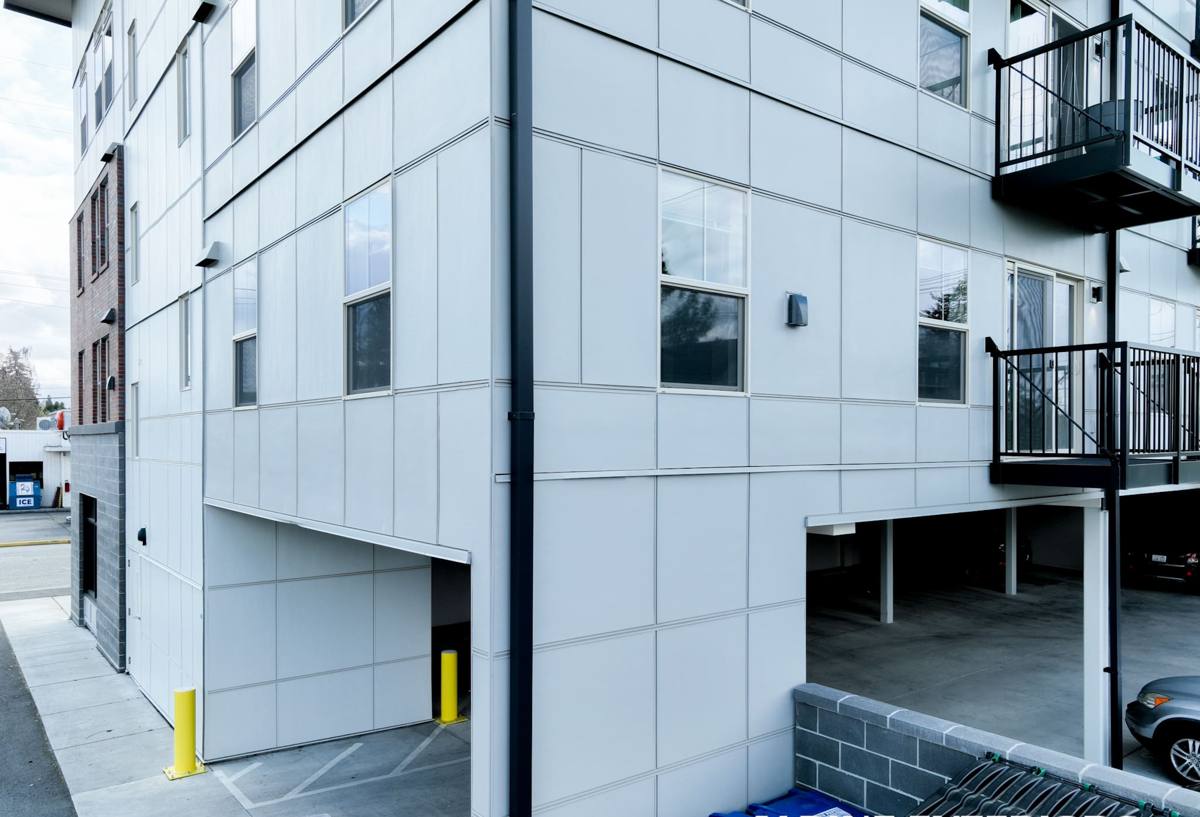
Signs a Bellingham Home Needs Replacement, Not Just Repair
Repair makes sense when the problem is isolated — a cracked panel, a damaged corner, a section that took an impact. Replacement is the right call when the damage is systemic: the siding as a whole has been fighting the local climate and losing. Common signs we look for during an inspection:
- Soft or spongy spots when you press on the siding, especially near the bottom courses and around window trim
- Paint that's failing repeatedly in the same spots no matter how often it's repainted
- Persistent moss or algae growth that comes back within a season of cleaning
- Visible gaps, warping, or buckling panels, particularly on walls exposed to wind-driven rain
- Staining or discoloration around seams and butt joints, which usually points to water getting behind the siding
- A musty smell near exterior walls or unexplained interior humidity issues
- Siding that's original to a home built more than 20-25 years ago, particularly if it's wood, older vinyl, or an unfinished fiber cement product
If you're only seeing one or two of these in a contained area, repair is often reasonable. If you're seeing several across multiple walls, that's usually a sign the underlying water management system — not just the visible siding — has been compromised for a while.
Why Moss Damage Gets Missed
Moss is often written off as a cosmetic nuisance in Whatcom County, something to pressure-wash off once a year. The problem is what's happening underneath while it's growing. Moss holds a film of moisture against the siding surface long after the rest of the exterior has dried out. On products that aren't built to tolerate sustained moisture contact, that's a slow, steady path to rot or delamination that isn't obvious until you're deep into repair territory.
What Correct Siding Replacement Actually Involves Here
Swapping old siding for new siding, panel for panel, is not a replacement — it's a reskin, and it usually just buries the same problems under a new surface. A correct replacement in a climate like this addresses the whole wall assembly.
Water-Resistive Barrier
Everything starts with the weather barrier underneath the siding. In a market with as much driving rain as Whatcom County sees, this layer has to be continuous, properly lapped shingle-style (upper courses over lower), and sealed at every penetration — hose bibs, light fixtures, vents. This is the layer that actually keeps water out of your wall cavity if the siding face ever gets wet, which it will.
Flashing at Every Transition
Windows, doors, decks, roof-to-wall intersections, and any horizontal trim are where driving rain finds its way in. Flashing at these points has to shed water outward and downward, not just cover the gap. This is one of the most common places we find prior installation shortcuts on older Bellingham homes — flashing that was installed but not integrated correctly with the water-resistive barrier behind it.
Rainscreen Ventilation
A ventilated gap between the siding and the weather barrier lets any moisture that does get behind the siding dry out instead of sitting there. In a region with this much sustained rainfall and humidity, that gap is the difference between siding that dries out between storms and siding that stays damp for weeks.
Fastening and Panel Spacing
Fiber cement siding needs to be fastened correctly and given room to expand and contract with temperature and moisture swings. Panels installed too tight, or face-nailed where they shouldn't be, are a common cause of premature cracking — not a defect in the material itself, but an installation error.
Why We Install Only James Hardie Fiber Cement
We get asked regularly why we don't offer vinyl, LP SmartSide, or other fiber cement brands as options. It's a fair question, and the honest answer is that we standardized on one product because we think it's the right call for this climate, not because it's the only thing available.
Vinyl is inexpensive and low-maintenance in mild climates, but it's a plastic product that can warp in temperature swings and offers minimal resistance to wind-driven rain intrusion at seams. LP SmartSide is an engineered wood product — treated to resist moisture, but still wood at its core, which means it's more sensitive to the sustained damp conditions moss and driving rain create here than a cement-based product is. Other fiber cement brands exist and some are reasonable products, but we've built our process, our crews' training, and our warranty relationships around one system rather than spreading thin across several.
James Hardie fiber cement is non-combustible, doesn't support moss and mold growth the way wood-based products can, and comes with a factory-applied ColorPlus finish that's baked on rather than field-painted, which matters when your paint is otherwise going to be fighting salt air and UV exposure for the next decade.
HardieZone HZ5: Built for This Region
James Hardie engineers its siding by climate zone, and the Pacific Northwest falls into the HZ5 category — formulated for sustained moisture exposure and freeze-thaw cycling rather than hot, dry conditions. That's not a marketing detail; it affects the product's moisture resistance and how it performs over decades of Whatcom County weather, as opposed to a one-size-fits-all national product.
Our Siding Replacement Process
Every Bellingham project follows the same sequence, because skipping steps is how water problems get built into a wall rather than kept out of it.
- Inspection and assessment. We look past the siding face — at trim, flashing, window sills, and any soft sheathing — before quoting anything, so the estimate reflects the actual scope, not just a surface guess.
- Tear-off and sheathing check. Once old siding is off, we inspect the sheathing underneath for rot or damage from prior water intrusion and address it before anything new goes on.
- Water-resistive barrier and flashing. New barrier is installed and properly lapped, with flashing integrated at every window, door, and penetration.
- Rainscreen installation. A ventilated gap is built in so moisture behind the siding has a path to dry out.
- Hardie panel installation. Panels are fastened to manufacturer spec, with correct spacing and joint treatment for long-term movement.
- Final detailing and walkthrough. Trim, caulking, and touch-up are finished, and we walk the exterior with the homeowner before calling the job done.
Cost Factors for a Bellingham Siding Replacement
Every home is different, so we don't publish flat pricing, but these are the factors that most often move a project's cost up or down:
| Factor | Why It Matters |
|---|---|
| Home size and wall complexity | More square footage and more corners, gables, and trim details mean more material and labor |
| Condition of underlying sheathing | Rot discovered during tear-off has to be repaired before new siding goes on |
| Siding profile and accessories | Lap siding, shingle-style panels, and trim board choices vary in material and install cost |
| Access and site conditions | Steep lots, tight setbacks, or multi-story walls affect equipment and labor time |
| Scope of water management upgrades | Adding or upgrading rainscreen ventilation and flashing is worth the cost but affects the total |
The only way to get an accurate number is a walk-through of your specific home — anything else is a guess.
Timing a Replacement in Whatcom County
Siding can technically be installed in most months here, but drier stretches make for a cleaner install and better curing conditions for caulking and finish work. Planning ahead — rather than waiting until visible failure forces a rushed decision — also gives you more flexibility on scheduling before the wetter months when contractor calendars fill up fastest.
Why Local Experience in Bellingham Matters
A crew that's worked homes throughout Whatcom County has already seen how salt air, moss, and driving rain actually behave on real houses in this area, not just in a manufacturer's install guide. That shows up in small decisions — where extra flashing attention pays off, which wall orientations need the most moisture protection, how much ventilation gap actually makes a difference in practice. It's the difference between a crew executing a checklist and a crew that understands why each step matters here specifically.
If your siding is showing signs of wear, or you're just trying to plan ahead before small problems become expensive ones, we're happy to take a look. A walk-through and estimate are free, there's no pressure, and you'll get a straight answer about whether you need replacement, repair, or nothing at all right now.