 Whatcom County
 Birchwood Roofs Take a Different Kind of Beating
Birchwood sits close enough to the water and the tree cover that its roofs age differently than roofs twenty minutes inland. Homes here deal with three things working against them at the same time: salt-laden air moving in off the water, driving rain that comes in sideways during winter storms, and a long moss season fed by shade, moisture, and mild temperatures that never really dry things out. Any one of those is manageable on its own. Together, over years, they shorten the life of a roof that wasn't built with them in mind.
A new roof installation in this neighborhood isn't just "put shingles on a house." It's a chance to correct whatever the original roof got wrong, and to build in the details that actually matter for Whatcom County weather instead of a generic install that would work fine in a drier climate but struggles here.
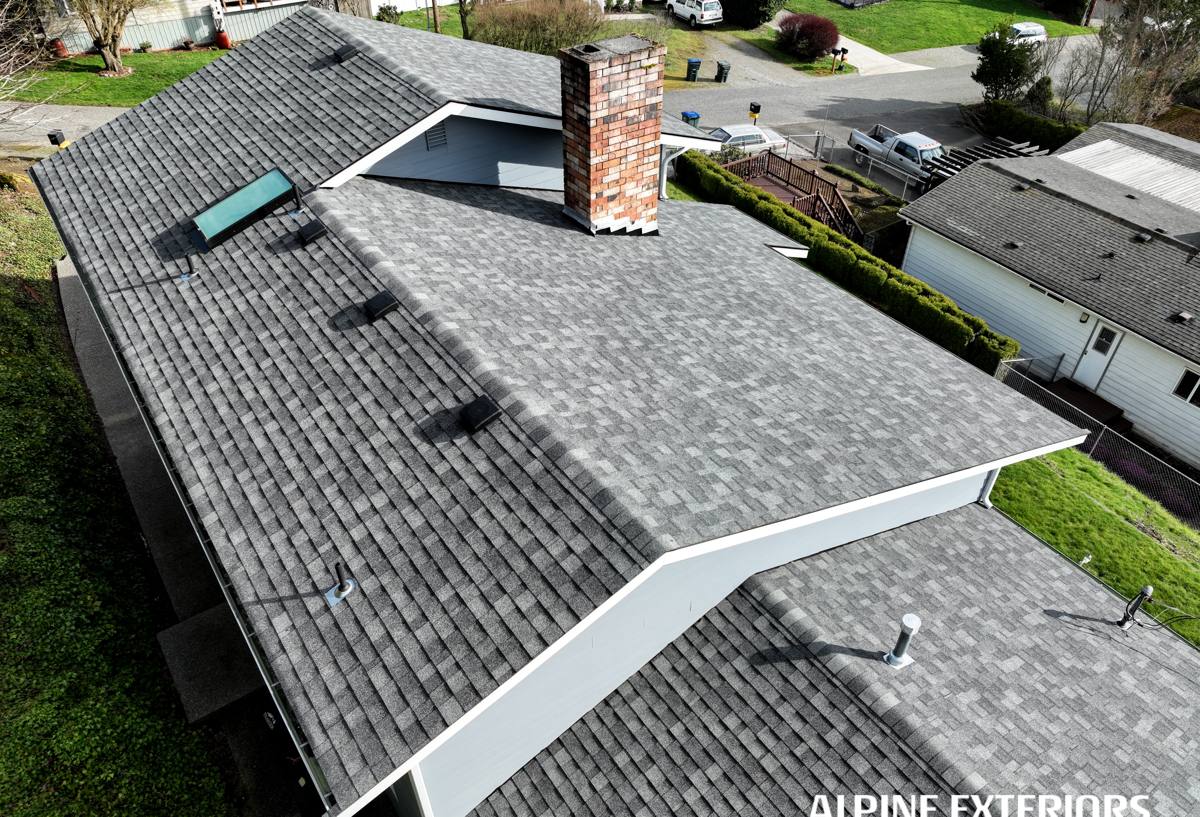
What the Local Climate Actually Does to a Roof
Salt Air
Airborne salt accelerates corrosion on any exposed metal — flashing, fasteners, vents, gutter hardware. Standard fasteners and lower-grade flashing metal can start showing rust streaks and pitting years before they would somewhere drier. It doesn't ruin a roof overnight, but it eats away at the parts of the system homeowners never look at until they leak.
Driving Rain
Whatcom County storms rarely come straight down. Wind-driven rain gets pushed sideways and upward under shingle edges, around chimneys, and into valleys. A roof that only handles vertical rain well — meaning the underlayment and flashing details are minimal — will eventually let water find its way in through a soffit, a valley, or a wall-to-roof transition.
Moss Season
Shaded, moisture-heavy conditions here support moss growth for a large part of the year, not just a few weeks. Moss holds water against the roof surface, works its way under shingle tabs, and lifts material as it grows. On a roof with poor ventilation or the wrong material choice, moss isn't cosmetic — it's a slow structural problem.
What a Correct New Roof Installation Actually Involves
A new roof is only as good as what's underneath it. The visible shingle or panel layer gets all the attention, but the parts that determine whether the roof lasts are the ones nobody sees after installation day.
- Full tear-off and deck inspection — replacing any soft, rotted, or delaminated sheathing before anything new goes down
- Ice-and-water style membrane at eaves, valleys, and vulnerable transitions, not just the code minimum
- Synthetic underlayment rated for extended exposure, since Whatcom County weather doesn't always allow work to close up in a single day
- Corrosion-resistant flashing and fasteners at chimneys, walls, skylights, and vent penetrations
- Balanced intake and exhaust ventilation, sized to the actual attic, not a rule-of-thumb guess
- Proper drip edge and starter strip installation so wind-driven rain can't get behind the first course
- A clean valley detail — closed-cut, open metal, or woven, chosen for the roof's pitch and material, not just whatever's fastest
Skip or shortcut any one of these and the roof can still look fine for a few years. The problems show up later, usually as a leak that's harder to trace than it should be because the root cause is buried under finished shingles.
Choosing the Right Roofing Material for This Climate
There's no single "best" roofing material — there's a best fit for a given roof, budget, and exposure. In Birchwood, the deciding factors are usually moss resistance, how the material handles sustained moisture, and long-term maintenance.
| Material | Moss & Moisture Behavior | Maintenance | Typical Lifespan |
|---|---|---|---|
| Architectural asphalt shingle | Good with algae-resistant granules; still needs periodic moss removal in shaded areas | Low to moderate | 25–30 years |
| Standing seam metal | Sheds moisture fast, very moss-resistant on its own | Low | 40–50+ years |
| Wood shake | Holds moisture, needs active moss management to avoid rot | High | 20–25 years with upkeep |
| Synthetic composite | Doesn't absorb moisture, resists moss growth well | Low | 40–50 years |
We don't push one product on every homeowner. We'll walk through what the roof's pitch, shade exposure, and budget actually call for, including the honest trade-offs — metal costs more up front but needs almost nothing after; asphalt is more affordable but benefits from a yearly look in shaded, moss-prone sections; wood shake looks great but demands the most ongoing attention in a climate like this one.
How Our Installation Process Works
1. On-Site Assessment
We look at the existing roof, the attic, ventilation, and any trouble spots — not just from the ground, but up close, so estimates reflect the actual condition of the deck and structure rather than a guess.
2. Material and Detail Selection
We go over material options suited to Birchwood's exposure, along with flashing, ventilation, and underlayment specs, so there are no surprises about what's included.
3. Tear-Off and Deck Repair
Old roofing comes off down to the deck. Any damaged sheathing gets replaced before new material goes on — this step gets skipped by crews trying to save time, and it's the single most common source of early roof failure.
4. Weatherproofing Layer
Membrane and underlayment go down with attention to valleys, eaves, and any wall-to-roof transitions where wind-driven rain typically finds a way in.
5. Installation and Flashing
Roofing material, flashing, vents, and trim go on according to manufacturer specs, using fasteners and metal rated for coastal exposure.
6. Final Walkthrough
We inspect the completed roof, clean up the site, and go over care and maintenance specific to the material installed.
Ventilation: The Detail Most Roofs Get Wrong
Poor attic ventilation is one of the most common causes of premature roof aging in this area, and it's largely invisible from the outside. Trapped heat and moisture in an attic accelerate shingle aging from underneath and create the exact damp conditions moss and rot need. A correct new roof installation includes a real ventilation calculation — intake at the eaves, exhaust at the ridge or through vents — balanced to the size of the attic, not just whatever vents were already there.
Signs a Roof Needs Ventilation Correction, Not Just New Shingles
- Moss returning heavily in the same spots year after year despite cleaning
- Visible sagging or dark staining on the underside of the roof deck in the attic
- Ice or heavy condensation forming inside the attic during cold snaps
- Shingles aging unevenly, with one section clearly older-looking than the rest
- Musty smell in upper rooms or closets along exterior walls
What Affects the Cost of a New Roof
| Factor | Why It Matters |
|---|---|
| Roof size and pitch | Steeper, more complex roofs take longer and require more safety setup |
| Number of valleys, chimneys, skylights | Each is a flashing detail that adds labor and material |
| Deck condition | Rotted or soft sheathing found during tear-off adds repair cost |
| Material choice | Metal and composite cost more upfront than asphalt but need less upkeep |
| Ventilation upgrades | Correcting inadequate intake/exhaust adds cost but prevents recurring moss and moisture issues |
We don't quote a number without seeing the roof — anyone who does is guessing. What we can say honestly is that the roofs that cost the least to own over 20 years are usually the ones where the underlayment, flashing, and ventilation were done right the first time, not the ones with the lowest sticker price on installation day.
Why Hiring a Crew That Already Works in Birchwood Matters
A roofing crew that regularly works this specific area already knows which streets sit in heavier shade, which exposures catch the worst of the wind-driven rain off the water, and which roof styles in this part of Whatcom County tend to develop moss fastest. That's not a marketing point — it changes real decisions on the job, like where to add extra underlayment, which valley detail to use, and how much ventilation a given attic actually needs versus a textbook estimate.
It also means faster response if something needs a look after installation. A local crew doesn't need to schedule a special trip from out of the area to check a flashing detail or answer a question about how the roof is settling in through its first winter.
Ready for an Honest Look at Your Roof?
If your roof in Birchwood is past its useful life, showing chronic moss problems, or just due for replacement, we're glad to come take a real look and give you a straight assessment — no pressure, no inflated urgency. Fill out the form below for a free estimate, and we'll walk you through what your roof actually needs and what your material options look like for this climate.