 Whatcom County
 Custom Decks in Ferndale: Built for Salt Air, Driving Rain, and a Long Moss Season
A deck in Ferndale lives outside year-round, and this particular stretch of Whatcom County doesn't go easy on exterior wood or hardware. Marine air drifting in off the water carries enough salt to accelerate corrosion on fasteners and connectors. Rain here rarely falls straight down for long, so it drives into joints, railings, and stair stringers from the side as often as from above. And a moss and algae season that can run most of the year turns any shaded or low-airflow deck surface into a growth surface, which is as much a safety issue as a cosmetic one once boards get slick. None of that means a deck can't hold up here for decades. It means the design, material choice, and framing details have to account for what this climate actually does to an outdoor structure, not just what looks good on install day.
We build custom decks in Ferndale and across our Whatcom County service area with those conditions in mind from the first sketch, not as an afterthought once the framing is already up.
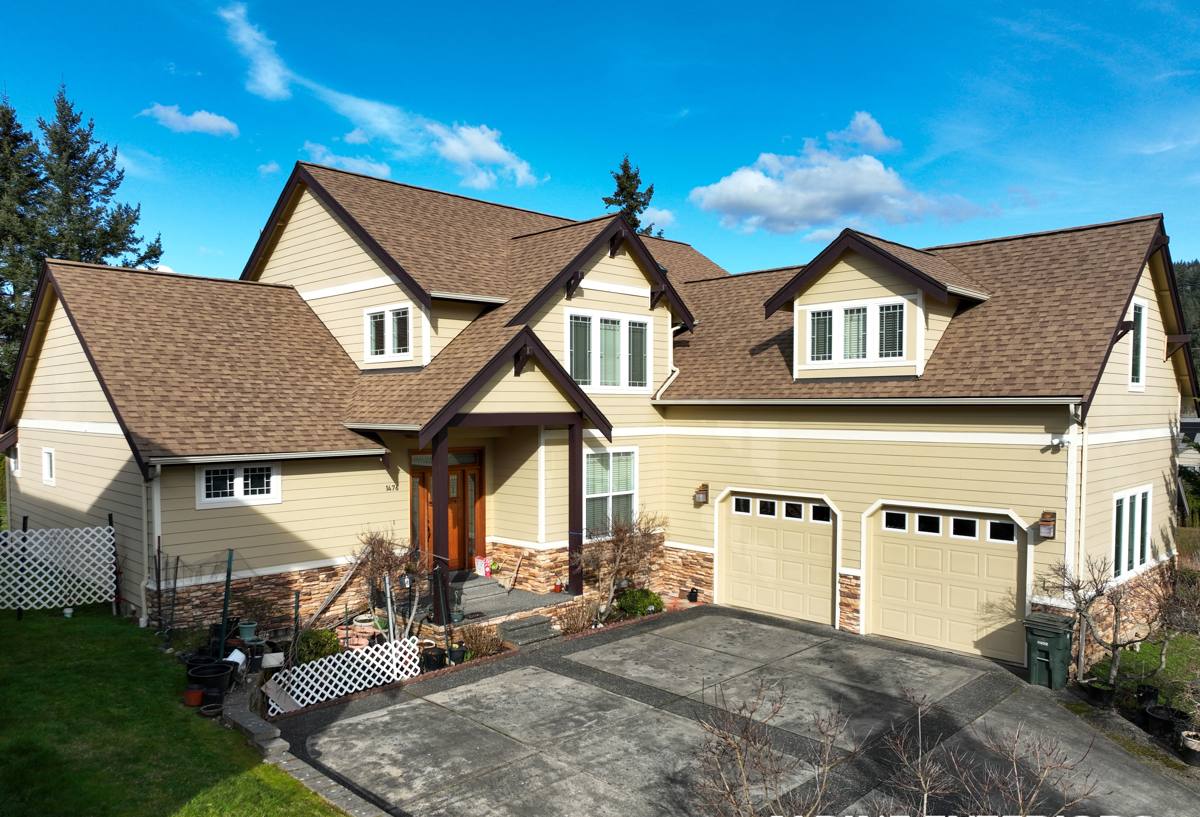
What Ferndale's Climate Does to a Deck
Moisture and Rot at Connection Points
Most deck failures don't start in the open field of decking boards — they start at connection points: the ledger board where the deck meets the house, joist hangers, post bases, and stair stringers. These are the spots where water collects and lingers longest, and in a climate with as much sustained rainfall as Ferndale sees, any gap in flashing or any fastener that isn't rated for wet exposure becomes the weak link years before the visible decking shows a problem.
Salt Air and Fastener Corrosion
Even homes set back from the immediate shoreline pick up a steady dose of salt-laden air moving through this part of the county. Standard fasteners and hardware can start showing corrosion, staining, and reduced holding strength well ahead of schedule in that environment. It's a slow problem, which is exactly why it's easy to under-spec hardware on the front end and not see the consequences until years later.
Moss, Algae, and Slip Risk
Mild temperatures, regular shade, and consistent moisture add up to a long moss and algae season across Whatcom County, and open, horizontal deck surfaces are especially exposed to it. Beyond the maintenance headache, a mossy or algae-covered deck surface gets genuinely slippery underfoot, particularly on stairs. Board spacing, airflow underneath the deck, and surface texture all affect how fast that growth takes hold and how manageable it is to keep clean.
Choosing a Decking Material for This Climate
There's no single right decking material for every homeowner, but there is a right way to weigh the trade-offs for a climate that stays wet as much of the year as this one does.
| Material | Moisture Behavior Here | Maintenance | Typical Lifespan |
|---|---|---|---|
| Capped composite | Doesn't absorb water or rot; resists mold and algae staining better than wood | Occasional washing; no staining or sealing | 25–30+ years |
| Pressure-treated wood | Absorbs moisture readily; prone to splitting and checking through repeated wet-dry cycles | Regular sealing and staining to slow moisture damage | 10–15 years before major repair or replacement |
| Cedar | Naturally rot-resistant but still absorbs moisture over time in sustained wet climates | Periodic sealing/staining; more upkeep in shaded areas | 15–20 years with consistent maintenance |
| Tropical hardwoods (e.g. ipe) | Very dense and moisture-resistant; can still develop surface graying and requires oiling | Periodic oiling to maintain color and moisture resistance | 25+ years |
We're upfront that this is a trade-off table, not a verdict. A homeowner who enjoys the look and feel of real wood and is willing to keep up with sealing can get a long, good-looking life out of cedar or a hardwood deck here. What we won't do is install a wood product and let a customer believe it needs the same low maintenance as composite — that mismatch between expectation and upkeep is one of the more common reasons decks in this climate look tired within a few years.
What a Correctly Built Deck Involves
The parts of a deck that determine whether it lasts are mostly the parts you stop noticing once it's built. Getting them right matters more here than in a drier climate, because moisture exploits any shortcut over time.
Ledger Attachment and Flashing
Where the deck attaches to the house is the single most common point of water intrusion into the structure itself, not just the deck. Proper flashing at the ledger board keeps water from tracking behind the siding and into the wall assembly — a detail that matters as much for the house as for the deck.
Footings and Frost Depth
Post footings need to be sized and set to local frost depth and soil conditions so the structure doesn't shift over time. Skipping or under-sizing footings is invisible on install day and shows up years later as a deck that's started to settle or feel less solid underfoot.
Joist Spacing and Framing
Joist spacing should match the decking material being installed — composite and wood often have different span requirements — and framing lumber itself needs to be rated for ground contact or exterior exposure where applicable, not just whatever's on hand.
Fasteners and Hardware
Given the salt air and sustained moisture in this area, we use corrosion-resistant fasteners and structural connectors rated for coastal exposure rather than standard hardware. It costs more upfront and makes no visible difference on day one, but it's one of the details that determines whether connection points are still sound in fifteen years.
Airflow and Ventilation Underneath
A deck built low to the ground with poor airflow underneath stays damp longer after every rain, which speeds up rot in framing and encourages moss on the surface above. Where grade and design allow, we account for underside ventilation as part of the framing plan, not as an afterthought.
Railings, Stairs, and Code Requirements
Guardrail height, baluster spacing, and stair specifications are governed by building code, and those requirements exist because they prevent real injuries, not because they're arbitrary. Any custom deck project in Whatcom County that involves a permit will need to meet current code for rail height, opening spacing, and stair rise and run. We build to code as the baseline on every project and handle the permitting process as part of the job rather than leaving a homeowner to sort that out separately.
Our Process for a Ferndale Deck Project
- On-site consultation: We walk the property, look at grade, drainage, sun and shade exposure, and how the deck will connect to the house.
- Design and material selection: We talk through decking material, layout, and railing options with the actual trade-offs laid out, not just a catalog.
- Permitting: We handle the permit application and inspection scheduling required for the project.
- Framing and structural work: Footings, posts, ledger attachment and flashing, and joist framing go in first, built to the standards above.
- Decking, railings, and finish work: Surface material and railings go on last, with attention to fastening patterns and spacing that account for local moisture and moss conditions.
- Final walkthrough: We walk the finished deck with the homeowner and go over any maintenance specifics for the material chosen.
Deck Cost Factors in Ferndale
| Factor | What It Affects | Why It Matters Here |
|---|---|---|
| Decking material | Material cost and long-term maintenance | Composite costs more upfront but resists the moisture and moss that shorten wood's lifespan here |
| Deck height and footing depth | Structural cost | Footings need to reach proper frost depth regardless of how modest the deck looks above grade |
| Site access and grade | Labor and equipment time | Sloped or tree-shaded lots can add site prep and staging time |
| Railing style and hardware | Material and fastener cost | Corrosion-resistant hardware costs more but holds up far better against salt air |
| Roof or cover integration | Added framing and flashing complexity | Covered decks need additional flashing detail to stay dry in a climate this wet |
Exact pricing depends on the specific lot, design, and materials, which is why we give real estimates after walking the property rather than quoting off a flat per-square-foot number.
Signs an Existing Deck Needs Attention
- Soft, spongy, or discolored decking boards, especially near the house or at board ends
- Moss or algae that returns quickly after cleaning, particularly in shaded areas
- Visible rust or corrosion staining around fasteners and hardware
- Any wobble, movement, or give in railings or stairs
- Gaps or separation at the ledger board where the deck meets the house
- Standing water that doesn't drain within a reasonable time after rain
Repair vs. Full Rebuild
Not every aging deck needs to come down. A deck with sound framing and footings can sometimes get a new surface, updated railings, or targeted repairs at problem connection points. But if the framing itself has been absorbing moisture for years, or if footings were undersized to begin with, resurfacing just delays a more expensive rebuild. We'll tell you honestly which category a given deck falls into rather than defaulting to whichever option is bigger.
Why a Local Crew Matters for a Ferndale Deck
A crew that builds decks across Whatcom County through every season sees how salt air, driving rain, and moss actually behave on real structures over years, not just how a product performs in a spec sheet. That shapes practical decisions on a Ferndale project specifically — where extra flashing attention pays off, which fastener grade is worth the added cost, and how a deck's orientation and airflow will affect how much moss maintenance a homeowner is signing up for. Ferndale's mix of coastal exposure and open, low-lying terrain isn't identical to every other town in the county, and a crew with hands-on local experience builds for those specific conditions instead of applying a generic plan.
If you're planning a new custom deck in Ferndale, or want an honest look at whether an existing deck needs repair or replacement, we're glad to take a look. Reach out using the form below to schedule a free, no-pressure estimate.