 Whatcom County
 Roofing in Sehome Isn't the Same Job as Roofing Somewhere Dry
Sehome sits close enough to the water and the hills around Bellingham that its roofs take a different kind of beating than roofs in drier parts of the country. It's not one big dramatic event that wears a roof out here — it's the slow, steady combination of salt-tinged air drifting in off the bay, wind-driven rain that gets pushed sideways under poorly flashed edges, and a moss season that runs longer than most homeowners realize. Any one of those is manageable. All three, year after year, is what actually shortens a roof's life in this part of Whatcom County.
When we install a new roof in Sehome, we're not just matching what's on the house today. We're building for what the next 20-40 years of that specific exposure will throw at it. That distinction matters more here than in a lot of places, and it's worth understanding before you sign off on any roofing bid.
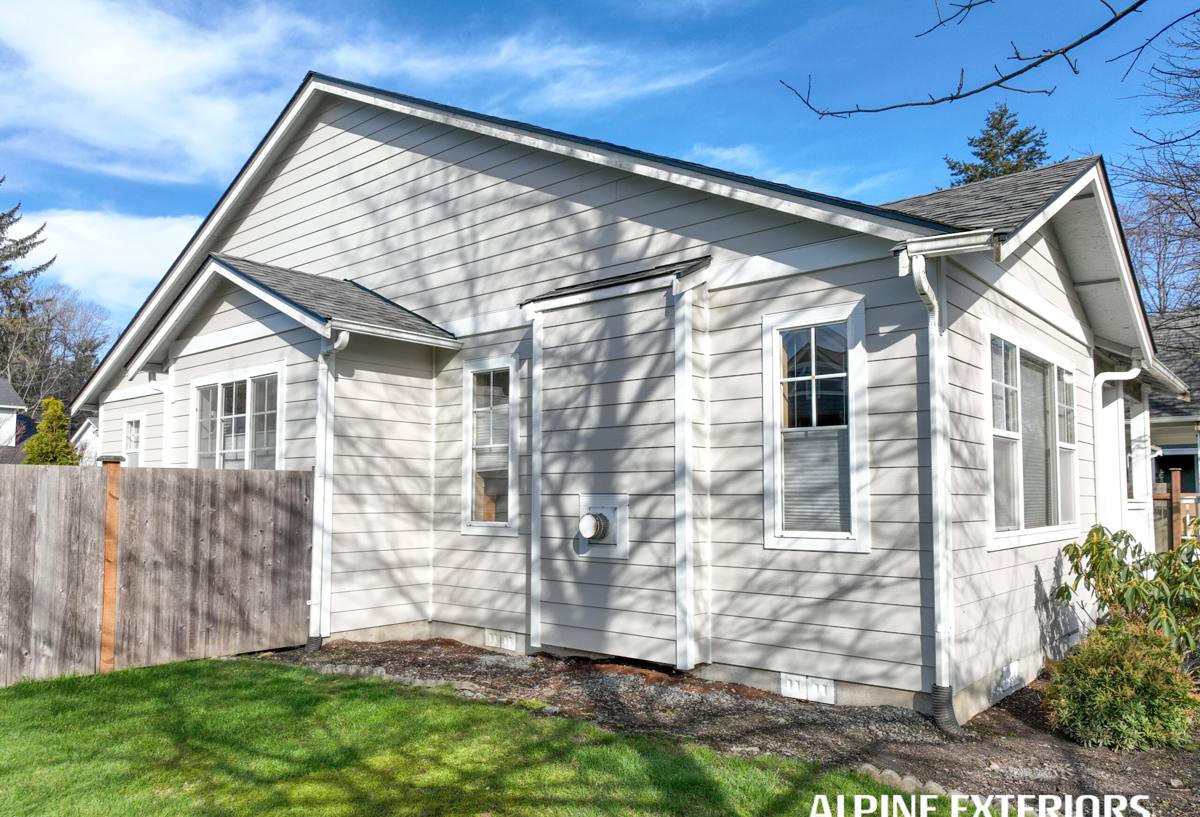
What the Local Climate Actually Does to a Roof
Salt Air and Metal Fatigue
Homes closer to Bellingham Bay deal with airborne salt that settles on exposed metal — flashing, fasteners, gutter hangers, vent caps. Over time, untreated or poorly coated metal components corrode faster than the roofing material around them. A shingle roof can look fine while its flashing is quietly failing underneath. This is why fastener and flashing material selection matters as much as the shingle brand for homes in this area.
Driving Rain and Wind-Driven Water
Rain that falls straight down is easy to shed. Rain that comes in sideways during a windstorm is a different problem — it can work its way under shingle tabs, around chimney flashing, and into valleys if those details weren't installed with enough overlap and sealant. Whatcom County gets plenty of both straight rain and wind-driven rain, often in the same storm system, which is why edge and valley detailing gets extra attention on every install we do here.
Moss and Prolonged Dampness
Moss doesn't just look bad — it holds moisture against the roof surface far longer than the material was designed to tolerate, and it works its way under shingle edges as it grows. Sehome's tree cover and the region's long damp stretches from fall through spring create ideal moss conditions on north-facing slopes and shaded roof sections. A new roof installed without moss-resistant materials or proper ventilation is often growing a moss problem again within a few seasons.
What a Correctly Installed Roof Looks Like Here
"Correct" for a Sehome roof isn't just nailing shingles to code. It's a set of decisions stacked on top of each other that account for the local exposure:
- Ice-and-water shield or equivalent self-adhered underlayment at eaves, valleys, and around every roof penetration — not just where code technically requires it
- Corrosion-resistant flashing and fasteners rated for coastal-adjacent exposure, not standard-grade hardware
- Balanced intake and exhaust ventilation so moisture doesn't get trapped under the deck, which accelerates both rot and moss growth from underneath
- Proper valley construction — closed-cut or metal-lined, installed with enough width to handle heavy water volume during storms
- Moss-inhibiting shingle options or zinc/copper strip detailing on shaded, north-facing slopes where moss pressure is highest
- Drip edge on every eave and rake, sized and fastened to actually direct water into the gutter rather than behind it
Skip any one of these and the roof will likely still pass a visual inspection on installation day. The problems show up two, five, or ten years later — usually as a leak that traces back to a detail that should have been handled differently from the start.
Ventilation Deserves Its Own Mention
We see more premature roof failures caused by poor attic ventilation than by any single material choice. A roof that can't breathe traps moisture from everyday household activity — showers, cooking, laundry — against the underside of the decking. Combined with our damp climate, that moisture has nowhere to go, which softens sheathing, encourages mold, and shortens shingle life from below, invisibly, while the top side still looks fine. Any new roof install should include a real look at intake and exhaust venting, not just a token ridge vent slapped on at the end.
Material Choices That Make Sense for This Area
| Material | How it Handles Local Conditions | Trade-Offs to Know |
|---|---|---|
| Architectural asphalt shingle | Good moss-resistant options available; wide range of wind ratings; proven in wet coastal climates | Needs correct underlayment and ventilation to hit full lifespan; quality varies by manufacturer tier |
| Metal roofing (standing seam) | Sheds water and moss buildup very well; long service life; handles wind-driven rain cleanly at seams | Higher upfront cost; requires experienced installation to avoid oil-canning and fastener issues near salt air |
| Composite/synthetic shake | Resists moisture absorption better than wood shake; consistent performance in damp shade | Cost sits between asphalt and metal; product quality varies significantly by brand |
| Cedar shake | Traditional look that fits older Sehome homes | Highest maintenance burden in a damp, mossy climate; needs regular treatment and inspection to avoid rot |
We'll walk through these trade-offs against your home's roof pitch, sun exposure, and budget rather than pushing one product line. The right call often comes down to how much shade the roof sits under and how much long-term maintenance you want to take on.
Our Installation Process
1. On-Site Evaluation
We inspect the existing roof, deck condition, ventilation setup, and any problem areas — valleys, chimneys, skylights, low-slope sections — before quoting anything. This is also when we look at sun exposure and tree cover, since that tells us how much moss pressure specific slopes will face.
2. Tear-Off and Deck Inspection
Full tear-off lets us actually see the decking. Soft, delaminated, or water-stained sheathing gets replaced before anything new goes down — installing new roofing over a compromised deck just hides the problem and shortens the new roof's life.
3. Underlayment and Flashing First
This is where most of the long-term performance in our climate gets decided. Self-adhered membrane at vulnerable points, correctly lapped underlayment, and corrosion-resistant flashing all go in before a single finish shingle or panel is installed.
4. Ventilation Check and Correction
We confirm intake and exhaust venting are balanced for the attic's actual size, adding or correcting vents where the existing setup falls short.
5. Roofing Material Installation
Installed to manufacturer spec plus the added detailing this climate calls for — extra attention to valleys, edges, and any north-facing or shaded sections prone to moss.
6. Final Walkthrough
We walk the property with you, cover care and maintenance basics, and make sure you know what routine upkeep (like moss checks after year one) looks like going forward.
Signs a Sehome Roof Needs Replacing, Not Patching
- Granule loss heavy enough to see bare shingle mat, especially on south or west-facing slopes
- Persistent moss on north-facing or shaded sections that returns within a season of cleaning
- Soft spots or sagging when walked on, which usually points to deck damage under the surface
- Flashing that's visibly corroded, lifted, or separated at chimneys, valleys, or vent penetrations
- Daylight visible through the attic decking or consistent staining on attic sheathing
- Multiple recent repairs in different spots — a pattern that usually means the roof is at end of life
- Roof age past 20-25 years for asphalt shingle, even without visible active leaks
Why Local Experience Matters for This Job
Roof installation isn't a one-size-fits-all trade. A crew that mostly works dry inland climates will size ventilation, choose underlayment, and detail valleys differently than a crew that works Whatcom County roofs every week. Working in Sehome specifically means knowing which slopes in this area tend to hold moss, how local wind patterns drive rain during winter storms, and how close proximity to the water changes hardware choices. None of that is guesswork once you've done enough roofs here — it's just what the job requires.
It also means showing up when you say you will. Roofing is weather-dependent work, and a crew that understands this region's rain patterns can plan installation windows more realistically than one working from a generic schedule.
What Affects the Cost of a New Roof
| Factor | Why It Matters |
|---|---|
| Roof size and pitch | More square footage and steeper pitches mean more material and labor time |
| Deck condition | Rotted or damaged sheathing discovered during tear-off adds material and labor |
| Material choice | Asphalt, metal, and composite carry different material and installation costs |
| Number of penetrations | Chimneys, skylights, and vents each need individual flashing and detailing |
| Ventilation upgrades | Adding or correcting intake/exhaust venting is a smaller line item that protects the larger investment |
| Access and site conditions | Steep lots, limited access, or extensive tree cover can affect labor and setup time |
We provide a written estimate that breaks these out so you can see exactly what you're paying for, rather than one lump number.
Get a Straight Answer About Your Roof
If you're weighing a repair against a full replacement, or just want an honest read on how much life is left in your current roof, we're happy to take a look. We offer free, no-pressure estimates for homeowners in Sehome and throughout Whatcom County — use the form below to get one scheduled.