 Whatcom County
 Roof Replacement Built for Nooksack's Climate
Nooksack sits in a part of Whatcom County where the weather doesn't do a home any favors. Long stretches of driving rain, damp air carrying salt off the Sound and the bay, and a moss season that seems to start earlier every year all work against a roof that isn't installed correctly. When a roof replacement is done right for this area, it's not just about swapping old shingles for new ones — it's about building in drainage, ventilation, and material choices that hold up to the specific way this region's weather attacks a roof over time.
We've worked on homes throughout Whatcom County, and Nooksack roofs tend to share a few common stress points: north-facing slopes that stay damp longer after a storm, valleys and low-slope sections that collect debris, and older ventilation setups that were never sized for how much moisture actually needs to escape an attic here. A roof replacement is the point where all of that gets fixed, not just covered over.
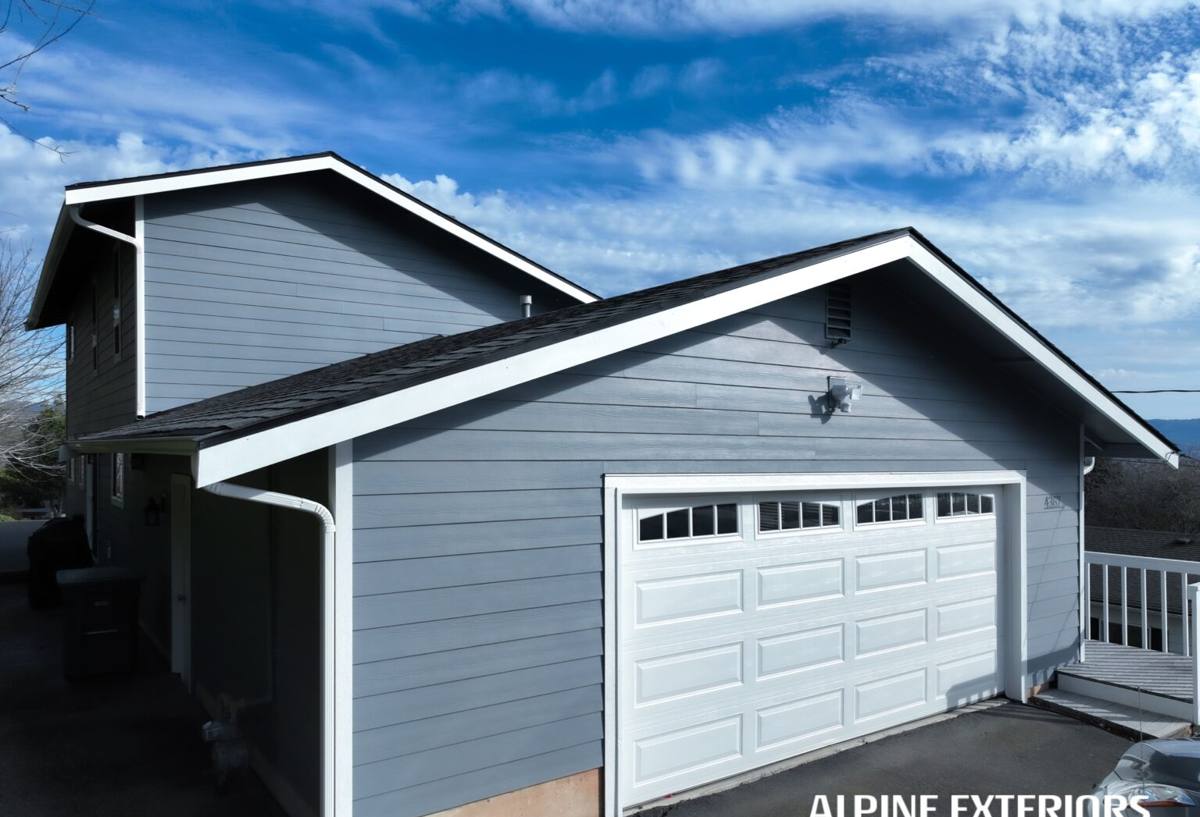
What Local Homes Actually Need From a New Roof
Moisture Management Comes First
In a climate with this much sustained rainfall, the underlayment and flashing details matter as much as the shingles themselves. A roof can look fine from the ground and still be letting water track underneath at a poorly lapped valley or a flashing detail that was rushed. We install synthetic underlayment rated for extended exposure and pay close attention to valleys, chimney flashing, and any roof-to-wall transitions — these are the spots where Whatcom County's rain finds a way in over time.
Moss Resistance Is a Design Decision, Not an Afterthought
Moss doesn't just sit on a roof looking bad — it holds moisture against the surface, works its way under shingle tabs, and shortens the life of the roofing material. On a replacement, we look at whether zinc or copper strips near the ridge make sense for the specific roof, along with making sure there's enough ventilation and sun exposure factored into the plan so moss has less of a foothold to begin with. No roof in this region will be permanently moss-free, but a well-built one sheds it far more easily and needs far less aggressive cleaning.
Ventilation Sized for the Real Climate
A lot of older homes in the area were built with minimal attic ventilation, which was less of a problem decades ago but causes real issues now — trapped moisture leads to premature sheathing rot and shortens the life of the roofing material from underneath, where you can't see it happening. Part of doing a roof replacement correctly here is evaluating intake and exhaust ventilation together and correcting the balance, not just replacing what was there before.
What a Correct Roof Replacement Involves
A roof replacement isn't one task, it's a sequence, and skipping steps is how a roof ends up needing repairs again in a few years instead of lasting its full service life.
- Full tear-off down to the deck — no installing new roofing over old layers
- Deck inspection and repair of any soft, rotted, or delaminated sheathing
- Ice-and-water shield at eaves, valleys, and vulnerable transitions
- Synthetic underlayment across the full roof
- New flashing at all penetrations, chimneys, and roof-to-wall junctions
- Balanced intake and exhaust ventilation
- Manufacturer-specified fastening pattern for local wind exposure
- Final walk-through and cleanup, including magnetic nail sweep
Cutting corners on any one of these steps might not show up as a problem for a year or two, but in a climate that stays wet as long as this one does, shortcuts tend to surface as leaks, granule loss, or premature aging well before the roof should need attention again.
Choosing Materials That Make Sense for Whatcom County
There's no single "best" roofing material for every home — it depends on the roof's slope, the home's style, and what the homeowner wants to maintain over time. What we won't do is recommend a product that looks good on paper but creates a maintenance headache in this specific climate. That's a professional judgment call based on how materials actually perform under sustained moisture exposure, not a knock on any manufacturer.
| Material | How It Handles This Climate | Maintenance Considerations |
|---|---|---|
| Architectural asphalt shingles | Strong performance when paired with proper underlayment and ventilation; widely available warranty support | Periodic moss and debris removal recommended |
| Standing seam metal | Sheds water and moss very effectively; performs well on lower-slope sections | Higher upfront cost; minimal ongoing maintenance |
| Synthetic/composite shingles | Resists moisture absorption well; good option where impact resistance matters | Installation sensitivity means contractor experience matters |
| Wood shake | Requires the most diligence in a wet, moss-prone climate | Regular treatment and inspection needed to manage moisture retention |
For most homes in and around Nooksack, architectural asphalt shingles with a properly detailed underlayment system offer the best balance of cost, durability, and appearance. Metal is worth discussing for homes with lower-slope roof sections where water tends to sit longer.
Cost Factors Worth Understanding
We don't publish blanket pricing because roof replacement cost depends on real variables specific to each home, but homeowners should know what actually drives the number up or down before they start getting quotes.
| Factor | Why It Matters |
|---|---|
| Roof size and number of planes | More cuts, valleys, and hips mean more labor and material waste |
| Deck condition | Rotted sheathing found during tear-off adds material and labor to replace |
| Existing layers | Removing multiple old layers takes longer than a single tear-off |
| Roof pitch and access | Steep or hard-to-access roofs require additional safety setup and time |
| Material choice | Asphalt, metal, and composite options carry different material costs |
| Ventilation upgrades | Correcting an undersized system adds scope but prevents future problems |
Broadly, a straightforward asphalt shingle replacement on a moderate-sized home tends to fall in a mid-range bracket, while complex rooflines, deck repairs, or a switch to metal push the number higher. The only way to get an accurate figure is a real inspection — we'd rather walk the roof and give an honest number than guess over the phone.
How Our Process Works
1. On-Site Inspection
We get on the roof, not just in the driveway. That means checking the deck where accessible, looking at flashing condition, evaluating current ventilation, and noting any moss or moisture damage patterns specific to that roof's exposure.
2. Straightforward Estimate
The estimate breaks out material options and explains what we're recommending and why, including any deck or ventilation work we think should be part of the scope rather than a surprise mid-project.
3. Scheduling Around Weather
In a region with this much rain, timing matters. We plan tear-off and dry-in around weather windows so a home isn't left exposed longer than necessary, and we stage materials and crews to keep the open-roof period as short as possible.
4. Installation and Daily Cleanup
Tear-off, deck repair, underlayment, and installation proceed in sequence with daily site cleanup — magnets run for nails, debris cleared, and the property left tidy at the end of each day.
5. Final Walk-Through
We walk the finished roof together, review what was done, and go over any warranty documentation before considering the job complete.
Why Hiring a Crew That Already Works in Nooksack Matters
A roofing crew that mostly works in drier climates or different housing stock doesn't automatically know how much ventilation a Whatcom County attic actually needs, or which flashing details tend to fail first under this area's rain patterns. Experience working specifically in this region means fewer assumptions and fewer callbacks — we're not learning how this climate behaves on your roof, we already know it from the homes we've worked on throughout the county.
It also means realistic scheduling. We understand the rain patterns well enough to plan tear-off dates that minimize exposure risk, rather than promising a timeline that doesn't account for how often this area actually gets a clear multi-day window.
Signs a Nooksack Home May Need Roof Replacement Soon
- Granules collecting in gutters or at downspout outlets
- Shingles that are curling, cracking, or missing tabs
- Heavy or spreading moss growth, especially on north-facing slopes
- Daylight visible through the attic decking
- Water stains on interior ceilings after heavy rain
- A roof approaching or past its material's expected service life
Any one of these on its own might just need a repair. Several together, or a roof that's already had multiple repairs in recent years, usually means replacement is the more cost-effective path forward rather than continuing to patch a system that's failing overall.
Get an Honest Look at Your Roof
If you're weighing a repair against a full replacement, or just want a straight answer about how much life is left in your current roof, we're glad to take a look. Reach out for a free, no-pressure estimate — we'll walk the roof, explain what we see, and give you options that make sense for your home and this climate, not a one-size-fits-all pitch.